Posted on

Worldwide Mushroom Spore Shipping, Explained

Worldwide Mushroom Spore Shipping, Explained

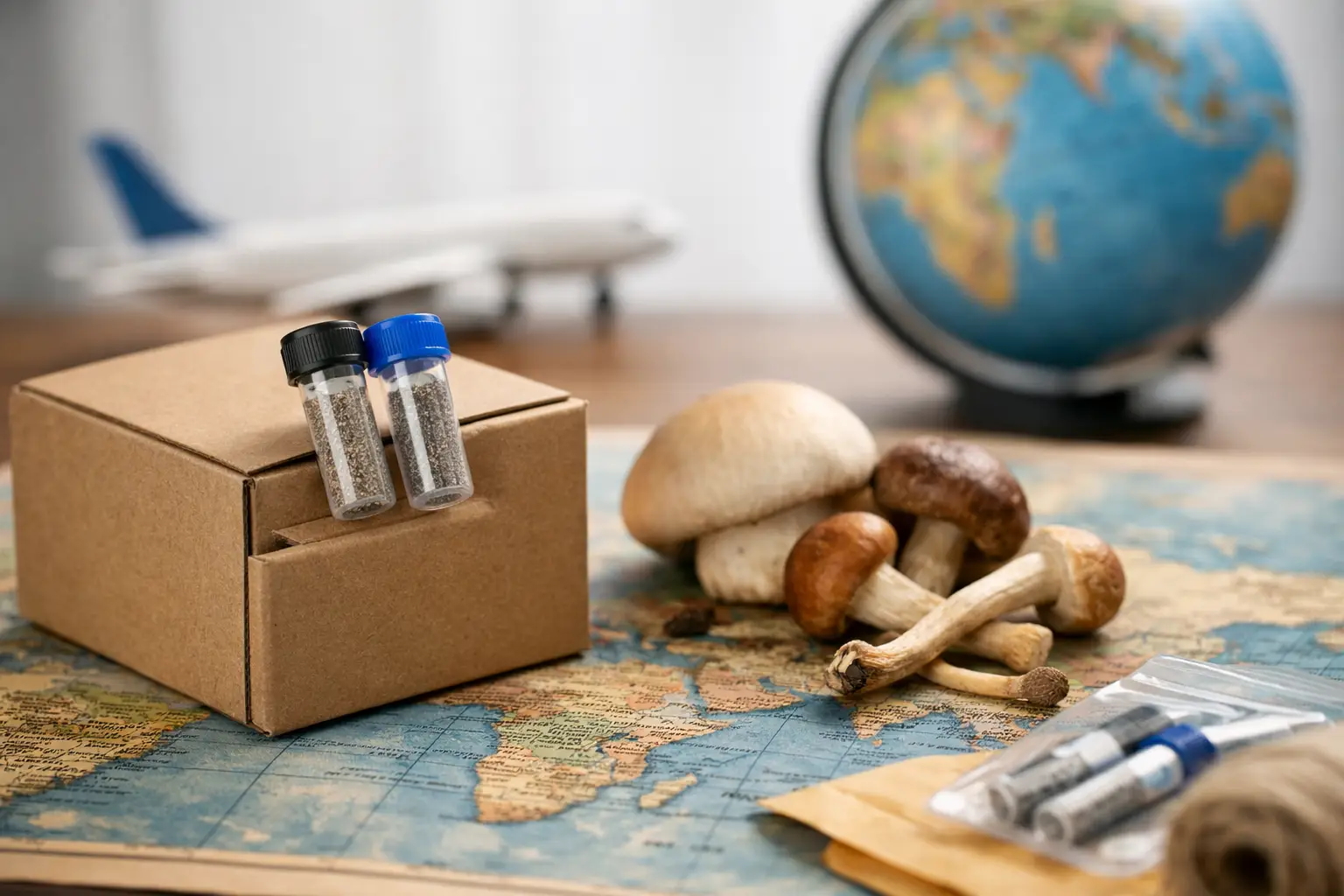
A great spore selection means very little if it cannot make it through the mail correctly. Worldwide mushroom spore shipping is not simply a matter of choosing a strain, adding it to cart, and waiting for delivery. Destination rules, carrier service, product format, weather, customs processing, and accurate address details all influence what a smooth international order looks like.

For collectors, microscopy-focused buyers, and edible mushroom enthusiasts, the smart move is to understand the shipping side before checkout. That protects your order, sets realistic expectations, and helps you choose the format that makes the most sense for your location and project.

What Worldwide Mushroom Spore Shipping Involves

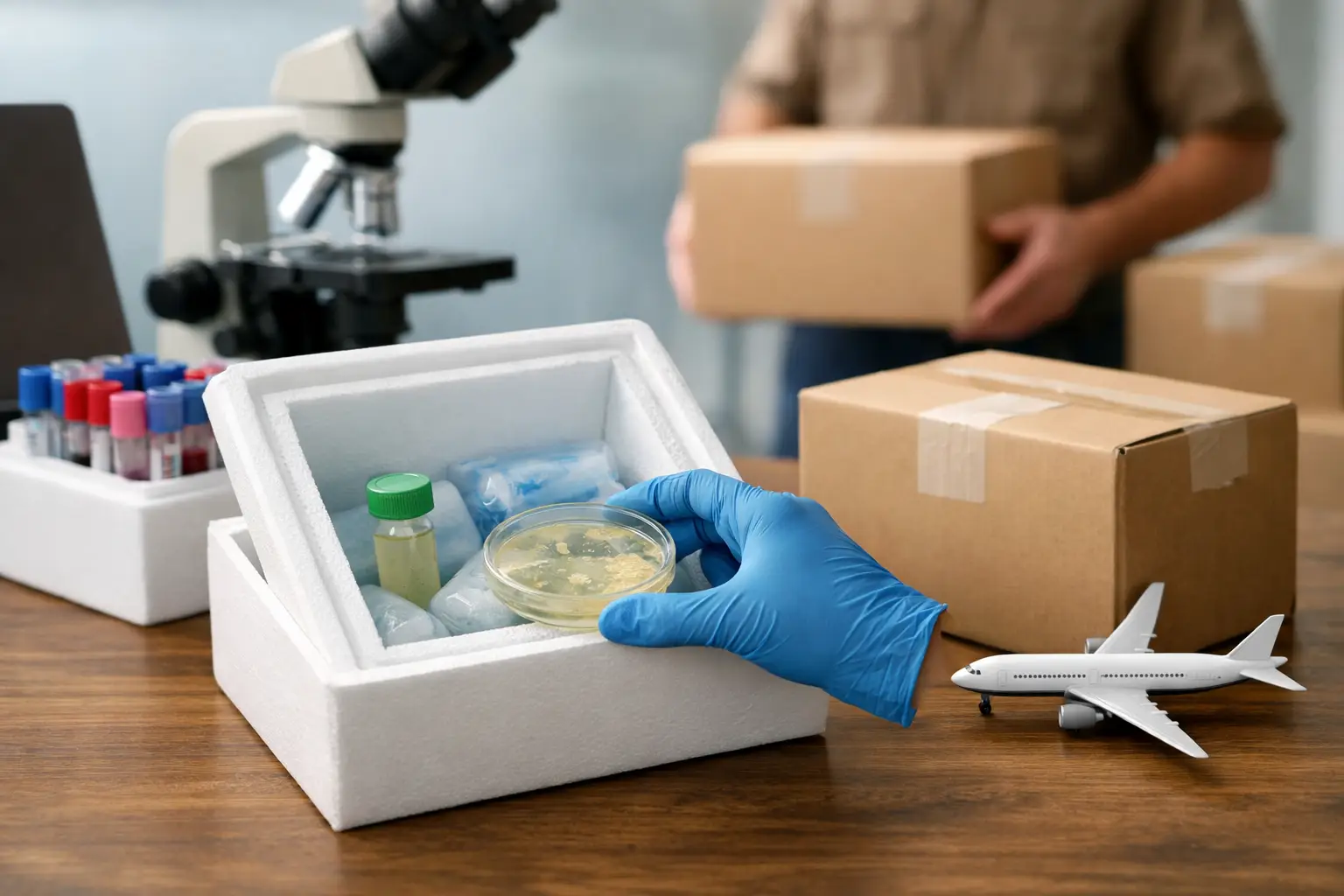
International orders move through more hands than domestic ones. A package may pass from the originating postal network to an export facility, customs authorities, an inbound carrier, and finally a local delivery service. Each handoff can add time, and some regions experience longer processing periods than others.

The first consideration is always destination eligibility. Rules governing spores, cultures, biological materials, agricultural goods, and imported fungi vary by country, state, province, and territory. An item that is available for delivery in one place may be restricted, require additional documentation, or be unavailable in another. Buyers are responsible for knowing the rules that apply where they live before placing an order.

This is not just a checkout detail. It is part of responsible collecting and cultivation. A reliable specialty shop can organize its catalog clearly and ship with care, but it cannot override local import restrictions or customs decisions.

Destination Rules Come First

Before comparing shipping speeds, check whether the product format is appropriate for your destination. Spore prints, spore syringes, liquid cultures, agar products, and ready-to-inoculate items are not treated identically by every jurisdiction. Some locations may permit one format while placing tighter controls on another.

It also matters whether you are ordering for microscopy, collection, research, or edible cultivation. The intended use does not replace local regulations, but it should guide your product choice. If a destination has strict agricultural controls, a dry print may be easier to evaluate than a live culture, while an edible culture may be the practical choice for a permitted gourmet project. It depends on both local rules and what you actually intend to work with.

When in doubt, verify current import requirements through the relevant local authority before ordering. Regulations change, and old forum posts are not a substitute for current guidance.

Choosing the Right Product Format for Shipping

The format you select affects transit resilience, handling, and the type of experience you will have after delivery. There is no universal best option. The right pick depends on your project, your level of experience, and the distance the package needs to travel.

Spore prints are compact, low-profile, and often well suited to collectors and microscopy users. They take up very little space and do not introduce the same leak concerns as liquid products. For buyers who value long-term storage potential and a broad strain library, prints can be a practical addition to the collection.

Spore syringes offer convenience for buyers who prefer a prepared liquid format. They are popular because they reduce preparation steps, but they require thoughtful packaging to prevent damage or leakage during transit. Temperature extremes can also be more relevant with liquid-based items, especially when shipping routes are long or seasonal weather is severe.

Edible cultures and ready-to-inoculate products are often chosen for hands-on gourmet cultivation. These products can be especially time-sensitive compared with dry materials. If you are ordering a live product internationally, plan for the possibility of customs delays and choose a shipping method that provides tracking whenever available.

For large orders, mixed-format bundles can be a good way to build out a collection or cultivation shelf. Just remember that combining several formats does not eliminate destination restrictions. Every item in the package should be suitable for import to your delivery address.

Packaging, Discretion, and Product Protection

A quality shipment starts with packaging designed for the material inside. Prints need protection from bends, moisture, and crushing. Syringes need secure containment and cushioning. Culture products need stable packing that limits movement while helping protect them from ordinary shipping stress.

Discreet, professional packaging benefits everyone. It helps prevent unnecessary attention during transit, keeps the order organized, and reduces the chance of accidental damage. Clear internal labeling also helps buyers identify what they received without turning unpacking into a guessing game.

Weather is the variable no one controls. Extreme summer heat, winter cold, and delayed regional delivery can affect some formats more than others. If your area is facing a major weather event, postal disruption, or holiday backlog, waiting for a more stable shipping window may be the better call. A few extra days before dispatch can be preferable to a package sitting in an unpredictable transit loop.

Tracking Is Useful, But It Is Not a Customs Shortcut

Tracked shipping is usually the best choice for international orders because it gives both buyer and seller a clearer view of the package journey. Tracking can show acceptance, export movement, arrival in the destination country, customs processing, and final delivery attempts.

Still, tracking does not guarantee a fixed delivery date. Once an order enters customs, the carrier may have limited control over timing. A scan may remain unchanged while a package is being reviewed, transferred between facilities, or awaiting the next local update. That can be frustrating, but it is common with cross-border shipments.

Use tracking as an information tool, not a countdown clock. Check it periodically rather than refreshing it every hour, and make sure your delivery address, postal code, apartment number, and contact details are complete before placing the order. Address errors are among the most avoidable reasons an international shipment gets delayed or returned.

What to Do If a Package Is Delayed

First, read the latest tracking status closely. “In transit” can mean movement between facilities, while “held,” “awaiting clearance,” or a local delivery exception may point to a specific next step. If the carrier requests information or payment of applicable duties, respond through the carrier’s official channel promptly.

Avoid assuming a parcel is lost just because tracking pauses. International scans can lag, particularly after a package reaches the destination country. If there has been no meaningful movement beyond a reasonable transit window, contact the seller with your order number and the current tracking details. Keep the message specific and factual so the support team can assess the shipment quickly.

Customs, Duties, and Buyer Responsibilities

Customs authorities make the final call on items entering their jurisdiction. A seller can prepare an order accurately, but cannot guarantee admission, release speed, or a waiver of taxes and duties. Buyers should expect that cross-border purchases may involve fees set by their own country.

Do not ask a seller to misstate contents, alter values, or bypass documentation requirements. That can create bigger problems for the order and may jeopardize future shipments. Accurate paperwork is the better long-term approach for a healthy mycology community and a dependable international marketplace.

The same goes for local compliance. Specialty genetics, spore products, cultures, and cultivation supplies deserve thoughtful sourcing. Know what you can receive, know what you can possess, and choose products that align with the rules where you live.

Ordering Smarter From The Mycelium Network

A well-planned order is easier to pack, easier to track, and less likely to create surprises. Start by selecting products that fit your destination and intended use. Then choose the shipping option that balances cost with visibility, especially if your order includes live or liquid formats.

Before you submit payment, review your cart one more time. Confirm your exact address, use a deliverable location where someone can receive the package, and avoid ordering immediately before travel. If you are building a collection, consider whether a larger order makes sense for your budget and destination rules rather than placing several small international shipments.

Myceli Nation is built for enthusiasts who want a wider mycology catalog without hopping between scattered suppliers. Whether you are browsing fan-favorite spore varieties, adding prints to a microscopy collection, or stocking up on edible cultures and supplies, shipping awareness belongs in the same decision as product selection.

International ordering works best when buyers treat it as a shared process: the seller packs responsibly, the carrier moves the parcel, customs applies local rules, and the buyer orders with accurate information and realistic expectations. Take those few minutes before checkout, and your next shipment has a far better chance of arriving as planned.
Posted on

Spore Swab Comparison for Serious Collectors

Spore Swab Comparison for Serious Collectors

A spore swab comparison is most useful when you look past the label and ask a simpler question: what do you actually want to collect, examine, or keep on hand? Swabs, prints, syringes, and ready-to-inoculate options may all appear in the same shop, but they serve different preferences around storage, presentation, handling, and intended use. Choosing the right format makes your collection easier to manage from the start.

For collectors and microscopy-focused buyers, a swab offers a compact, low-profile format with a strong practical appeal. For shoppers who want a visible sample, a print can feel more traditional and display-worthy. For others, convenience may point them toward a prepared format. The best choice depends on your priorities, not a one-size-fits-all hierarchy.

Spore Swab Comparison: Where Swabs Fit

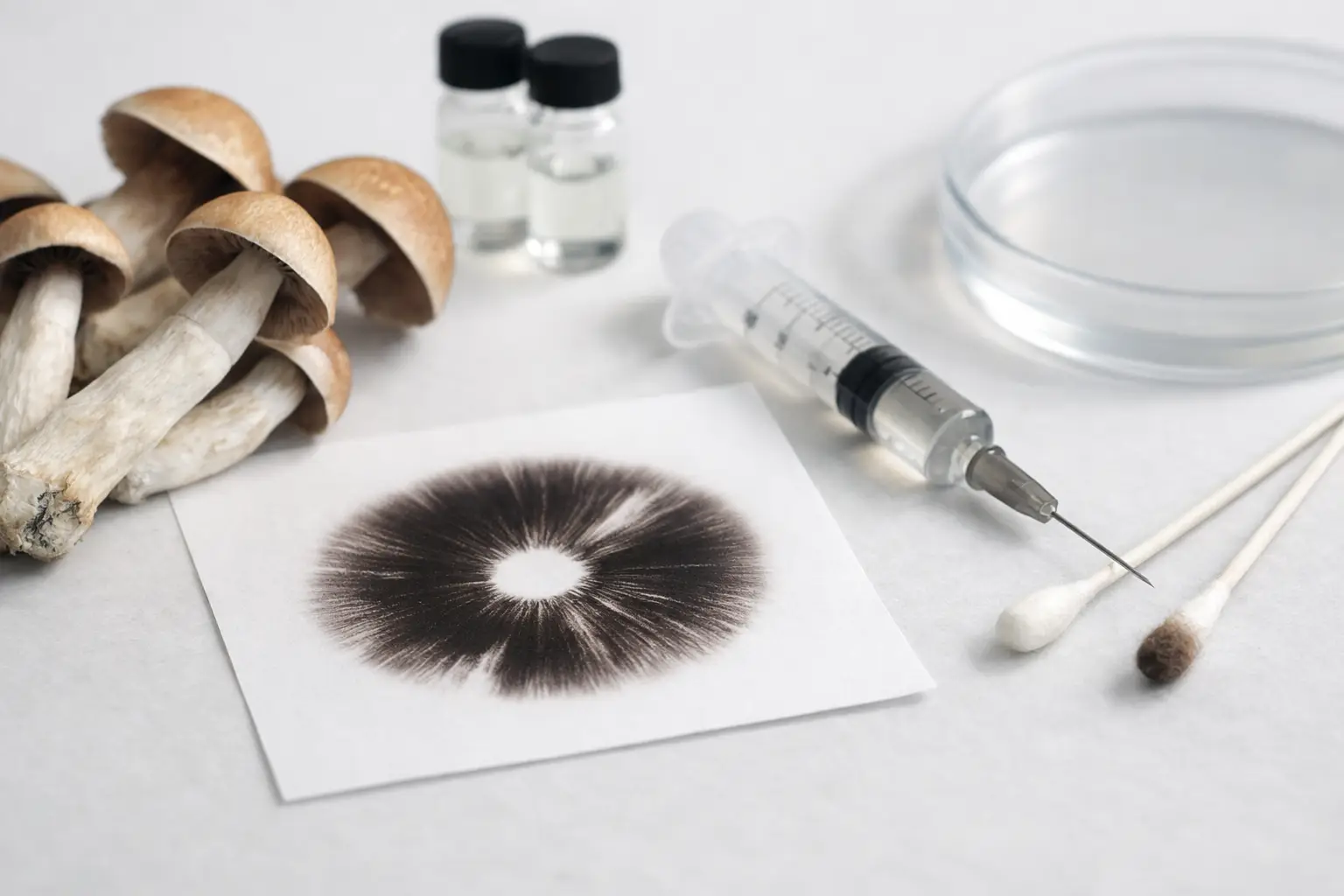
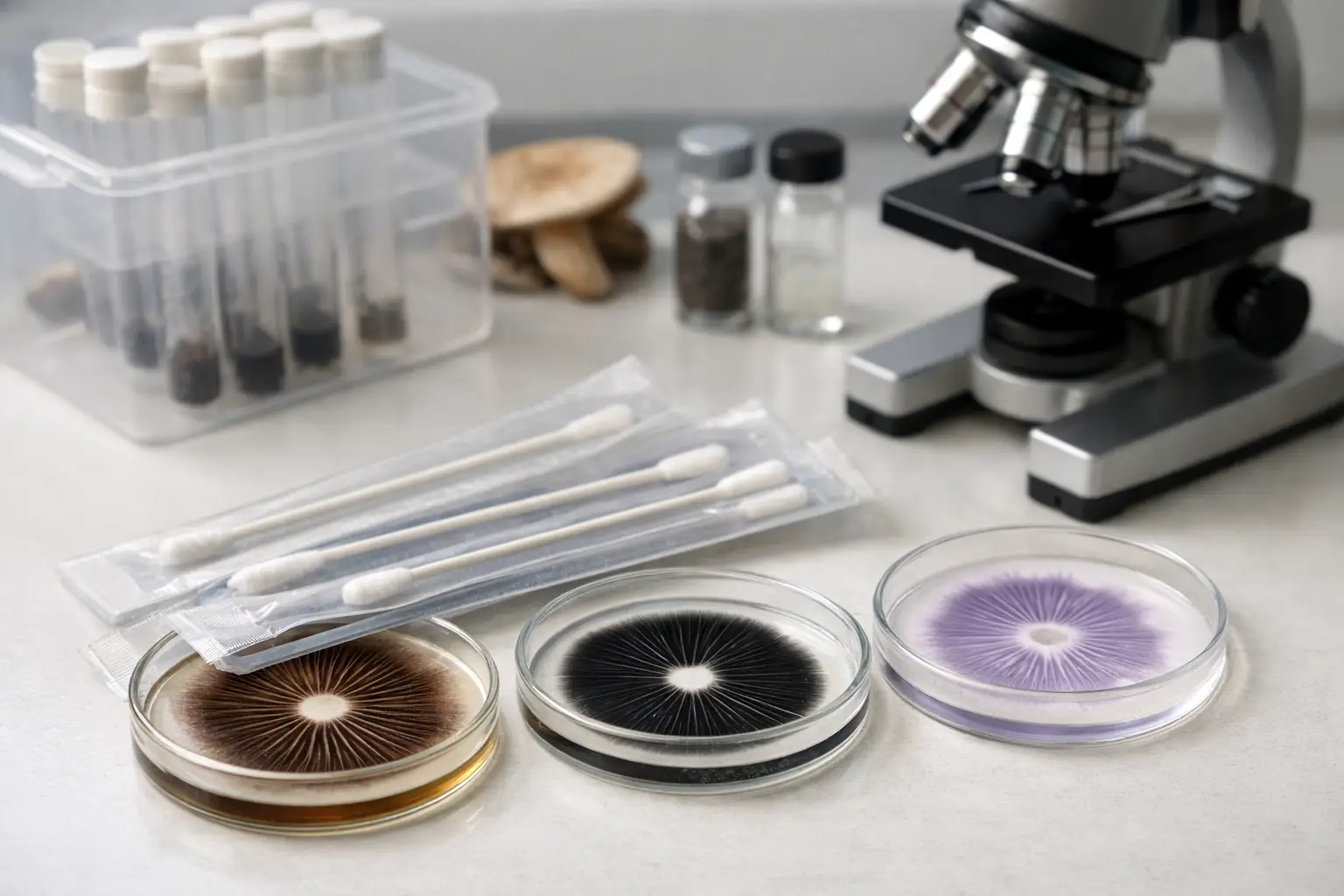
A spore swab is typically a sterile cotton-tipped applicator carrying a spore sample. It is usually packaged in a way that keeps the format compact, discreet, and easy to store alongside other labeled samples. Compared with a print, a swab does not offer the same immediate visual reference. You cannot simply glance at it and see the pattern, density, or character of the deposited spores.

That trade-off is exactly why some collectors prefer swabs. A swab takes up very little room, travels well when properly packaged, and can be organized by strain, date, source, or collection category without requiring a binder full of larger foil packets. If your cabinet already holds a growing assortment of genetics, compact storage is a real advantage.

Swabs can also make sense for buyers building a broad strain library. When the goal is variety, it is often more practical to keep a neatly labeled lineup of individual swabs than to manage larger physical prints. This is particularly relevant for enthusiasts comparing fan favorites such as Golden Teacher, B+, Blue Meanie, and Lizard King alongside less common selections.

Still, a swab is not automatically better because it is smaller. Its minimal presentation means it can feel less satisfying for collectors who value the visual, archival side of mycology. If the sample itself is part of what you want to admire, document, or showcase, a print may be the stronger match.

Swabs vs. Prints vs. Syringes

The major formats differ less in basic value than in how they fit into a buyer’s routine. A print is a classic collector format, usually valued for its visible spore deposit and familiar place in mycology culture. It gives buyers a tangible artifact that can be labeled, preserved, and visually inspected without opening anything.

A swab is more compact and purpose-focused. Rather than presenting spores as a visible imprint, it stores the sample on an applicator. This makes it an attractive option for buyers who prioritize simple organization, smaller packaging, or a collection that can grow without demanding much shelf space.

Spore syringes are a different category altogether. Their appeal is convenience and product readiness, not archival presentation. They often suit buyers who prefer a prepared liquid format and do not need the collectible visual qualities of a print. Because they are liquid-based, they also call for more attention to storage guidance, transit conditions, and product-specific handling instructions.

Ready-to-inoculate products and edible cultures sit in their own lane. They are selected for buyers seeking a more direct, prepared experience with species intended for culinary cultivation. Comparing these products to swabs is useful only if you are deciding between a long-term collection format and a product chosen for a specific project.

| Format | Best fit | Main advantage | Main trade-off | | — | — | — | — | | Spore swab | Compact collections and microscopy | Small, organized, easy to store | No visible spore display | | Spore print | Traditional collectors and visual documentation | Tangible, display-worthy format | Takes up more space | | Spore syringe | Buyers who prefer a prepared liquid format | Convenient product format | Less suited to archival collecting | | Edible culture | Culinary mushroom projects | Species-specific and practical | Not a substitute for a spore collection |

A Spore Swab Comparison by Buying Priority

If storage is your first concern, swabs deserve a close look. A clearly labeled swab collection can be filed in compact sleeves, containers, or other dry storage solutions without creating much clutter. Prints also store well, but their larger packaging can become harder to organize as your selection expands.

If visual collecting is the priority, prints have the edge. Every print has a physical presence that a swab intentionally does not. Many collectors enjoy comparing print shapes, tones, and deposition patterns as part of the hobby. A swab is more like a well-organized reference item: useful, compact, and less ornamental.

If you are shopping for strain variety, either format can work. The deciding factor is whether you want to acquire more formats in less space or build a collection with visual character. Bundles can be especially useful here because they let buyers compare several selections at once while keeping purchasing simple.

If discretion matters, swabs are often the more understated option. Their packaging is generally modest and their footprint is minimal. That does not eliminate the need for responsible storage, though. Keep every sample clearly labeled, protected from excess heat, humidity, and direct light, and separated from items that could damage the packaging.

What to Check Before You Choose a Swab

Product details matter more than dramatic claims. Start with the strain or species listing, the format being offered, the number of swabs included, and the packaging description. A single swab may suit a focused collector, while a multi-pack may make more sense for someone building a broader catalog.

Next, consider labeling. Good collection habits begin before an item reaches your door. You should be able to identify what the sample is, where it came from, and when you added it to your collection. If you are comparing several similar varieties, consistent labels prevent mix-ups later.

Finally, choose a seller that makes category browsing straightforward. A dedicated shop should help you distinguish prints, swabs, syringes, edible cultures, and supply options without making you guess what each listing contains. At Myceli Nation, that kind of category clarity is part of making The Mycelium Network useful for both first-time buyers and longtime collectors.

The Right Format Is the One You Will Keep Organized

There is no universal winner in a spore swab comparison. Swabs are excellent when compact storage, clean organization, and collection breadth matter most. Prints are hard to beat when the visual and traditional side of collecting matters just as much as the sample itself. Prepared formats may be more appropriate when your needs are project-specific rather than archival.

Before adding another item to your cart, think about where it will live after arrival and what role it will play in your collection. A format that fits your storage habits, local requirements, and personal interests will always be more useful than the one that simply looks most popular on a product page.

Posted on

Substrate Selection Guide for Better Mushroom Grows

Substrate Selection Guide for Better Mushroom Grows

A great culture can only express what its growing medium allows. If colonization stalls, fruits come in small, or contamination keeps winning, the issue is often not the genetics or inoculation technique. It is the substrate. This substrate selection guide helps you choose a medium that fits the species you are growing, the format you are using, and the level of hands-on work your setup can support.

Substrate is not just a place for mycelium to sit. It is the food source, water reserve, and physical structure behind the grow. Getting it right means looking beyond what is cheap or easy to find and matching the material to what the species naturally prefers.

Start With What the Species Eats

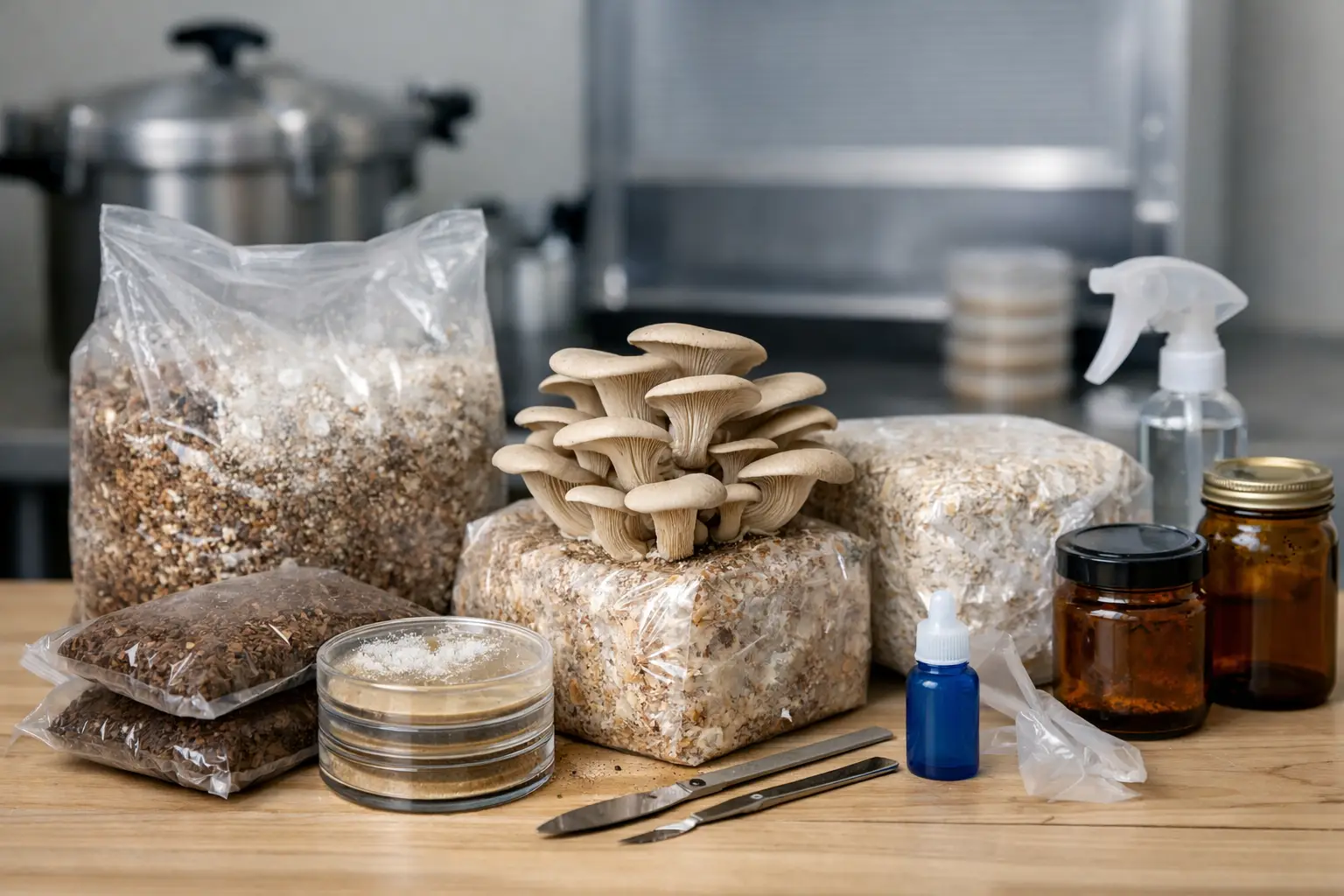
The most useful question is simple: what does this mushroom grow from in nature? Wood-loving species tend to perform best on hardwood-based substrates. Straw-loving species are more at home on agricultural fibers. Species that thrive in nutrient-rich soil and compost generally need richer blends than plain sawdust can provide.

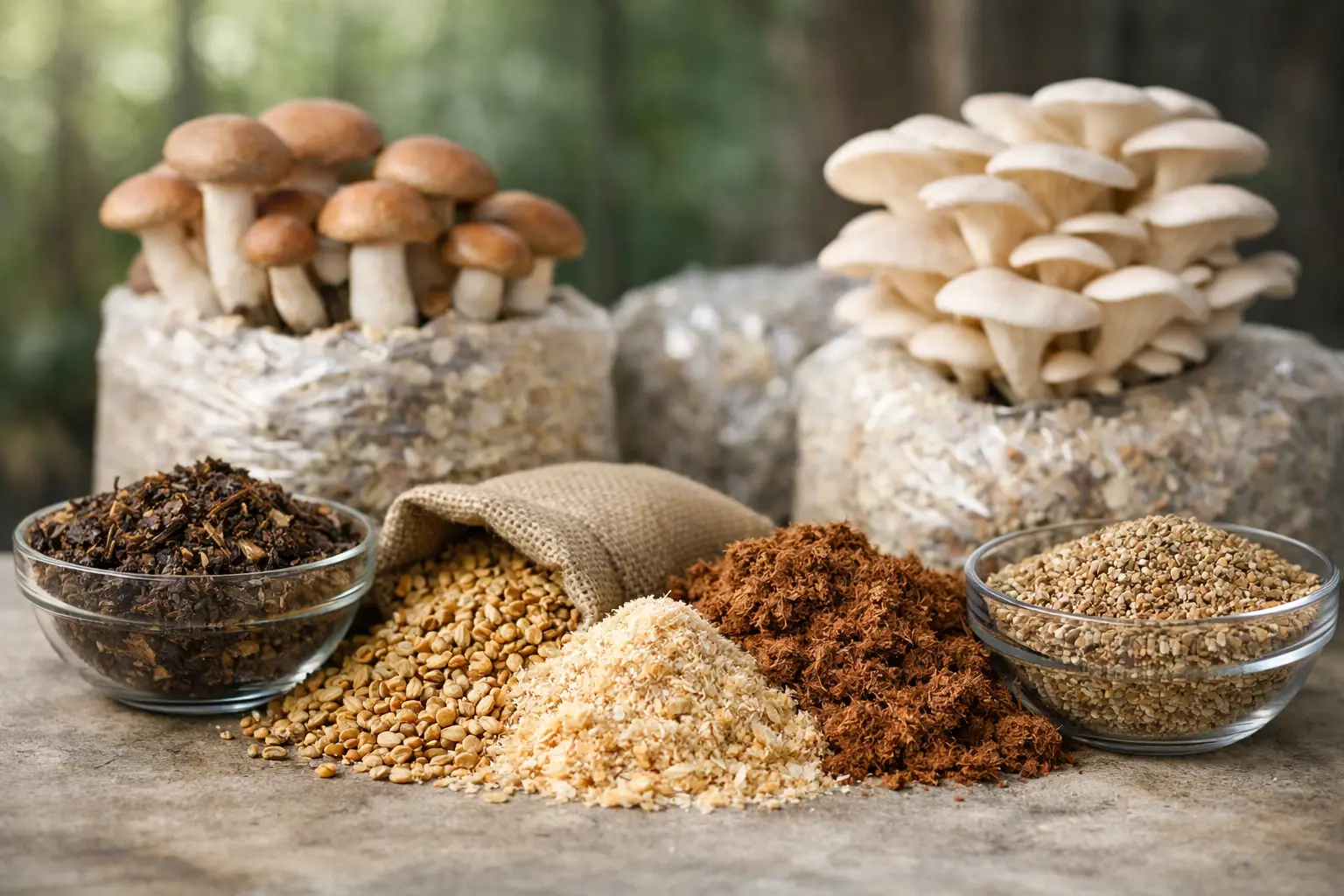
Oyster mushrooms are famously flexible and can run on hardwood pellets, straw, soybean hull blends, and several agricultural byproducts. That flexibility makes them a strong option for growers testing new materials. Lion’s mane and shiitake are more particular. They generally reward growers who use hardwood-forward formulations with enough structure for a long, steady colonization cycle.

Button-style mushrooms and other compost-oriented varieties are a different category. They rely on a properly prepared, nutrient-dense compost substrate and often a casing layer to create the right fruiting environment. Trying to force every species onto the same all-purpose blend is one of the fastest ways to create disappointing results.

Substrate Selection Guide: Know Your Main Options

Hardwood sawdust and hardwood pellets

Hardwood is the go-to base for many gourmet and medicinal species. It provides lignin and cellulose that wood-loving mycelium is built to break down. Sawdust offers a fine, even texture, while hardwood pellets are compact, clean, easy to store, and expand into hydrated sawdust when water is added.

Pellets are especially practical for bag cultivation. Choose untreated hardwood pellets with no fuel additives, binders, or fragrance. Oak, maple, beech, and other hardwoods are generally reliable choices. Softwood-heavy products can work for certain species, but the resins and different nutrient profile make them less universal.

The trade-off is preparation. Hardwood-based supplemented substrates usually need sterilization, especially when they include added nutrition. Plain hardwood materials can sometimes be pasteurized depending on the species and process, but supplementation raises the contamination stakes.

Straw

Straw is inexpensive, widely available, and an excellent match for aggressive species that colonize quickly. Wheat straw is common, though oat and rye straw can also be used. It holds air well when chopped and hydrated correctly, which supports fast mycelial movement through the substrate.

Straw is not the same as hay. Hay contains more seeds and nutrient-rich plant matter, making it far more contamination-prone. Clean, dry straw with a fresh smell is what you want.

Pasteurization is usually the practical route for straw. It reduces competing organisms without making the material completely sterile. That is a feature, not a flaw, when working with vigorous species that can establish themselves quickly. Straw can dry out faster than dense sawdust blends, so field capacity deserves attention throughout the process.

Manure-based and compost-based blends

Nutrient-rich blends have their place, but they are less forgiving than hardwood or straw. Properly aged manure, compost, coco coir, and gypsum may be combined for species that prefer richer substrates. The quality of the source material and the preparation method matter as much as the recipe itself.

These blends require careful hydration and clean handling. Overly wet material becomes dense and oxygen-poor. Under-prepared material can carry a high contamination load. If you are new to bulk substrate work, start with a proven recipe and a manageable batch size rather than improvising with multiple additives at once.

Masters’ mix and other supplemented blends

A common high-performance option for wood-loving gourmet mushrooms is a hardwood and soybean hull blend, often called Masters’ mix. The added soybean hulls increase available nutrition and can produce larger yields than unsupplemented hardwood alone.

That output comes with a condition: rich substrate attracts competitors. A supplemented bag needs dependable sterilization, clean inoculation practices, and appropriate spawn rates. It is a strong option when your process is dialed in, not necessarily the first choice when you are still learning moisture control and sterile workflow.

Match the Substrate to Your Grow Format

Your container matters as much as the material. A filter-patch bag filled with supplemented hardwood behaves differently from a straw bucket or a monotub filled with a bulk blend.

For all-in-one bags and grain-to-bulk projects, a hydrated, properly prepared bulk substrate with even texture is easier to mix and colonize. For fruiting blocks, hardwood pellets and supplemented sawdust create a dense, stable block that holds moisture well. For bucket grows, chopped pasteurized straw remains one of the most accessible formats because it is simple to layer, compact, and fruit from side openings.

Ready-to-inoculate products simplify the preparation stage for growers who want to focus on culture selection, clean inoculation, and fruiting conditions. They are also useful for comparing how different cultures perform on the same substrate without changing several variables at once.

Moisture Is the Make-or-Break Variable

Even a perfect substrate recipe fails if its water content is off. Mycelium needs moisture, but it also needs oxygen. A soaked, muddy substrate compacts and creates conditions where bacterial issues can take hold. A dry substrate colonizes slowly and may not have enough water stored for a strong flush.

The classic field-capacity test is still useful. Squeeze a handful of hydrated substrate firmly. It should feel thoroughly moist and release only a few drops, not stream water. This is not a laboratory measurement, but it gives home growers a repeatable reference point.

Different materials hold water differently. Fine sawdust retains moisture efficiently but can compact if packed too tightly. Straw creates more air space but may need more frequent attention. Coco coir expands substantially when hydrated, so measure your water carefully before mixing in supplements or other materials.

Preparation Method Should Follow Nutrition Level

Pasteurization and sterilization are not interchangeable terms. Pasteurization reduces the microbial load and is commonly used for straw and certain lower-nutrient bulk materials. Sterilization removes a much broader range of organisms and is generally required for supplemented sawdust, grain, and other nutrient-dense media.

The more food you add, the cleaner your process needs to be. That is the central trade-off. A plain hardwood substrate may colonize more slowly but offers fewer easy nutrients to molds and bacteria. A heavily supplemented blend can deliver impressive yields, but only if your sterilization and inoculation practices are consistent.

Avoid treating cleanliness as an afterthought. Use clean containers, inspect raw materials before hydration, and do not assume a good culture can overcome a poorly prepared substrate. Mycelium is competitive, but it is not magic.

Choose for Your Actual Setup, Not an Ideal One

The best substrate is the one you can prepare correctly and repeat reliably. A grower with a pressure sterilizer, filter bags, and a clean inoculation area can make excellent use of supplemented hardwood blocks. A grower with limited equipment may get more dependable results from pasteurized straw and a fast-colonizing edible species.

Consider storage and sourcing too. Hardwood pellets are compact and available year-round in many areas. Straw can be economical but bulky. Compost-based ingredients can vary dramatically by supplier and may bring inconsistency into every batch. Buying a cheap substrate that performs differently each time is rarely a bargain.

If you are choosing between two materials, run a small side-by-side trial. Use the same culture, inoculation rate, container type, and fruiting conditions. Track colonization speed, contamination, pinset, yield, and how much effort each option required. That data is more useful than a one-size-fits-all recommendation.

Myceli Nation is built for growers who like having options, but more choices only help when each one has a purpose. Start with the species, select a substrate that suits its natural appetite, then choose the preparation level your workflow can handle. A repeatable grow built on the right medium will teach you far more than chasing the most complicated recipe.

Posted on

Mushroom Spores: Prints, Syringes, and Swabs

Mushroom Spores: Prints, Syringes, and Swabs

A dark spore print on foil, a labeled syringe in a sterile bag, or a clean swab pack may look like small additions to a mycology setup. But mushroom spores are where identification, microscopy, collecting, and many culture projects begin. The format you choose affects how you store it, observe it, and fit it into the rest of your workflow.

For collectors and hobbyists, the goal is not simply to grab the first listing with a familiar name. It is to match the format to the project, check how the product was prepared and packaged, and keep expectations realistic. A print, syringe, and swab each offer a different kind of flexibility.

What Are Mushroom Spores?

Spores are microscopic reproductive cells produced by fungi. They are the fungal equivalent of a starting point, carrying genetic material that can be examined, preserved, or used in appropriate culture work. A mature mushroom releases an enormous number of spores, though only a small fraction would ever encounter the conditions needed to continue naturally.

That is part of what makes spores so compelling to mycology enthusiasts. They are compact, varied, and biologically complex. Under a microscope, details such as color, shape, size, and surface texture can help support identification. For collectors, a well-made print is also a physical record of a specimen and its spore deposit.

Spores are not the same as live culture. A culture typically contains established fungal growth, while spores must first germinate before they develop further. This distinction matters when you are comparing products. If you want a ready-to-work edible option, culture products may suit the project better. If you value microscopy, collecting, or genetic variety, spores are often the more natural choice.

Mushroom Spores Come in Several Formats

The best format depends on what you want to observe, store, or work with. There is no universal winner. The right choice comes down to handling preference, equipment, and intended use.

Spore Prints

A spore print is a visible deposit of spores collected from a mushroom cap, usually on foil or another clean surface. It is one of the most recognizable formats in the mycology world, and it has lasting appeal for both collectors and microscopy-focused buyers.

Prints are compact and easy to catalog. Many enthusiasts appreciate being able to inspect the color and density of the deposit directly before preparing a slide. They also make sense for anyone building a physical collection organized by variety, date, source, or region.

The trade-off is handling. A print requires careful, clean technique whenever material is transferred for observation or other lawful work. It is less immediately convenient than a prepared syringe, but that extra hands-on step is exactly what some hobbyists enjoy.

Spore Syringes

A spore syringe suspends spores in sterile water inside a sealed syringe. For buyers who prefer a ready-to-use format for microscopy preparation or appropriate culture applications, the convenience is obvious. It can be easier to dispense a small, controlled amount of liquid than to work from a dry print.

A quality syringe should be clearly labeled and packaged with care. Look for practical details: the variety name, volume, a secure cap, and packaging that helps protect the product during transit. Once received, inspect the package before opening it and follow any product-specific storage guidance.

Syringes are popular because they reduce preparation time, but they are not automatically better than prints. A collector may prefer the permanence of foil prints. A microscopy hobbyist who wants repeatable slide preparation may prefer a syringe. Both belong in a well-rounded mycology supply lineup.

Spore Swabs

Swabs place spores on the tip of a sterile applicator. They are a clean, minimal format often chosen for close handling and compact storage. Compared with prints, swabs contain less visibly obvious material, so they may feel less satisfying to collectors who want a displayable specimen. Still, they can be highly practical for specific microscopy and culture workflows.

Because the material is not presented as a visible deposit, clear labeling matters even more. Keep swabs in their original packaging until needed, and avoid mixing labels, sleeves, or storage containers between varieties.

Choosing the Right Format for Your Goal

Start with the question that actually matters: what do you want to do with the product? A casual collector who enjoys building a reference archive will often get more value from prints. Someone preparing microscope slides regularly may find syringes easier to portion. A hobbyist with limited storage space may appreciate the simplicity of swabs.

It also depends on your existing setup. If you already keep clean work materials, slides, labels, and basic microscopy gear on hand, each format can fit naturally into your routine. If you are starting from scratch, avoid overbuying. Choose one format, learn how it behaves in your own workspace, and build from there.

Variety selection deserves the same level of attention. Names can be useful for organizing a collection and comparing product types, but a name alone does not tell the full story. Read the listing for its format, quantity, preparation details, and intended category. A broad catalog is valuable when it helps you compare options clearly, not when it turns every purchase into guesswork.

Storage and Handling Make a Real Difference

Spores are small, but careless storage can create unnecessary problems. Keep products in a cool, dry place away from direct sunlight, excessive heat, and frequent temperature swings. Avoid leaving packages in a car, near a radiator, or on a sunny windowsill.

Labels should stay with the product from arrival through storage. If you transfer an item to a different container or organizer, label it immediately with the variety, format, and date received. This sounds basic, yet it prevents one of the most common collector mistakes: ending up with an unidentified print or syringe weeks later.

Clean handling is equally valuable. Set up a tidy work surface, use fresh materials for each observation session, and minimize exposure to household dust and open-air clutter. You do not need to turn a hobby bench into a laboratory to benefit from good habits. Consistency is more useful than complicated rituals.

How to Shop Mushroom Spores With Confidence

Online shopping makes it easier to find specialized varieties and formats without piecing together orders from scattered sellers. Still, product presentation should do the work of reducing uncertainty. Strong listings identify the format, describe what is included, and make it simple to compare individual options with bundles or category selections.

Before ordering, check the basics: whether you want a print, syringe, or swab; how many items you need; the seller’s shipping coverage; and the product’s stated purpose. If you are trying several varieties for a collection, a bundle can offer better value and keep your order organized. If you are evaluating a new format, a single item may be the smarter first move.

Myceli Nation is built around that kind of choice, with mushroom supplies organized for collectors, microscopy-focused buyers, and edible culture enthusiasts who want fewer dead ends between browsing and ordering. The best purchase is still the one that matches your own project rather than the one with the loudest name.

Build a Collection You Can Actually Use

A useful spore collection is not necessarily the biggest one. It is the one you can identify, store properly, and revisit with purpose. Keep a simple record of what you have, when it arrived, the format, and any microscopy notes that matter to you. That record becomes more valuable as your interest grows.

Mushroom spores reward patience and curiosity. Start with a format that fits your current setup, treat each item as something worth labeling and handling carefully, and leave room for your collection to develop alongside your skills.

Posted on

Spore Print vs Liquid Culture for Growers

Spore Print vs Liquid Culture for Growers

A spore print can sit neatly in a collection, travel easily, and preserve the starting point of a mushroom variety in a remarkably simple format. Liquid culture, by contrast, is built for momentum: living mycelium suspended in a nutrient solution and ready for the next stage of an edible cultivation workflow. That difference is the heart of the spore print vs liquid culture decision.

Neither format is automatically better. The right choice depends on whether you value long-term storage, microscopy, genetic exploration, quick project turnaround, or a dependable repeatable workflow. Knowing what each format does well makes it much easier to shop with purpose instead of grabbing the option that simply sounds more advanced.

What a Spore Print Brings to the Table

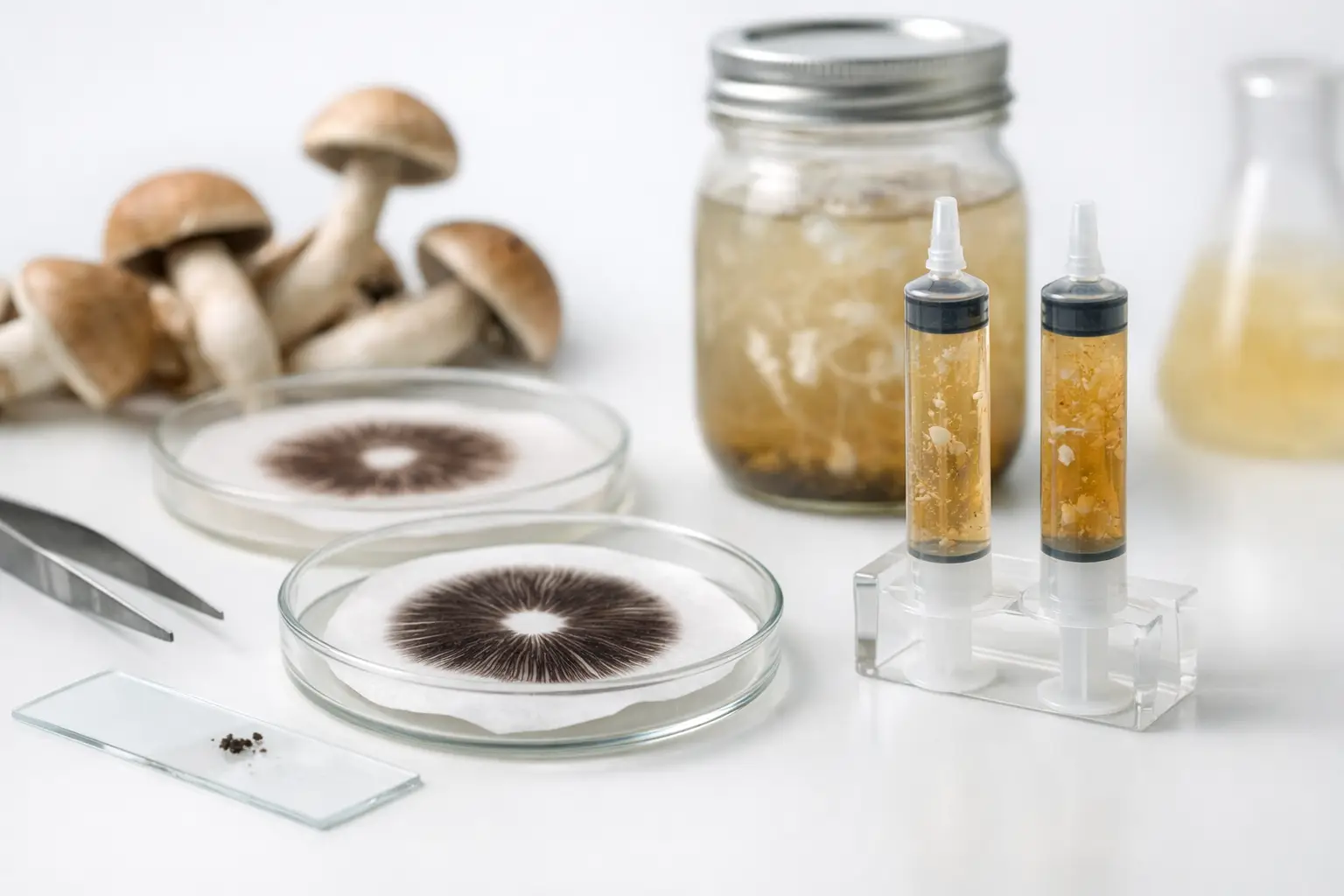
A spore print is a visible deposit of spores collected from a mature mushroom cap. It is one of the most traditional formats in mycology, and it remains popular because it is compact, versatile, and useful for study, collecting, and preservation.

For hobbyists interested in microscopy, prints offer a direct starting point for observing spores and comparing characteristics between varieties. They are also appealing to collectors because each print represents a distinct mushroom specimen and can be labeled, organized, and stored with minimal space.

The larger advantage is potential diversity. Spores are reproductive cells, so a print does not represent one fixed mycelial culture. When spores are studied or used in appropriate edible projects, the resulting growth can express variation. That makes prints especially interesting for enthusiasts who enjoy the discovery side of mycology rather than chasing identical outcomes every time.

A print is also a practical format for keeping a personal library. Properly handled and stored in a cool, dry, clean location, it takes up very little room. For someone building a broad collection of mushroom varieties, prints are often the easiest format to catalog over time.

The Trade-Offs With Prints

Flexibility comes with more variables. A print is not a ready-to-use living culture. It requires careful clean handling for microscopy work or for any lawful edible cultivation process, and it may require more time before a project reaches the same point as one started from an established liquid culture.

Because spores can produce varied genetics, results are less uniform. That is a feature for exploration, but it can be a drawback for growers who want consistency in a familiar edible variety. Prints also demand more attention to storage conditions and handling hygiene, since the material is exposed when opened.

What Makes Liquid Culture Different

Liquid culture contains actively growing mycelium in a sterile nutrient broth. In edible mushroom cultivation, it is valued for reducing the time needed to establish growth compared with starting from spores. Rather than beginning with reproductive material, the grower begins with a living mycelial network.

That makes liquid culture attractive for projects where speed and repeatability matter. A well-maintained culture can offer more predictable traits than a spore-based start because it is based on an existing mycelial line. For growers who have already found a favorite edible culture, that consistency can simplify planning and help them keep their process organized.

Liquid culture is also a convenient format for those who do not want to build every project from the earliest stage. It gives newer edible growers a more accessible entry point while still rewarding careful sterile technique and observation. The format is straightforward, but it is not a shortcut around good habits.

The Trade-Offs With Liquid Culture

Liquid culture is perishable compared with a dry print. Its quality depends on how it was prepared, stored, and handled throughout its life. A culture that looks active is not automatically verified as clean, which is why experienced cultivators treat quality control as part of the process rather than an optional extra.

It also offers less genetic variety. When you purchase or preserve a single culture, you are working from one established mycelial line. That is ideal when consistency is the goal, but it does not provide the same exploratory potential as spores from a print.

Storage is another consideration. Liquid cultures need more care, have a shorter practical shelf life, and are more sensitive to temperature swings. If you are building a long-term collection rather than planning a near-term edible project, prints may be the lower-maintenance option.

Spore Print vs Liquid Culture: The Real Comparison

The simplest way to compare these formats is to think about what you want your starting material to do. A spore print is a versatile source material with potential for microscopy, collecting, preservation, and genetic variation. Liquid culture is an active mycelial format intended for efficiency and more repeatable edible cultivation projects.

Speed is the clearest dividing line. Liquid culture generally moves a project forward sooner because mycelium is already established. A print begins at an earlier biological stage, so it calls for more patience and more room for natural variation.

Consistency is the next major factor. Liquid culture is usually the better fit when you want to work with known characteristics from a selected line. A print is a better fit when variability is part of the appeal, whether that means microscopy comparisons, building a collection, or exploring the diversity inherent in spores.

Then there is storage. Dry prints are easier to archive and take up almost no space. Liquid culture is more time-sensitive and requires closer attention. Neither is difficult in the right context, but they serve different collection habits.

Which Format Fits Your Goals?

Choose a spore print if your interest centers on microscopy, collecting, preserving a wide range of varieties, or learning more about the reproductive side of mushroom biology. Prints are also a strong option for enthusiasts who enjoy a slower, more hands-on path and understand that variation is part of the experience.

Choose liquid culture if you are focused on lawful edible mushroom projects and want a living culture that can help create a more efficient, repeatable workflow. It is especially useful when you already know the edible variety you want to work with and prefer fewer genetic unknowns.

Many serious enthusiasts keep both. Prints build the archive and support exploration. Liquid cultures support active projects. Together, they make a collection feel less like a shelf of products and more like a working mycology library.

Buying and Handling With a Clear Plan

Before selecting either format, consider how soon you plan to use it, how you will store it, and whether your interest is educational, collectible, or tied to edible cultivation. Buying a liquid culture for a project months away may not make as much sense as choosing a print for storage. On the other hand, selecting a print when you want to begin an edible project promptly can add steps you did not intend to take.

Pay attention to labeling, variety information, packaging quality, and the seller’s handling standards. For liquid cultures, clear identification and careful shipping matter because you are receiving living material. For prints, secure packaging and proper labeling help keep a collection organized from the start.

At Myceli Nation, the goal is to make those choices easier by giving mushroom enthusiasts access to a broad range of formats, from collectible prints to edible cultures and cultivation essentials. The best purchase is not necessarily the most popular one. It is the one that matches your next move.

A well-chosen format keeps the hobby enjoyable: pick prints when curiosity and preservation lead the way, and choose liquid culture when your edible workflow calls for an established living start. Always handle mushroom materials responsibly and follow the laws that apply where you live.

Posted on

Mushroom Bundles Versus Singles: Buy Smarter

Mushroom Bundles Versus Singles: Buy Smarter

A three-pack can look like an obvious win until two items sit untouched in a drawer. A single can feel precise until shipping turns a small order into a pricey one. That is the real decision behind mushroom bundles versus singles: not which format is universally better, but which one makes sense for the way you collect, study, or work with cultures.

For buyers building a reliable mycology shelf, the best choice usually comes down to purpose, pace, and how much variety you will actually use. Bundles reward a plan. Singles reward flexibility. Knowing where you fall saves space, money, and the frustration of ordering the wrong format for your next project.

Mushroom Bundles Versus Singles at a Glance

Singles are individual products purchased one at a time. They make it easy to select a specific spore syringe, spore print, edible culture, or supply item without committing to a larger set. This is the cleanest option when you know exactly what you need.

Bundles group multiple items into one offer. They may center on a theme, a product format, fan-favorite varieties, or a broader mix designed for buyers who want to explore more than one option. The appeal is straightforward: more selection in one checkout, often at a better per-item price.

Neither format is automatically the better deal. A bundle is valuable only when the included items fit your interests and timing. A single is economical when it prevents you from buying extras that will not serve a purpose.

When Singles Are the Better Move

Singles are built for focused shopping. If you have one variety in mind, need to replace a particular item, or want to evaluate a source before expanding your collection, ordering individually keeps the decision simple.

They also work well for buyers who have limited storage or prefer to keep their collection lean. A carefully chosen single gives you control over every item that arrives. There is no overlap with products you already own and no pressure to make use of an unfamiliar selection just because it came in a pack.

You are testing a new format

Maybe you usually shop prints and want to try a ready-to-inoculate edible culture. Maybe a specific variety has been on your list, but you are not ready to buy a broad assortment. A single lets you test the format, packaging, and fit for your workflow before buying more.

This approach is especially useful when your interests are narrow. A microscopy-focused buyer, for example, may care more about a specific specimen than a mixed assortment. The same goes for growers who are maintaining a small, intentional rotation of edible cultures.

You need exact control over your order

Singles are also the right call when you are pairing products with supplies you already have. If you need one replacement syringe, one print, or one particular culture, a bundle can create unnecessary duplication. Select the item, check the product details, and keep the cart aligned with the project at hand.

The trade-off is that individual orders can carry a higher per-item cost. Shipping can also take up a bigger share of the total when the cart is small. That does not make singles a poor value. It simply means their value is precision rather than volume.

Why Bundles Appeal to Mycology Enthusiasts

Bundles make sense when variety is part of the goal. Instead of researching and adding several products separately, you get a curated group in one purchase. For collectors, hobbyists building a reference selection, and buyers who enjoy comparing varieties or formats, that convenience matters.

At Myceli Nation, bundles can also be a practical way to browse beyond one familiar favorite. A well-matched pack introduces options you may not have searched for on your own while keeping your order organized around a clear category or theme.

Better per-item value, when you will use it

The most visible bundle advantage is usually price. Buying several products together may lower the effective cost per item compared with purchasing each one separately. Combined shipping can improve the math further, particularly for buyers placing a larger order anyway.

But value is not the sticker price alone. If a five-item bundle includes two products you would never choose individually, it may not be a bargain for you. Before checking out, divide the bundle price by the number of items you genuinely want. Then compare that number with the individual products in your cart.

More variety without a scattered cart

A bundle is also a shortcut for building range. This is useful if you are new to a category, expanding a collection, or looking for multiple options to study over time. Rather than piecing together a selection from dozens of product pages, a bundle gives you a starting point with a built-in point of view.

That said, variety works best when it is intentional. Choose a bundle because the group has a purpose for you, not simply because it contains the most items. A smaller, relevant pack often beats a larger one filled with random extras.

How to Compare a Bundle With Individual Items

Start with the products, not the promotion. Read the included varieties, formats, quantities, and any product-specific notes. A bundle title may sound broad, but the details tell you whether it matches what you actually want to add to your collection.

Next, look at your existing inventory. Do you already have similar items? Are you likely to use the bundle’s contents within a reasonable timeframe? Storage conditions, labeling, and your own organization habits all affect whether a multi-item purchase stays useful.

Then compare the real cost. Add up the individual products you would otherwise buy, account for shipping, and check whether the bundle creates meaningful savings. If you were only going to buy one item, a bundle may still be appealing, but it is an expansion purchase rather than a cost-saving replacement.

Finally, think about availability. Some products are easy to reorder whenever you need them. Others may be seasonal, limited, or simply harder to find in a preferred format. A bundle that includes items you have been waiting for can be worth choosing even when the discount is modest.

Match the Format to Your Buying Style

If you are a planner, bundles tend to reward you. You know what you want to explore, have room for several items, and appreciate consolidating purchases. They are particularly useful when you are building out a category, gifting to an enthusiast, or stocking up on a selection you already know you will use.

If you are selective, singles usually fit better. You prefer choosing every item yourself, you are curious about one specific product, or you make purchases around a focused need. Singles also keep experimentation manageable when you are still learning which formats and varieties belong in your regular rotation.

Many experienced buyers use both. They order singles for exact replacements and targeted finds, then choose bundles when a collection matches their broader interests. This mixed approach avoids treating either format as an all-or-nothing choice.

A Few Details That Can Change the Decision

Product format matters as much as product count. A bundle of similar items may be perfect for a collector who wants range within one category, while a mixed-format bundle may suit someone exploring spores, prints, and edible cultures. Always check that the format supports your intended lawful use and follows the rules where you live.

Timing matters too. A bundle bought for a future idea is less useful than one bought for a project or collecting goal you are ready to pursue. If you tend to change direction quickly, singles can prevent your shelf from becoming a collection of good intentions.

Packaging and labeling deserve attention as well. With multiple items arriving at once, label them clearly, keep product information together, and avoid relying on memory later. A bundle creates more value when you can identify and organize every item from day one.

Make the Cart Work for You

The smartest order is not always the biggest bundle or the cheapest single. It is the one that gives you useful variety, clear product choices, and a collection you are genuinely excited to return to. Shop singles when specificity leads the purchase, and choose bundles when the full set earns its place in your lineup.

Posted on

Best Edible Mushroom Cultures for Home Growers

Best Edible Mushroom Cultures for Home Growers

A culture that tears through a supplemented block can be a great buy for one grower and a poor fit for another. The best edible mushroom cultures are not simply the most unusual species on the menu. They are the cultures that match your space, your substrate, your temperature range, and the amount of attention you can give a fruiting block each day.

For home cultivators, starting with a clean, vigorous edible culture removes a major variable. You are not waiting for spores to germinate or sorting through genetic variation. You are working with established mycelium selected for consistent growth, which makes cultures especially useful when your goal is reliable gourmet harvests rather than a long experimental project.

What Makes an Edible Culture Worth Growing?

A good culture earns its place in the grow room through more than flavor. Colonization speed matters because faster substrate run times can reduce the window for contamination. Fruiting temperature matters because a strain that loves cool air may struggle in a warm apartment, garage, or tent. Substrate preference also matters: some species are forgiving on hardwood fuel pellets and soy hulls, while others reward growers who use more specialized recipes.

Look at the full growing cycle before choosing. A culture may be easy to colonize but require high humidity, lots of fresh air exchange, or a precise cold-weather fruiting range. There is nothing wrong with a demanding species, but it should be an intentional choice.

When shopping cultures, prioritize a clearly identified species or strain, a clean presentation, and a format that fits your workflow. Liquid culture can be efficient for inoculating multiple grain jars or bags. Agar cultures offer a useful visual check on mycelial health and are ideal if you already maintain plates. Ready-to-inoculate products are often the practical middle ground for growers who want to get moving without building an entire lab setup.

Best Edible Mushroom Cultures by Growing Style

Oyster mushrooms for fast, forgiving harvests

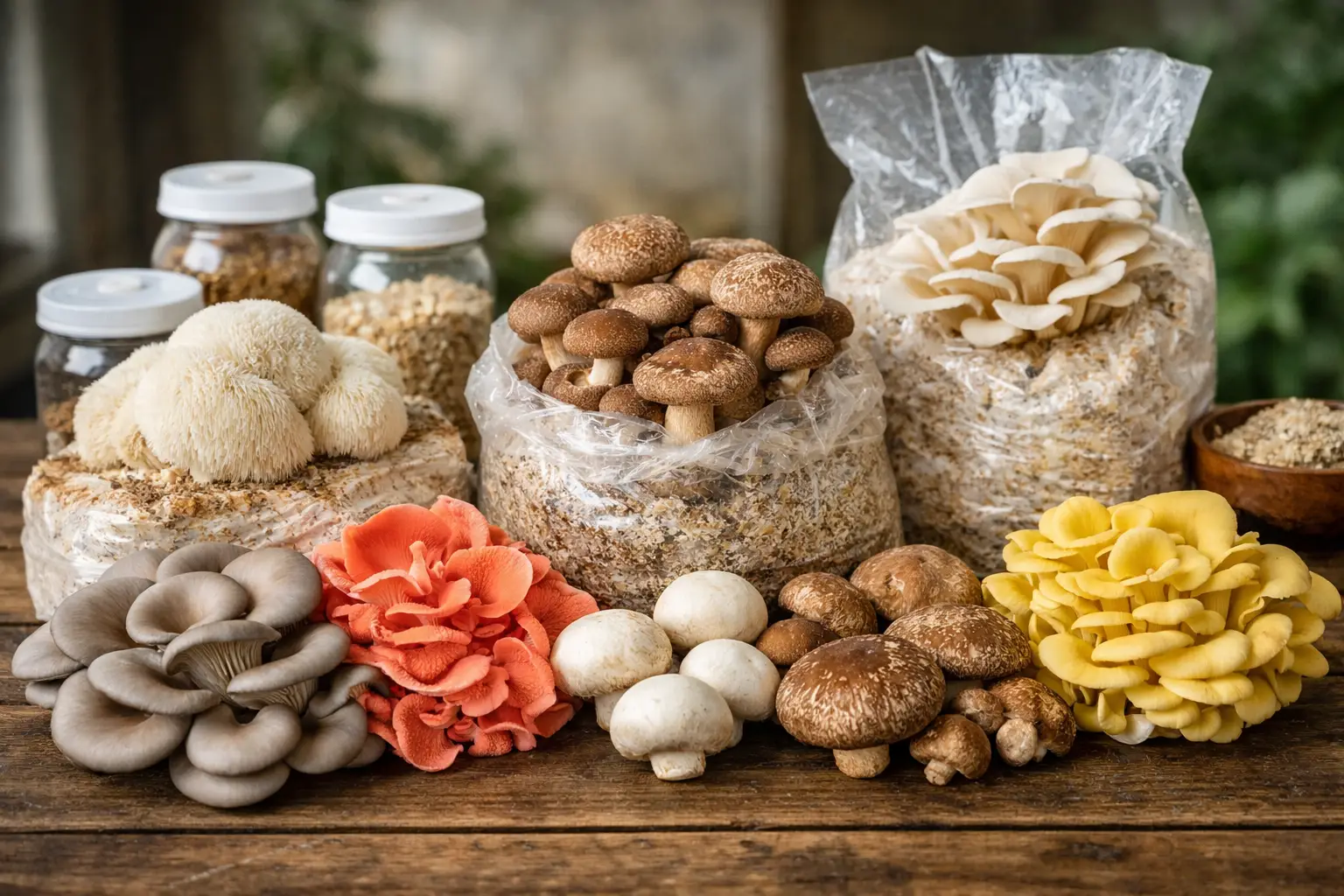
Oyster mushrooms are often the first recommendation for good reason. They colonize aggressively, accept a broad range of lignocellulosic substrates, and fruit quickly compared with many gourmet species. If you have pasteurized straw, hardwood pellets, or supplemented sawdust blocks, oysters give you plenty of room to learn the basics of moisture, fresh air, and harvest timing.

Blue oyster is a strong all-around option, particularly for growers with moderate to cool fruiting conditions. Pearl oyster is another dependable choice with broad appeal in the kitchen. Pink oyster is a favorite for warm-weather grows because it tolerates higher temperatures and produces striking clusters, though it is less forgiving of stale air and has a shorter shelf life after harvest.

Golden oyster brings color and a delicate texture, but it can be more particular about conditions and tends to mature quickly. Black pearl oyster, a cultivated hybrid-type selection commonly valued by gourmet growers, can offer dense, attractive clusters and a more substantial texture. The trade-off is that it may benefit from steadier fruiting conditions than a basic blue or pearl oyster grow.

For a first culture purchase, oyster varieties are hard to beat. For a more varied grow room, run two types with different temperature preferences so your production does not stop when the seasons shift.

Lion’s mane for growers chasing a premium crop

Lion’s mane is one of the most rewarding gourmet cultures to grow at home. Its white, cascading fruiting bodies look nothing like a standard capped mushroom, and fresh harvests have a mild, seafood-like texture that makes them a standout in the kitchen.

It is not as carefree as oyster mushroom. Lion’s mane generally prefers supplemented hardwood-based substrates and needs a fruiting environment with stable humidity and adequate fresh air. Too much carbon dioxide can lead to compact, coral-like forms rather than the fuller, toothy fruits many growers want. That does not make it difficult in an absolute sense, but it does make environmental control more noticeable.

Choose lion’s mane when you are ready to monitor your fruiting space and want a high-value harvest from a compact block. It is a smart next step after oysters, especially for growers using a small tent, greenhouse shelf, or dedicated humidity chamber.

Shiitake for patience and serious flavor

Shiitake culture is a classic choice for growers who do not mind waiting. It is slower than oyster mushroom and typically requires a maturation or browning period after full colonization, but the payoff is a deeply flavored mushroom with excellent culinary range.

Shiitake performs best on hardwood sawdust-based blocks rather than low-nutrient straw. Its slower pace means clean technique matters from the beginning. A rushed or poorly hydrated block can cost you weeks. Still, once you understand the schedule, shiitake can be a satisfying production crop with firm fruits and strong shelf life.

This is a culture for the grower who wants to build a rotation rather than chase the fastest possible harvest. In a mixed grow room, shiitake can colonize and mature while oysters keep your harvest basket full.

Chestnut mushrooms for dense clusters and visual appeal

Chestnut mushrooms are a fan favorite for their caramel-brown caps, crisp stems, and clustered growth. They offer a useful middle path between familiar culinary mushrooms and more specialized gourmet varieties. Their flavor is rich and nutty, and they hold up well in sautés, soups, and stir-fries.

Chestnut cultures usually prefer supplemented hardwood substrates and cool to moderate fruiting conditions. They can take longer to develop than oysters, so avoid judging a block too early. Patience is part of the crop. Once pins form, maintain humidity without soaking the developing clusters, and provide enough fresh air to support sturdy growth.

For growers building a gourmet lineup, chestnut is an excellent complement to lion’s mane and shiitake. It gives your grow room a different texture, color, and harvest profile without requiring an entirely different cultivation approach.

Pioppino and nameko for growers who want range

Pioppino and nameko are worth considering once your basic fruiting conditions are dialed in. Pioppino produces elegant clusters with long stems and small brown caps, along with a savory flavor that works well in pasta, broths, and pan-seared dishes. It usually prefers hardwood-based substrate and steady fruiting conditions.

Nameko is distinctive for its small amber caps and naturally glossy surface. It is often used in soups and Japanese-inspired dishes, where its texture becomes part of the experience. It can be a fun culture for growers looking beyond standard supermarket mushrooms, but it is best approached with a little environmental control already in place.

Neither needs to be your first culture. Both are better viewed as a way to expand a working setup once you understand how your space responds to humidity, fresh air, and seasonal temperature changes.

Choosing the Best Edible Mushroom Cultures for Your Setup

Start with the conditions you already have instead of buying around an ideal future setup. If your fruiting area runs warm, pink oyster is likely a more realistic pick than a cold-fruiting species. If you have a cool basement or climate-controlled tent, blue oyster, chestnut, lion’s mane, and shiitake become easier to manage.

Your substrate plan should shape the decision too. Straw growers should lean toward oysters. Growers using hardwood pellets and supplementation have access to a broader gourmet range, including lion’s mane, chestnut, shiitake, pioppino, and nameko. Matching culture to substrate is cheaper and easier than forcing a species onto material it does not prefer.

Consider your schedule. Oysters fit growers who want quick feedback and frequent harvests. Shiitake suits those comfortable with a longer timeline. Lion’s mane is a good choice when you can check fruiting blocks regularly. A culture’s reputation only matters if you can give it the conditions it needs.

Keep a Small Culture Rotation Instead of Chasing One Perfect Strain

The most productive home growers rarely depend on a single culture. A small rotation creates flexibility. Keep one fast crop, such as an oyster variety, one premium gourmet crop like lion’s mane, and one slower variety such as shiitake or chestnut. This approach spreads out your workload and gives you a better read on what performs well in your specific environment.

Record inoculation dates, substrate recipes, colonization time, fruiting temperatures, and harvest weight. Those notes turn a good culture into a repeatable process. They also make it easier to compare two oyster varieties or decide whether a chestnut culture is worth keeping in regular rotation.

At Myceli Nation, The Mycelium Network is built for growers who want that kind of range: familiar edible staples, specialty gourmet options, and cultivation formats that fit where you are in the hobby. Start with a culture that suits your current setup, grow it cleanly, and let each harvest point you toward the next species worth adding.

Posted on

Culture Shipping: How to Order Live Cultures

Culture Shipping: How to Order Live Cultures

A live culture is not a shelf-stable supply item. It is active mycelium in a nutrient medium, and culture shipping is the handoff that determines whether that living material arrives ready for your next project or spends too long dealing with heat, cold, or delay. For cultivators ordering edible cultures, the best shipment is usually the one that moves quickly, arrives on a day you can receive it, and gets inspected without being left in a mailbox.

What Culture Shipping Actually Involves

Culture shipping is the process of packaging and transporting a live mushroom culture, most commonly in a culture syringe, liquid culture vessel, or agar format. Unlike dry goods, cultures have a limited comfort zone. The goal is not to keep them in perfect incubator conditions during transit. It is to protect them from temperature extremes, physical damage, and unnecessary time in the carrier network.

That distinction matters when comparing products. A spore print, a cultivation tool, and a live culture may all appear in the same order, but they do not have the same handling needs. The culture is generally the item that should shape your delivery plan.

A seller’s role is to prepare the culture carefully, package it securely, and choose an appropriate shipping method. Your role begins before checkout: select an address where someone can bring the package inside, avoid ordering before a long trip, and consider the weather along the delivery route. Even excellent packaging has limits when a box sits outside in direct summer sun or freezing overnight conditions.

What Affects Live Culture Viability in Transit

Transit time is the biggest factor. Shorter routes and fewer carrier handoffs reduce the chances of exposure and delay. This does not mean every culture needs overnight delivery. It means the shipping option should make sense for the season, distance, and your local delivery conditions.

Temperature is the next variable. Moderate temperatures are generally easier on live cultures than prolonged heat or freezing cold. In warm weather, a package can heat up quickly in a truck, locker, or porch area. In winter, cold exposure can slow or stress mycelium, particularly if the shipment is held outdoors. Insulation or seasonal packaging can help, but it cannot turn a delayed package into a climate-controlled shipment.

Physical handling also counts. Culture syringes should be secured so plungers, caps, and packaging do not shift in transit. Agar plates and slants need protection against cracking, while liquid culture containers need enough room that movement does not create a mess. A clean, well-packed order is not just about presentation. It protects the material and makes inspection easier when it arrives.

Timing is often underestimated. Ordering late in the week can mean a package enters a weekend or holiday hold, depending on the service selected and carrier schedule. For many buyers, placing an order early in the week is the practical move. It gives the shipment more time to travel during regular delivery days and helps you avoid an unnecessary pause.

Choosing the Right Shipping Setup

The right culture shipping setup depends on what you are ordering and where it is going. A hobbyist receiving one edible liquid culture at a residential address may prioritize a straightforward tracked service. Someone ordering several cultures for a planned grow cycle may care more about coordinating delivery with their availability.

Before placing an order, confirm that your address is complete, including apartment numbers, unit details, or gate information. A carrier cannot deliver accurately if the address leaves room for guesswork. If your building has a package room, front desk, or secure delivery location, use the details that make a first-attempt delivery more likely.

Tracking is useful because it lets you plan around the actual delivery window instead of waiting for a vague estimate. Check updates on the expected delivery day, especially during high-heat or cold-weather periods. If a shipment shows a meaningful delay, keep an eye on its progress rather than assuming it will arrive on the original date.

For orders going farther from the seller, shipping speed may be worth weighing against cost. Faster service can reduce transit exposure, but it is not automatically necessary in every situation. Mild weather, a reliable carrier route, and a secure delivery location may make standard shipping perfectly reasonable. During weather extremes or when delivery conditions are uncertain, a quicker option can be a smart safeguard.

Your First 30 Minutes After Delivery

When the package arrives, bring it inside promptly. Do not leave it on a porch, in a hot car, or near a heater while you finish other tasks. Open the outer packaging carefully and inspect the contents before preparing your work area.

Look for obvious concerns such as a damaged syringe, leaking container, broken plate, or an item that does not match your order. A healthy-looking liquid culture may show light cloudiness or visible mycelial growth depending on its age and format. Appearance can vary by species and culture type, so avoid making a judgment based on one visual detail alone.

If the package arrived unusually warm, cold, or shaken up, give the culture time to settle at an appropriate storage temperature before use. Avoid the temptation to rush it straight into inoculation just because it has arrived. A short period of calm handling is better than adding another source of stress.

For a clean workflow, prepare your workspace before opening individual culture packaging. Have your sterile tools, labeled substrate or media, and disposal materials ready. Confirm the culture label against your plan so you do not mix up varieties once several products are on the bench.

Storage Between Arrival and Use

The best storage method depends on the culture format and how soon you plan to use it. If you are using a culture promptly, keep it protected from direct light and temperature swings until your work session. If you need to hold it longer, follow the product-specific storage guidance supplied with the culture.

In general, storage is about slowing activity without exposing the culture to damaging conditions. Refrigeration may be appropriate for some culture formats and short-term holding plans, while freezing can damage living material. Do not assume every product should be stored the same way just because it contains mycelium.

Labeling makes a difference here. Record the culture name, arrival date, and intended use. If you maintain more than one edible strain or work through a rotation of cultures, a simple label system prevents the classic problem of finding a perfectly healthy syringe later with no idea what project it belonged to.

When a Shipping Issue Needs Attention

Most culture shipping questions are straightforward: a tracking update is late, the package was delivered while you were away, or a product needs a little time to settle. More serious issues include visible damage, missing items, or delivery delays that expose the shipment to extreme conditions.

Document clear problems as soon as you notice them. Keep the packaging, take photos of visible damage, and note the delivery date and condition. Clear information gives customer support something useful to work with and avoids confusion about what happened. Do not discard a damaged box immediately if you may need to report the issue.

For buyers building a dependable culture routine, the goal is not to eliminate every shipping variable. That is impossible once a package enters a carrier network. The goal is to control the variables you can: order at a sensible time, choose a reliable delivery address, watch tracking, and handle the culture calmly on arrival.

Myceli Nation is built for growers who want their mycology supplies in one place, but a successful order still starts with good receiving habits. Treat a live culture like the active material it is, plan for the season, and give it a clean path from delivery box to your next edible mushroom project.

Posted on

Mycology Supply Sourcing Guide for Growers

Mycology Supply Sourcing Guide for Growers

A great grow setup can be derailed by one weak link: a mislabeled culture, a dried-out syringe, a grain bag that arrives damaged, or basic supplies bought from five different shops with five different delivery windows. A smart mycology supply sourcing guide helps you build your order around compatibility, quality signals, and the way you actually work at the bench.

For hobbyists, collectors, and microscopy-focused buyers, the goal is not simply to find the lowest price. It is to source the right format, from a seller with clear product information, practical shipping standards, and enough inventory depth to keep your next project from becoming a scavenger hunt.

Start With the Format, Not the Strain Name

Strain names get attention, and for good reason. Fan favorites such as Golden Teacher, B+, Blue Meanie, and Lizard King are familiar points of reference for many enthusiasts. But before choosing a name, decide which format fits your purpose and experience level.

Spore syringes are a familiar option for microscopy work and for buyers who value compact, ready-to-use packaging. Look for clear labeling, a stated volume, and packaging that protects the syringe during transit. A syringe should not be treated as interchangeable with every other starting material just because the name on the label is similar.

Spore prints appeal to collectors and microscopy enthusiasts who want a classic, low-profile format. A quality print should be securely packaged, clearly identified, and handled in a way that minimizes unnecessary exposure during shipping. If you are building a collection, consistent labeling matters as much as the individual variety.

Edible cultures are a separate category with their own sourcing priorities. Here, vigor, species identification, format, and the supplier’s handling practices carry more weight than flashy naming. If your plans involve culinary varieties, source cultures from a shop that makes it easy to distinguish them from spore products and related supplies.

Ready-to-inoculate products can simplify shopping when you want to reduce the number of components in an order. The trade-off is that these products are more sensitive to fulfillment timing, storage conditions, and shipping distance. Check availability before planning around them, especially during periods of extreme heat or cold.

Mycology Supply Sourcing Guide: Build Around Compatibility

Buying each item individually may feel flexible, but it can create avoidable friction. A better approach is to map the core pieces of your project before filling the cart: starting material, sterile work supplies, containers or prepared media, labels, cleaning supplies, and storage considerations. You do not need every possible accessory. You need products that make sense together.

For example, a buyer focused on microscopy may prioritize prints, slides, sterile water, labeling materials, and reliable storage. Someone shopping for edible culture projects may need cultures, appropriate prepared products, gloves, sanitation supplies, and a backup option in case a favorite variety sells out. The right cart depends on the project, not on a generic starter list.

Bundles are worth a close look when they combine products you would genuinely purchase on their own. A multi-pack can lower the cost per item and give you more variety, but only if every item fits your interests. Avoid buying a bundle just because it looks like a deal. The best bundle reduces repeat shipping costs and fills real gaps in your collection or supply shelf.

It also helps to separate essentials from nice-to-haves. Sterile consumables, clear labels, and dependable packaging are often more useful than novelty gear. Build the reliable base first, then add variety as your routine develops.

Read Product Pages Like a Buyer, Not a Browser

A polished storefront is helpful, but the product page does the real work. Before ordering, look for specific details: product format, quantity or volume, variety name, handling notes, what is included, and any relevant shipping restrictions. Clear categorization is another good sign. You should be able to tell at a glance whether you are viewing spores, prints, edible cultures, ready-to-inoculate products, or cultivation supplies.

Pay attention to naming consistency. If the same product is called three different things across category pages, product titles, and bundle descriptions, it becomes harder to compare what you are actually buying. Reliable sourcing starts with information you can understand without guessing.

Photos matter, but they should support the description rather than replace it. Packaging images can show scale and presentation, while written details answer the questions that affect your order. If you are comparing several options, make a quick note of format, size, price, and availability instead of relying on memory after ten tabs.

Stock status deserves extra attention. Some specialty items move quickly, and waiting to assemble a perfect cart can mean missing the one culture or print you actually wanted. If a product is central to your order, confirm it is available before adding secondary items.

Evaluate the Seller’s Fulfillment Standards

Specialty mycology products do not benefit from vague shipping language. A seller should make it reasonably easy to understand where they ship, when orders are processed, how products are packaged, and what customers should do if an item arrives with an issue.

Worldwide shipping can be valuable for buyers outside the United States, but it also adds variables. International customers should account for transit time, customs processes, local import rules, and potential weather exposure. Faster is not always possible, so choose products and shipping methods with realistic expectations.

For domestic orders, weather still matters. High heat, freezing temperatures, and long carrier delays can affect sensitive supplies. Consider your local conditions before ordering, and avoid leaving deliveries unattended when possible. If you are stocking up, it may be smarter to order before a holiday rush rather than during it.

Customer support is another sourcing signal. You do not need a dramatic guarantee for every item, but you should be able to find a clear policy and a straightforward way to contact the seller. Transparent policies tend to reflect a retailer that understands the realities of specialized inventory.

Balance Variety With Repeatability

A huge catalog is exciting, especially when you are curious about exotics, new edible varieties, or different collection formats. Still, buying too many unfamiliar products at once makes it harder to learn what you prefer. Variety is useful when it gives you meaningful comparisons. It is less useful when it creates clutter and confusion.

A practical pattern is to choose one or two reliable favorites, then add a small number of new options per order. That keeps your supply shelf organized and makes reordering easier. Once you know which formats, packaging styles, and categories suit your needs, you can expand with more confidence.

Repeatability also means keeping records. Note the date of purchase, supplier, product name, format, and any relevant lot or label information. A simple notebook or spreadsheet is enough. When you find a product that fits your routine, those notes make the next order faster and more intentional.

Shop With Local Rules and Responsible Use in Mind

Mycology products can be subject to different laws, regulations, and seller policies depending on the product type and where you live. Review the rules that apply in your location before purchasing, particularly when ordering across state lines or internationally. Responsible sourcing includes knowing what you are permitted to possess, collect, study, or use.

It is also worth respecting product labels and stated intended uses. Specialty retailers organize their catalogs to help customers find products efficiently, but the buyer is still responsible for making informed choices. When in doubt, ask questions before ordering rather than after a shipment is already in motion.

Make Every Order Easier Than the Last

The strongest supply source is one you can return to without redoing all the research. That usually means clear categories, dependable stock, useful bundles, transparent shipping information, and enough selection to support both familiar favorites and new interests. Myceli Nation brings those pieces together as part of The Mycelium Network, helping buyers shop spores, prints, edible cultures, and cultivation supplies from one dedicated storefront.

Treat your next order as the start of a better system, not a one-time purchase. Source carefully, keep notes on what works for you, and let each well-planned cart make the next project simpler.