
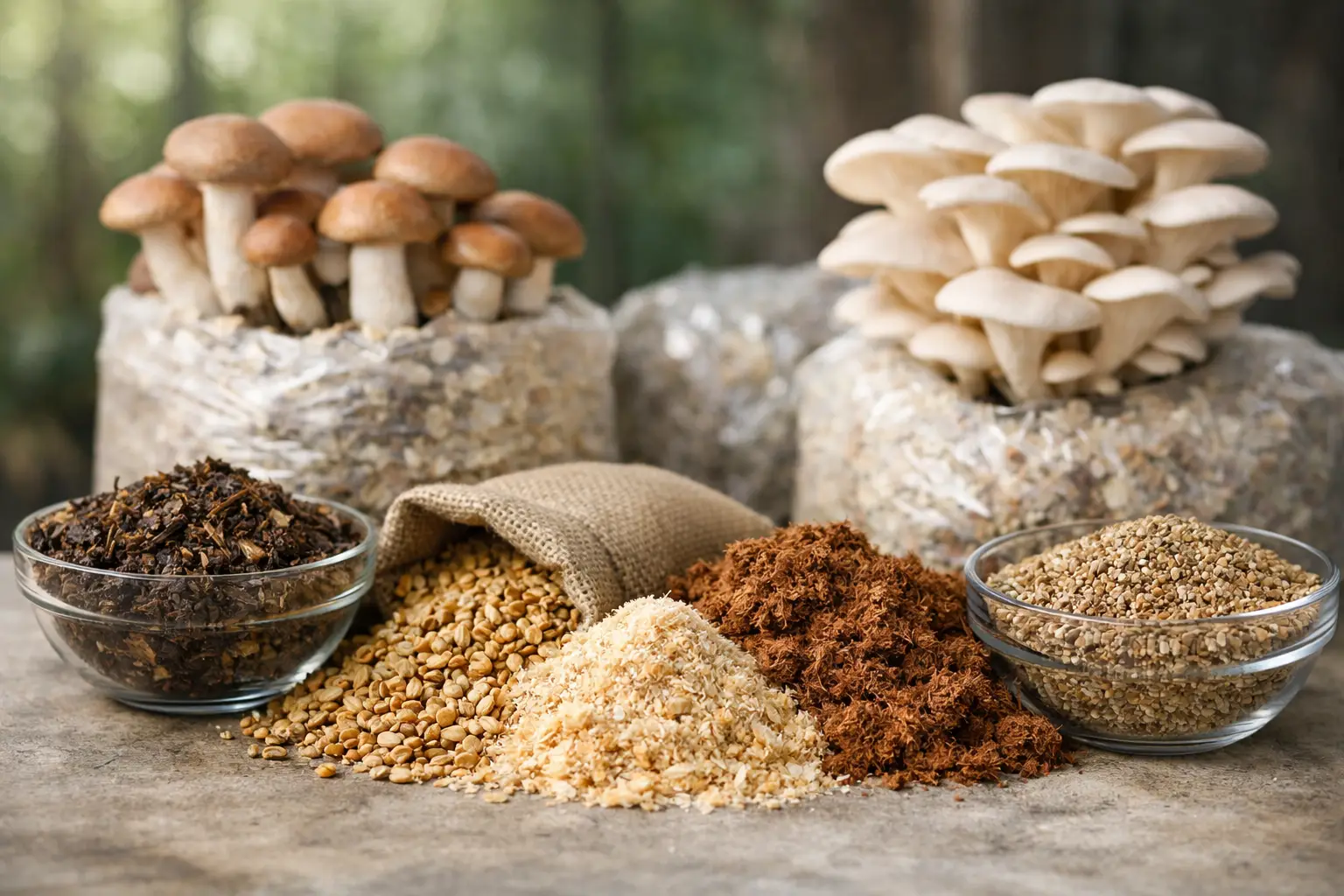
A great culture can only express what its growing medium allows. If colonization stalls, fruits come in small, or contamination keeps winning, the issue is often not the genetics or inoculation technique. It is the substrate. This substrate selection guide helps you choose a medium that fits the species you are growing, the format you are using, and the level of hands-on work your setup can support.
Substrate is not just a place for mycelium to sit. It is the food source, water reserve, and physical structure behind the grow. Getting it right means looking beyond what is cheap or easy to find and matching the material to what the species naturally prefers.
Start With What the Species Eats
The most useful question is simple: what does this mushroom grow from in nature? Wood-loving species tend to perform best on hardwood-based substrates. Straw-loving species are more at home on agricultural fibers. Species that thrive in nutrient-rich soil and compost generally need richer blends than plain sawdust can provide.
Oyster mushrooms are famously flexible and can run on hardwood pellets, straw, soybean hull blends, and several agricultural byproducts. That flexibility makes them a strong option for growers testing new materials. Lion’s mane and shiitake are more particular. They generally reward growers who use hardwood-forward formulations with enough structure for a long, steady colonization cycle.
Button-style mushrooms and other compost-oriented varieties are a different category. They rely on a properly prepared, nutrient-dense compost substrate and often a casing layer to create the right fruiting environment. Trying to force every species onto the same all-purpose blend is one of the fastest ways to create disappointing results.
Substrate Selection Guide: Know Your Main Options
Hardwood sawdust and hardwood pellets
Hardwood is the go-to base for many gourmet and medicinal species. It provides lignin and cellulose that wood-loving mycelium is built to break down. Sawdust offers a fine, even texture, while hardwood pellets are compact, clean, easy to store, and expand into hydrated sawdust when water is added.
Pellets are especially practical for bag cultivation. Choose untreated hardwood pellets with no fuel additives, binders, or fragrance. Oak, maple, beech, and other hardwoods are generally reliable choices. Softwood-heavy products can work for certain species, but the resins and different nutrient profile make them less universal.
The trade-off is preparation. Hardwood-based supplemented substrates usually need sterilization, especially when they include added nutrition. Plain hardwood materials can sometimes be pasteurized depending on the species and process, but supplementation raises the contamination stakes.
Straw
Straw is inexpensive, widely available, and an excellent match for aggressive species that colonize quickly. Wheat straw is common, though oat and rye straw can also be used. It holds air well when chopped and hydrated correctly, which supports fast mycelial movement through the substrate.
Straw is not the same as hay. Hay contains more seeds and nutrient-rich plant matter, making it far more contamination-prone. Clean, dry straw with a fresh smell is what you want.
Pasteurization is usually the practical route for straw. It reduces competing organisms without making the material completely sterile. That is a feature, not a flaw, when working with vigorous species that can establish themselves quickly. Straw can dry out faster than dense sawdust blends, so field capacity deserves attention throughout the process.
Manure-based and compost-based blends
Nutrient-rich blends have their place, but they are less forgiving than hardwood or straw. Properly aged manure, compost, coco coir, and gypsum may be combined for species that prefer richer substrates. The quality of the source material and the preparation method matter as much as the recipe itself.
These blends require careful hydration and clean handling. Overly wet material becomes dense and oxygen-poor. Under-prepared material can carry a high contamination load. If you are new to bulk substrate work, start with a proven recipe and a manageable batch size rather than improvising with multiple additives at once.
Masters’ mix and other supplemented blends
A common high-performance option for wood-loving gourmet mushrooms is a hardwood and soybean hull blend, often called Masters’ mix. The added soybean hulls increase available nutrition and can produce larger yields than unsupplemented hardwood alone.
That output comes with a condition: rich substrate attracts competitors. A supplemented bag needs dependable sterilization, clean inoculation practices, and appropriate spawn rates. It is a strong option when your process is dialed in, not necessarily the first choice when you are still learning moisture control and sterile workflow.
Match the Substrate to Your Grow Format
Your container matters as much as the material. A filter-patch bag filled with supplemented hardwood behaves differently from a straw bucket or a monotub filled with a bulk blend.
For all-in-one bags and grain-to-bulk projects, a hydrated, properly prepared bulk substrate with even texture is easier to mix and colonize. For fruiting blocks, hardwood pellets and supplemented sawdust create a dense, stable block that holds moisture well. For bucket grows, chopped pasteurized straw remains one of the most accessible formats because it is simple to layer, compact, and fruit from side openings.
Ready-to-inoculate products simplify the preparation stage for growers who want to focus on culture selection, clean inoculation, and fruiting conditions. They are also useful for comparing how different cultures perform on the same substrate without changing several variables at once.
Moisture Is the Make-or-Break Variable
Even a perfect substrate recipe fails if its water content is off. Mycelium needs moisture, but it also needs oxygen. A soaked, muddy substrate compacts and creates conditions where bacterial issues can take hold. A dry substrate colonizes slowly and may not have enough water stored for a strong flush.
The classic field-capacity test is still useful. Squeeze a handful of hydrated substrate firmly. It should feel thoroughly moist and release only a few drops, not stream water. This is not a laboratory measurement, but it gives home growers a repeatable reference point.
Different materials hold water differently. Fine sawdust retains moisture efficiently but can compact if packed too tightly. Straw creates more air space but may need more frequent attention. Coco coir expands substantially when hydrated, so measure your water carefully before mixing in supplements or other materials.
Preparation Method Should Follow Nutrition Level
Pasteurization and sterilization are not interchangeable terms. Pasteurization reduces the microbial load and is commonly used for straw and certain lower-nutrient bulk materials. Sterilization removes a much broader range of organisms and is generally required for supplemented sawdust, grain, and other nutrient-dense media.
The more food you add, the cleaner your process needs to be. That is the central trade-off. A plain hardwood substrate may colonize more slowly but offers fewer easy nutrients to molds and bacteria. A heavily supplemented blend can deliver impressive yields, but only if your sterilization and inoculation practices are consistent.
Avoid treating cleanliness as an afterthought. Use clean containers, inspect raw materials before hydration, and do not assume a good culture can overcome a poorly prepared substrate. Mycelium is competitive, but it is not magic.
Choose for Your Actual Setup, Not an Ideal One
The best substrate is the one you can prepare correctly and repeat reliably. A grower with a pressure sterilizer, filter bags, and a clean inoculation area can make excellent use of supplemented hardwood blocks. A grower with limited equipment may get more dependable results from pasteurized straw and a fast-colonizing edible species.
Consider storage and sourcing too. Hardwood pellets are compact and available year-round in many areas. Straw can be economical but bulky. Compost-based ingredients can vary dramatically by supplier and may bring inconsistency into every batch. Buying a cheap substrate that performs differently each time is rarely a bargain.
If you are choosing between two materials, run a small side-by-side trial. Use the same culture, inoculation rate, container type, and fruiting conditions. Track colonization speed, contamination, pinset, yield, and how much effort each option required. That data is more useful than a one-size-fits-all recommendation.
Myceli Nation is built for growers who like having options, but more choices only help when each one has a purpose. Start with the species, select a substrate that suits its natural appetite, then choose the preparation level your workflow can handle. A repeatable grow built on the right medium will teach you far more than chasing the most complicated recipe.