
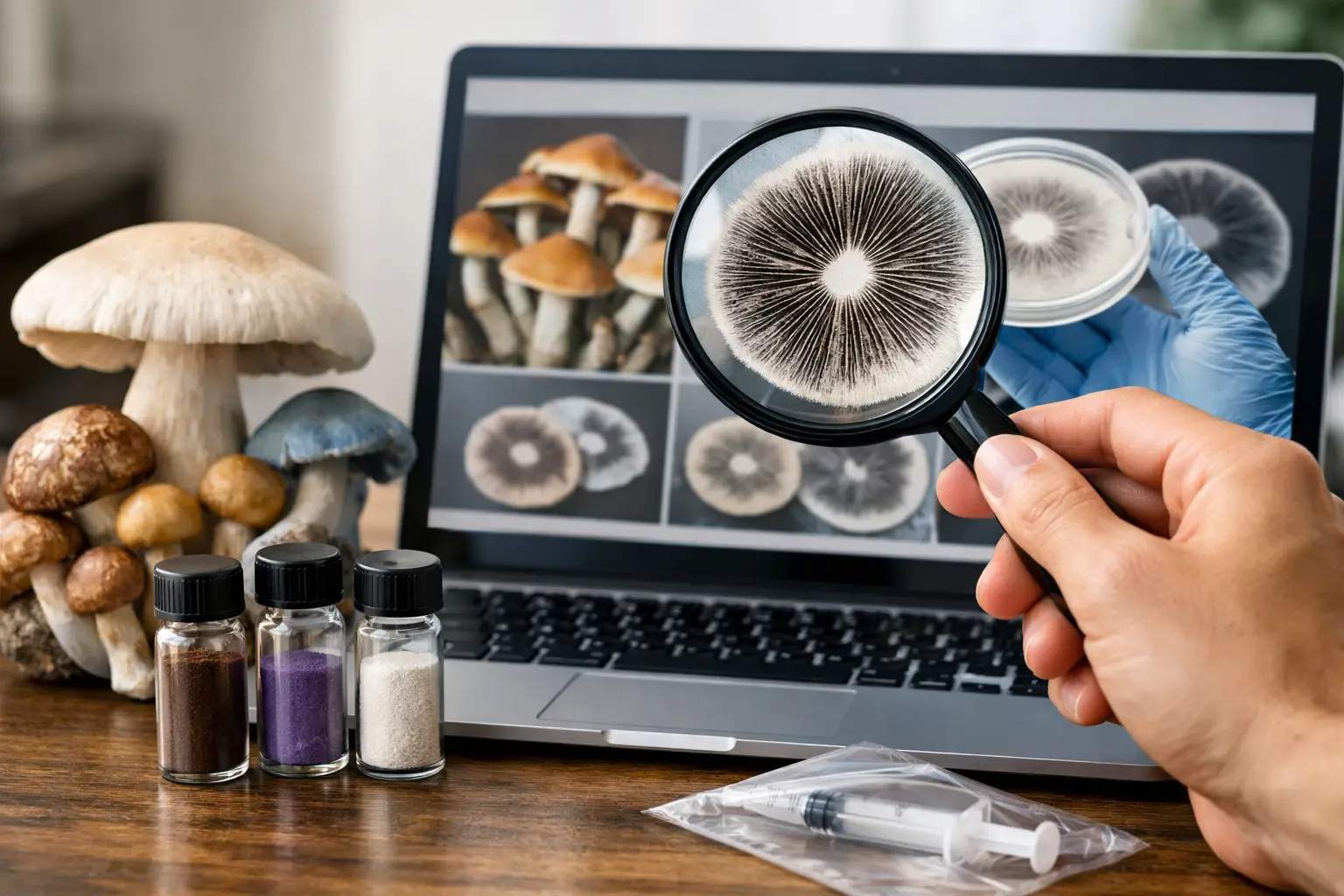
A spore listing can look simple until you are comparing formats, strain names, pack sizes, shipping terms, and availability across several storefronts. When you buy mushroom spores online, the best choice is rarely just the lowest price. It is the listing that clearly tells you what you are receiving, fits your intended legal use, and comes from a seller that understands the products well enough to organize them properly.
For collectors, microscopy-focused buyers, and gourmet cultivation enthusiasts, online shopping opens up far more variety than a general garden supplier can offer. The trade-off is that you need to evaluate the shop, the format, and your local rules before checking out. A smart purchase starts with knowing what matters.
Buy Mushroom Spores Online by Starting With the Format
The first decision is not always the strain. It is the format that makes the most sense for your collection, research setup, or edible cultivation plans. Spore syringes, spore prints, and ready-to-inoculate products serve different needs, and treating them as interchangeable can lead to a disappointing order.
A spore syringe is a popular choice because it is compact, clearly portioned, and easy to store according to the seller’s handling guidance. For microscopy work, it gives you a liquid sample that can be observed and compared with minimal extra preparation. Buyers who already know the varieties they like often prefer syringes because browsing and reordering is straightforward.
Spore prints are especially appealing to collectors and microscopy enthusiasts who value the physical presentation of a sample. A quality print should be packaged with care and identified clearly. The format also makes it easier to build a reference collection across distinctive varieties without committing to a large bundle of any one selection.
For legal edible mushroom cultivation, live cultures and ready-to-inoculate products are often the more direct option. These products are designed for growers who want to work with recognized gourmet varieties rather than begin with spores. Read each product description closely, since handling expectations, shelf life, and storage needs can differ from one culture to the next.
Read Product Descriptions Like a Mycologist
A strong listing does more than give a catchy name and a product photo. It identifies the product format, states the quantity or size, explains what is included, and gives practical information about storage or shipping. That level of detail helps you compare like with like.
Start with the basics. Confirm whether the listing is for a syringe, print, culture, bundle, or another product type. Check the listed volume or count rather than assuming two similarly priced items contain the same amount. If the product is part of a pack, look for the exact varieties included and whether substitutions may occur when inventory changes.
Strain names can be useful shorthand, but they are not a substitute for a complete description. Golden Teacher, B+, Blue Meanie, and Lizard King are recognizable names within specialty mycology circles, yet the individual listing should still tell you the actual format and provide accurate product information. A well-organized catalog makes it easier to shop by category, compare fan favorites, and find the product you intended to purchase.
Photos matter, but they should support the description rather than carry it. Clear images of packaging, prints, labels, or product bundles can show that a seller puts care into presentation. Still, written details are what protect you from ordering the wrong item.
Check Local Rules Before You Place an Order
Mushroom-related laws and regulations are not uniform. They can vary by country, state, province, and city, and they may apply differently depending on the species and intended use. Before ordering, confirm that possession, purchase, shipment, and use are permitted where you live.
This is not a formality to skip at checkout. A responsible buyer understands local requirements before placing an order and uses products only in lawful ways. International shoppers should be especially careful: customs rules, import restrictions, and delivery timelines can differ sharply from domestic shipping.
A reputable specialty retailer should communicate shipping coverage and any relevant ordering limitations clearly. If a policy is unclear, do not make assumptions based on a forum post or a product available elsewhere. Rules change, and the location that matters is yours.
What Separates a Good Spore Shop From a Random Listing
The internet makes niche products easy to find, but not every seller offers the same shopping experience. A reliable mycology storefront feels intentional. Categories are clear, product names match the descriptions, and the catalog does not force you to guess whether an item is a print, syringe, or culture.
Inventory breadth is also valuable when it is organized well. A shop with individual options, multi-packs, edible cultures, and cultivation supplies lets you compare formats in one place instead of piecing together an order from several unknown sources. Bundles can be a good value for collectors who want variety, but only when the included products are listed plainly.
Look at the store’s overall signals of specialization. Does it provide useful educational content alongside products? Are best sellers and category pages easy to browse? Is there a clear way to understand shipping expectations and contact the business? A focused retailer such as Myceli Nation builds trust by making the path from discovery to selection less fragmented.
Avoid listings that rely on vague claims, unclear photos, or urgency without details. A discount is only useful if you understand exactly what you are purchasing. The better move is usually to choose a transparent seller and a product format that matches your purpose.
Compare Value Beyond the Sticker Price
A single low price can be misleading. Consider the product amount, packaging, selection, shipping cost, and whether the seller offers a bundle that genuinely fits your interests. A collector buying multiple distinct varieties may get better value from a thoughtfully assembled pack than from several separate orders. Someone focused on one edible culture may be better served by a single, clearly labeled option.
Shipping deserves its own comparison. Check whether the shop ships to your location, how orders are packaged, and what the stated processing window is. For international orders, factor in the possibility of delays and review the destination’s import rules before purchasing. Fast shipping is helpful, but accurate fulfillment and appropriate packaging matter more.
Do not overbuy simply because a promotion is running. Spores, prints, cultures, and other mycology products have different storage considerations. Order an amount you can store properly and use lawfully within the product’s recommended timeframe. Buying with a plan is more useful than filling a cart with options you have not researched.
Build a Better First Order
If you are new to specialty mycology shopping, keep your first order focused. Choose one or two formats you understand, read the listings fully, and confirm the seller’s shipping policy before payment. This gives you a clear baseline for future purchases and prevents the common mistake of ordering a product that does not match your intended use.
Experienced buyers can take a more curated approach. Use category pages to compare familiar names, explore a new print for a collection, or add an edible culture alongside the supplies you already need. The goal is not to chase the biggest catalog. It is to build a selection that is useful, legal, and easy to keep organized.
The right online order should feel considered, not rushed. Choose clear product information over hype, verify local rules before checkout, and let your actual interest in mycology guide the cart. That is how a specialty purchase becomes part of a collection or cultivation setup you are genuinely excited to return to.