Posted on

Mushroom Microscopy for Clearer Spore Work

Mushroom Microscopy for Clearer Spore Work

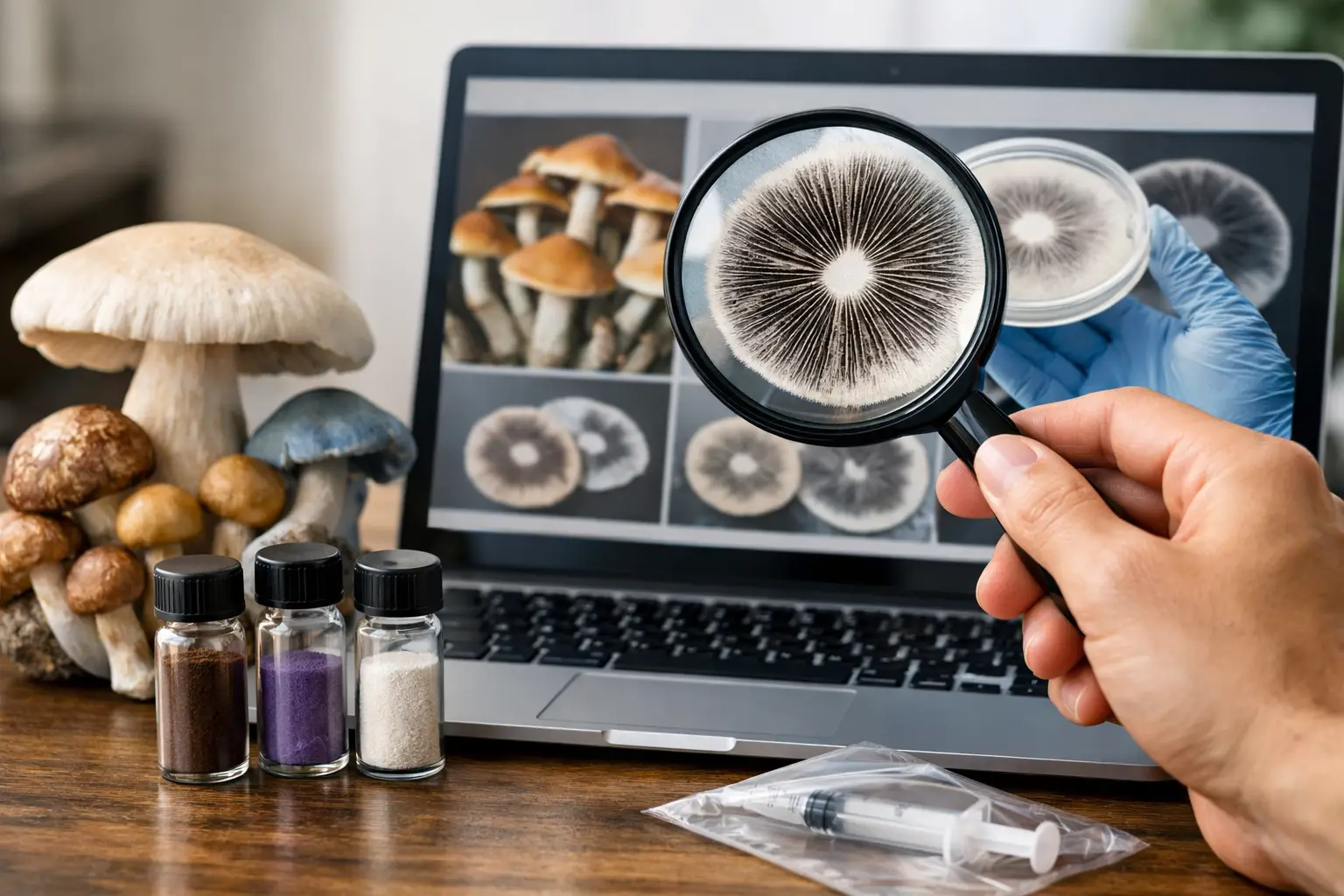
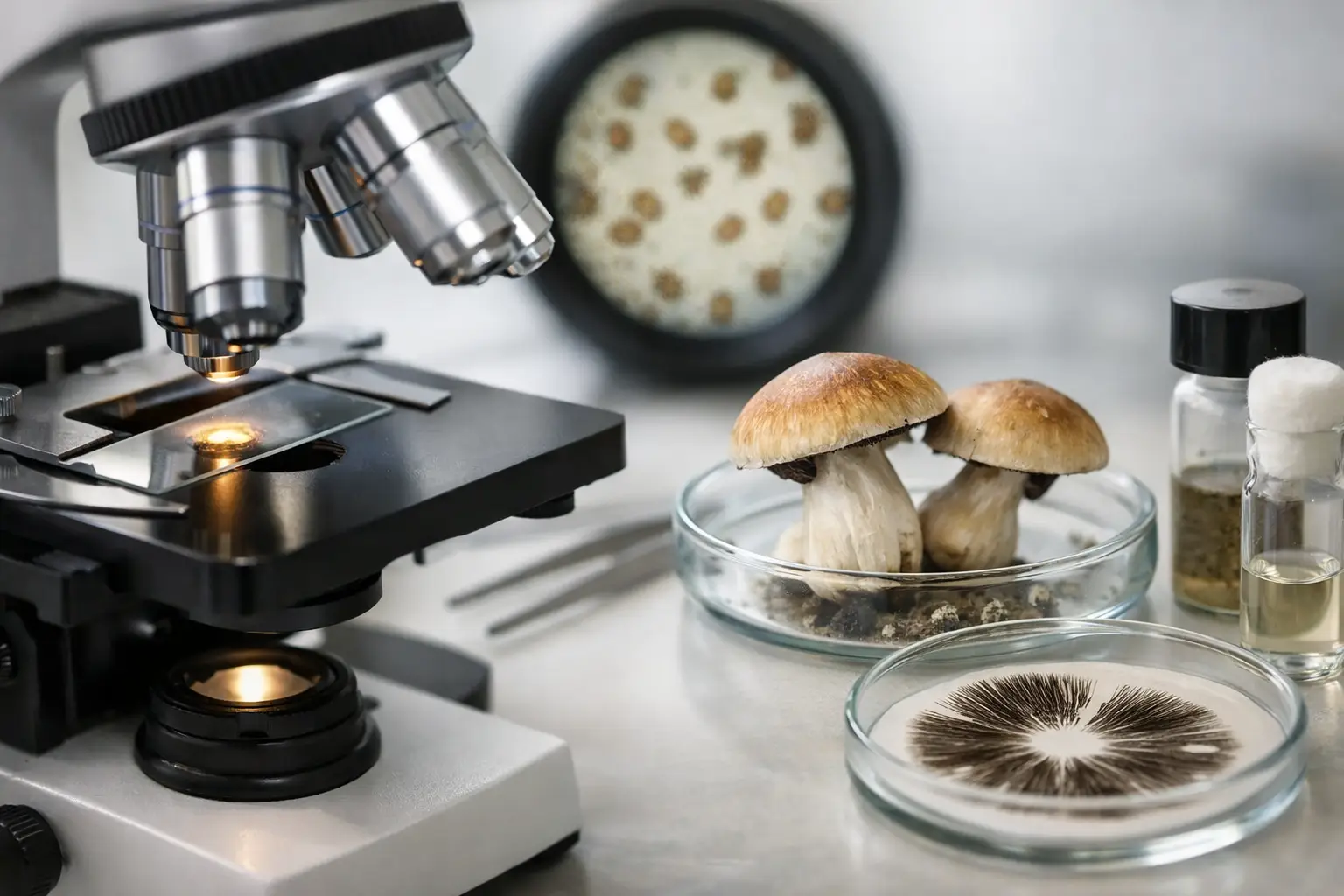
A spore print can tell you a lot before it ever reaches a slide: color, density, freshness, and whether your handling has stayed clean. Mushroom microscopy takes that first read further. Under magnification, a print becomes a field of individual spores with measurable shapes, surfaces, and colors that help you build better records, compare collections, and appreciate the real variation between mushrooms.

For collectors and microscopy-focused hobbyists, this is not about chasing a single perfect image. It is about creating a repeatable workflow. A clean slide, the right amount of moisture, and a few careful observations will teach you more than rushing through expensive gear ever will.

What mushroom microscopy can show you

At the basic level, mushroom microscopy lets you inspect spore morphology. Size, shape, wall thickness, ornamentation, color, and the presence or absence of a germ pore are all details worth recording. Some spores appear smooth and oval, while others can look angular, elongated, dark-walled, or subtly textured depending on the sample and the optics.

A microscope also reveals whether a print contains a reasonably consistent spore population. Variation is normal. A single field may include spores at different orientations, a few damaged specimens, and debris from the print itself. The goal is not to expect identical spores in every view. Instead, look for a recurring range of traits across multiple fields of view.

Microscopy works especially well alongside the observations you already make: cap and gill features, print color, substrate, growth habit, and collection notes. Spores alone rarely settle every identification question, particularly with wild mushrooms. Treat the slide as one useful piece of evidence rather than a shortcut around careful documentation.

Build a sensible microscopy setup

You do not need a lab packed with specialty equipment to get started. A compound microscope with 400x total magnification is enough to see basic spore shape and color. A model capable of 1000x with an oil-immersion objective gives a closer look at finer detail, but it also demands better technique. Start with the magnification you can use confidently.

For a practical bench setup, keep clean glass slides, cover slips, a fine needle or inoculation loop, droppers or pipettes, distilled water, lens paper, and a notebook close at hand. A small slide storage box is helpful once you begin keeping comparative samples. A phone adapter can be useful for documenting what you see, though a hand-drawn observation with measurements is often more reliable than a blurry image.

Lighting matters as much as magnification. Begin at low power to locate the sample, then increase magnification slowly. Adjust the condenser and iris diaphragm until the spores show clear edges without washing out the field. Too much light can flatten fine details. Too little light makes every speck of debris look more dramatic than it is.

A 1000x oil-immersion setup is best reserved for sessions where you are ready to work deliberately. Oil should only contact the oil-immersion objective, and it needs to be cleaned off promptly with proper lens paper. If that sounds like more maintenance than you want, there is no shame in doing excellent work at 400x first.

Choose a sample that gives you a fair read

Fresh, dry, well-kept prints tend to make slide preparation easier. If a print has absorbed moisture, picked up dust, or been handled repeatedly, you may see extra debris and clumped spores. That does not make it worthless, but it can make the first viewing session frustrating.

Work with a very small amount of material. Beginners often add too much, creating a thick dark layer where individual spores overlap. You want a light dusting in the mounting drop, not a mound. When in doubt, use less than you think you need. You can always prepare a second slide.

How to prepare a clean spore slide

Start by cleaning the slide and cover slip so lint or fingerprints do not become part of the mystery. Place a small drop of distilled water in the center of the slide. With a clean needle, transfer a tiny trace of spores into the drop and gently disperse them. Avoid grinding the sample into the glass, which can damage delicate material and introduce larger fragments.

Lower the cover slip at an angle, allowing one edge to touch the water before releasing it. This method helps reduce trapped air bubbles. A few bubbles are common and not a disaster, but they are distracting under higher magnification. If the drop floods beyond the cover slip, blot the outer edge carefully with clean absorbent paper rather than pressing down on the glass.

Give the slide a minute to settle. Then begin on the lowest objective, focus on the cover slip edge, and move toward the area where the spores are dispersed. Once you find a clear zone, increase magnification. At higher power, use fine focus only. Large focus adjustments are the fastest way to lose the field you just found.

Water mounts are ideal for a straightforward first look. Other mounting media and stains can improve contrast or preserve samples, but they introduce variables that are best explored after you are comfortable with basic wet mounts. If you change your medium, note it in your records. A spore can look different depending on the preparation method and lighting.

What to record while you observe

Good microscopy notes turn a one-time view into a collection you can actually use later. Record the date, sample label, source format, mounting medium, microscope magnification, and any notable observations. Add the print color as seen with the naked eye, not just its apparent shade under the microscope.

For spore measurements, measure a useful sample size rather than choosing the biggest or most photogenic spores in the field. Record a range for length and width, then note the general shape. Are most spores broadly oval, narrowly elliptical, cylindrical, or irregular? Do they look smooth? Is a pore visible at one end? Are the walls pale or deeply colored?

It helps to write what you actually see before trying to name it. “Mostly smooth, dark brown, oval spores, with a visible pore on many specimens” is stronger documentation than a quick conclusion based on memory. If you revisit the sample months later, precise notes give you something real to compare.

Common slide problems and simple fixes

If your field is crowded, make another slide with less material. If spores are drifting constantly, use a smaller drop or wait longer for the mount to settle. If everything looks hazy, check the cover slip, objective lens, and condenser before assuming the sample is poor.

If you cannot find spores at all, go back to low power and scan systematically. The sample may be sitting near the edge of the drop or buried in a dense patch of debris. If the spores are too faint, adjust illumination gradually instead of immediately reaching for higher magnification.

Contamination can be educational, too. Fibers, bacteria, dust, and fragments of mushroom tissue all have their own appearance. The key is recognizing that not every object on a slide is a spore. Comparing several areas of the same mount helps separate the repeating pattern from random noise.

Make microscopy part of your mycology routine

The most useful microscope is the one you return to. Keep your sessions short at first: prepare one or two slides, observe them carefully, record what you find, and clean the equipment. That pace builds confidence without turning every sample into a long project.

As your collection grows, compare prints prepared with the same method. Consistent lighting, magnification, and notes make those comparisons more meaningful. Myceli Nation is built for enthusiasts who enjoy that kind of hands-on curiosity, whether they are collecting prints, working with cultures, or simply learning how much detail a microscope can reveal.

A clear slide will not answer every question, but it will sharpen the questions worth asking. Start small, keep your observations honest, and let each session add one more useful layer to your mycology knowledge.

Posted on

What Causes Agar Contamination in Culture?

What Causes Agar Contamination in Culture?

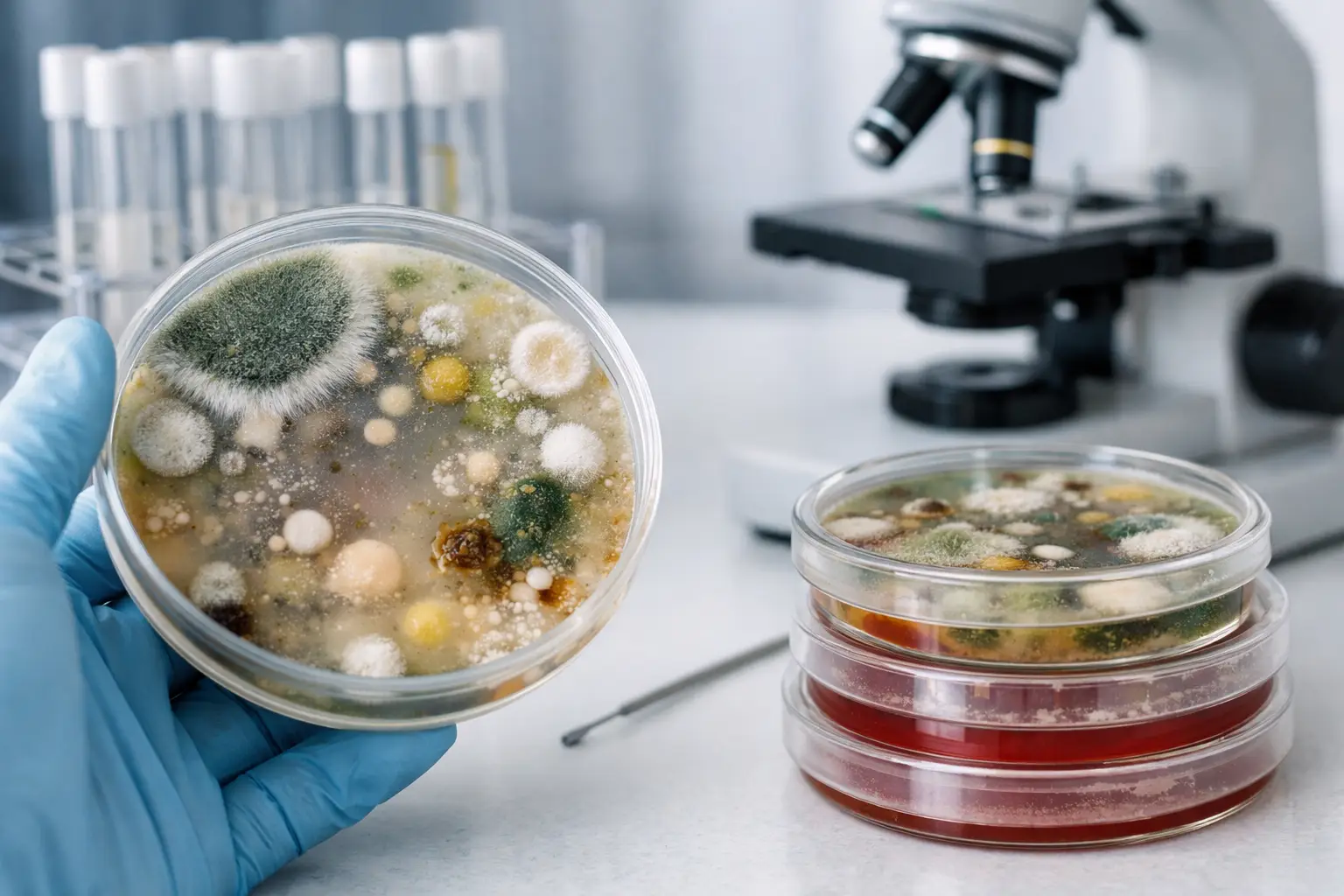
A plate can look perfect when it leaves the pressure cooker and still show a fuzzy green patch, wet sheen, or fast-moving colony a few days later. So, what causes agar contamination? Usually, it is not one dramatic mistake. It is a break somewhere in the clean workflow: during media prep, pouring, inoculation, incubation, or from the sample itself.

For cultivators working with spores, tissue, or edible cultures, agar is where clean genetics become visible. It is also where small lapses become impossible to ignore. Learning to read contamination patterns and trace their source saves plates, time, and frustration.

What Causes Agar Contamination Most Often?

Agar contamination happens when bacteria, mold spores, yeast, or other unwanted organisms land on or enter nutrient agar before the intended mycelium can fully claim the surface. Agar is a rich food source. The same nutrients that support healthy mycelial growth can support nearly every airborne microbe in a room.

The most common causes are unsterilized media, contaminated tools or work surfaces, poor airflow control, weak plate seals, and dirty starting material. The timing and appearance of growth can help narrow down which one is responsible.

If several unopened plates contaminate, suspect your media preparation, pouring environment, plates, or lids. If clean plates contaminate only after you transfer a sample, focus on your technique or the source culture. If a plate stays clean for days and then develops growth around the edge, sealing or incubation conditions may be part of the problem.

Contamination From Agar Prep and Sterilization

Agar must be fully sterilized before it is poured. Heating media until it looks dissolved is not the same as sterilizing it. Bacterial cells and fungal spores can survive inadequate processing, then reveal themselves once the plates cool.

Pressure and time matter, but so does the volume of media in the vessel. A large bottle of agar takes longer for its center to reach sterilization temperature than a smaller container. Overfilling jars, rushing the cycle, or starting timing before the pressure cooker reaches proper pressure can leave survivors behind.

Water quality and ingredients can also contribute. Use clean water and fresh agar ingredients, and make sure bottles, jars, stir bars, and lids are washed thoroughly before sterilization. Old residue inside a bottle can harbor microbes or create uneven heating. After sterilization, avoid repeatedly opening the vessel or leaving it exposed while waiting for it to cool.

Overcooking has a trade-off. Excessive heat can darken nutrient-rich media and alter its consistency, while underprocessing raises the chance of contamination. Aim for repeatable preparation rather than trying to compensate with extra heat every time.

Problems During Pouring

Pouring is an easy place for clean agar to become dirty. Every second a lid is off is an opportunity for airborne particles to settle. A still-air box or properly used flow hood reduces that exposure, but neither replaces clean habits.

Wipe down the work area before starting. Let disinfectant remain wet for its labeled contact time rather than immediately wiping it dry. Keep movements slow, avoid reaching over open plates, and pour only as many plates as you can handle without rushing. Talking, coughing, fans, open windows, pets, and nearby traffic all add variables.

Condensation is not contamination by itself, but heavy moisture can spread contaminants across a plate and make diagnosis harder. Let poured plates set until the agar has firmed, then store them inverted so moisture collects on the lid instead of dripping onto the agar surface.

Tools, Hands, and Airflow Break the Clean Zone

A sterile scalpel, inoculation loop, or needle can become contaminated the moment it touches a nonsterile surface. The same goes for gloves. Flame-sterilizing a tool is effective only if the full working end is heated and allowed to cool without touching anything else.

Do not wave a hot blade around to cool it. That movement draws it through room air. Let it cool briefly inside your clean workspace, or touch it to a clean, unused area of agar before making the transfer. A tool that is too hot can damage the mycelium, while one that is not properly sterilized can carry contamination plate to plate.

Gloves are useful, but they are not automatically clean. Sanitize gloved hands before work and again whenever they touch a phone, cabinet handle, spray bottle, or anything outside the clean zone. Keep sleeves, hair, and loose clothing away from open plates. The goal is not a perfectly sterile home. It is a controlled space where the sample has the fewest possible chances to pick up hitchhikers.

Still-Air Boxes and Flow Hoods Are Different Tools

A still-air box works by limiting air movement. Once the box is cleaned and allowed to settle, work slowly so you do not create turbulence inside it. Fast arm movements, frequent opening, or spraying the air right before a transfer can stir particles up instead of reducing them.

A laminar flow hood uses filtered moving air to push contaminants away from the work area. It can be highly effective, but only if the filter, fan speed, and workflow are correct. Blocking the filter face with supplies or working too far off-center can compromise the clean stream. Choose the setup that fits your space and volume, then learn its limits rather than assuming equipment makes every transfer safe.

The Starting Culture May Already Be Contaminated

Not every contaminated plate means your agar work failed. Spores, liquid samples, clone tissue, and even apparently clean plates can carry bacteria or mold that are not obvious at first. Agar is valuable because it separates the sample into visible growth zones, making hidden contamination easier to isolate or discard.

A transfer from a fruit body can introduce contaminants from the outer surface, the tool, or the tissue itself. Work with clean inner tissue when possible, take a small sample, and make multiple transfers rather than trusting a single plate. With spores, germination may be uneven and multiple organisms can be present. Patience and selective transfers are often more productive than trying to rescue every plate.

If contamination appears consistently from one syringe, print, culture, or tissue source while your control plates stay clean, the source is the likely variable. Label every plate with the date, medium, source, and transfer number. Good labeling turns a frustrating mystery into a usable record.

How to Identify Common Agar Contaminants

Mycelium can vary by species and genetics, so appearance alone is not a perfect test. Still, a few patterns are common. Healthy growth usually expands from the inoculation point in an organized way, although it may be fluffy, ropey, thin, or tomentose depending on the culture and conditions.

Bacteria often look wet, shiny, creamy, translucent, or slimy. They may form a puddle-like halo around the inoculation point and can slow or distort mycelial growth. Yeast may appear as smooth, moist, off-white or tan colonies. Mold often starts as a fast-growing patch with a distinctly different texture or color, then may turn green, black, gray, or powdery as it matures.

Do not open a suspicious plate to inspect it more closely. Keep it sealed, observe through the lid, and remove it from the grow area. A contaminant can sporulate quickly, and opening it can turn one failed plate into a room-wide cleanup project.

A Better Troubleshooting Routine

The fastest way to improve your agar success is to change one variable at a time. Prepare a small batch of plates and leave several unopened as controls. If those controls stay clean, your media and pouring process are probably sound. Then test your transfer technique with a known clean culture or make a few transfers under the same conditions.

When contamination occurs, note when it appeared, where it began, and whether it repeats across plates. Growth in the center soon after inoculation often points to the sample or tool. Growth around the perimeter may suggest plate handling, lid gaps, or airborne exposure. Contamination that appears in multiple unopened plates is a signal to revisit sterilization and pouring.

For a consistent home workflow, keep these practices in rotation:

  • Clean the workspace and allow disinfectant contact time before each session.
  • Sterilize agar, vessels, and tools with a repeatable process.
  • Use minimal, deliberate movements inside a still-air box or in front of a properly functioning hood.
  • Seal and label plates promptly, then store them inverted at appropriate culture temperatures.
  • Keep control plates from each batch so you can identify where a problem began.

Clean Agar Is Built Through Repetition

Contamination is part of learning culture work, not proof that you are bad at it. Even experienced cultivators lose plates. The difference is that a repeatable process makes failures easier to diagnose, while a rushed process makes every contamination event feel random.

Build your workflow around clean media, controlled air, sterile tools, and carefully tracked source material. Over time, your plates will tell you exactly where the weak point is – and every clean transfer is one more step toward a stronger mycelium library.

Posted on

Penis Envy Mushrooms: A Collector’s favourite

Penis Envy Mushrooms: A Collector’s favourite

Few mushroom names are as instantly recognizable as Penis envy mushrooms. Their unusual morphology, contested lineage stories, and wide range of related labels have made them a fixture in collector conversations for years. But the name alone does not tell you exactly what you are looking at – and that distinction matters when comparing spores, prints, cultures, and vendor descriptions.

For mycology enthusiasts, Penis Envy is less a single, fixed identity than a family of recognizable traits and community-used names. Knowing how those traits, labels, and formats fit together makes it easier to shop thoughtfully, catalog accurately, and avoid treating a dramatic listing name as a guarantee.

Why Penis Envy Mushrooms Stand Apart

The defining visual idea behind Penis Envy is easy to understand: a notably thick, dense stem paired with a cap that may remain small, rounded, or less open than the classic umbrella-shaped mushroom silhouette. Mature examples can look compact and heavy-bodied rather than tall and delicate. That distinctive form is a major reason the variety became so well known.

However, mushroom morphology is variable. Environmental conditions, specimen maturity, handling, and lineage stability can all influence how a sample presents. A photo showing an exceptionally thick stem or tightly formed cap can be useful reference material, but it should never be treated as a standalone identification tool.

The name also carries a strong reputation within enthusiast communities. That reputation has led to plenty of exaggerated claims, inconsistent labeling, and lookalike listings. The practical takeaway is simple: evaluate the source, the stated lineage, the format, and the documentation together rather than relying on a name or photo alone.

The traits collectors often notice

Collectors commonly associate Penis Envy-type specimens with denser-looking stems, compact caps, slower or less typical-looking cap expansion, and dark blue bruising after handling. These are descriptive observations, not a field test or a guarantee of identity. Bruising can occur across multiple mushroom types and may vary substantially between samples.

Microscopy provides a more useful layer of context than surface appearance. Spore characteristics, print quality, labeling, and the condition of the sample can help a collector build a more complete record. Even then, morphology and microscopy should be viewed as parts of a larger identification process, not shortcuts.

Penis Envy Mushrooms Are Not One Fixed Lineage

One of the biggest sources of confusion is the assumption that every Penis Envy listing represents the same exact genetic line. In practice, vendors and communities may use the name for related phenotypes, established selections, cross-named varieties, or their own working labels. Two products carrying similar names can differ in presentation, history, and consistency.

That does not automatically make a listing unreliable. It means the details matter. A stronger product description explains what is being offered in direct terms: the stated variety name, the product format, the intended microscopy or collection use, and any relevant notes on appearance or source history. Vague superlatives are much less useful than specific information a buyer can record and compare.

Lineage stories are also worth treating with healthy skepticism. Mycology culture is full of memorable origin stories, but stories often get condensed or altered as a name travels from one collector to another. If provenance is important to you, preserve the label as sold, note the seller and date, and keep your own reference records instead of relying on forum lore alone.

Popular Penis Envy Labels and Variants

The wider Penis Envy category includes several names that appear frequently in specialty collections. Not every seller uses these labels in exactly the same way, so they are best understood as market and community reference points.

  • Original Penis Envy: Usually used for a classic, thick-stemmed PE-style presentation. The exact history attached to this label can vary by source.
  • Albino Penis Envy: Often shortened to APE, this label is associated with pale or reduced-pigment appearances. It is one of the most recognized names in the broader PE family.
  • PE6: A long-circulating label commonly described as a PE-related cross or selection. Details may differ across catalogs.
  • Uncut Penis Envy: A community-used name that generally refers to a particular PE-style phenotype or selection rather than a universal standard.
  • Melmac: Frequently discussed alongside PE varieties because of its robust, dense appearance. Some vendors treat it as PE-adjacent, while others describe it as separate.

These labels are useful for browsing and conversation, but they are not substitutes for clear sourcing. If you are building a reference library, catalog each item under the seller’s full name first. You can add common shorthand afterward, but keep the original product label attached to your notes.

How to Compare Listings Without Guesswork

When several listings use related names, start with the information that can actually be verified. Product photos can show general presentation, but a detailed description and consistent source practices are more valuable over time.

Look for clarity around the format being sold. A spore print, spore syringe, swab set, and ready-to-inoculate product are not interchangeable from a collector’s perspective. Each has different handling expectations, documentation needs, and practical uses. A well-organized catalog should make the product type obvious before you add it to your collection.

It also helps to assess whether the seller distinguishes between a phenotype name and a broad category name. For example, a listing that simply says “Penis Envy” may be perfectly suitable for someone seeking a general PE reference. A collector looking for a specific variant, however, should seek a more precise label and supporting notes.

Freshness and storage matter, too. Spore materials and prints should be packaged and labeled in a way that supports clean organization. Once received, keep products in their original labeled packaging whenever possible, document the arrival date, and store them according to applicable product guidance and local requirements. Good records turn a growing collection into a useful mycology archive.

Format Matters for Collectors

A spore print is a classic format for microscopy-focused collectors. It is compact, visually interesting, and easy to catalog by date, supplier, and stated variety. Print quality can vary, so collectors often value clean presentation, clear labeling, and protective packaging as much as the name on the label.

Spore syringes offer a different kind of convenience. Their standardized packaging can make inventory management straightforward, especially when a collection includes multiple varieties. For buyers comparing options, the key is not which format is universally better. The better choice depends on the purpose of the purchase, local rules, and how you prefer to document your materials.

Ready-to-inoculate products and cultures are more specialized formats. Availability, lawful use, and restrictions can vary considerably by location. Before ordering, confirm that the format you want is permitted where you live and that you understand the seller’s stated use and handling information.

Legal and Responsible Collecting

Mushroom-related laws vary by country, state, city, and product format. A name that is widely discussed online is not automatically lawful to possess, study, ship, or use in every location. Responsible collectors check their local regulations before placing an order and do not ask vendors to mislabel shipments or work around restrictions.

Responsible sourcing also means avoiding overconfident identification claims. Never consume a mushroom or specimen based on an online photo, a strain name, or a casual comparison. Misidentification can carry serious health risks. Keep collection activities focused on lawful, clearly understood purposes and treat labels as records, not guarantees.

For sellers and buyers alike, transparent communication is the standard worth supporting. Clear product categories, accurate descriptions, careful packaging, and realistic expectations create a healthier marketplace than hype ever will.

Build a Better Penis Envy Reference Collection

The best collections are built with consistency, not impulse. Keep a simple record for every item: the full listing name, format, source, date received, packaging notes, and any microscopy observations. If a seller changes naming conventions later, your original documentation will still give the item context.

It is also smart to compare similar labels side by side over time. Rather than asking which Penis Envy name is “the best,” ask what information is available, how clearly the item is represented, and whether it fills a meaningful gap in your collection. That mindset turns a famous mushroom name into something more useful: a well-documented place in your personal mycology library.

Within The Mycelium Network, a thoughtful collector is never just chasing fan favorites. They are learning the language behind the labels, keeping better records, and choosing products with a clear purpose.

Posted on

How to Buy Mushroom Spores Online With Confidence

How to Buy Mushroom Spores Online With Confidence

A spore listing can look simple until you are comparing formats, strain names, pack sizes, shipping terms, and availability across several storefronts. When you buy mushroom spores online, the best choice is rarely just the lowest price. It is the listing that clearly tells you what you are receiving, fits your intended legal use, and comes from a seller that understands the products well enough to organize them properly.

For collectors, microscopy-focused buyers, and gourmet cultivation enthusiasts, online shopping opens up far more variety than a general garden supplier can offer. The trade-off is that you need to evaluate the shop, the format, and your local rules before checking out. A smart purchase starts with knowing what matters.

Buy Mushroom Spores Online by Starting With the Format

The first decision is not always the strain. It is the format that makes the most sense for your collection, research setup, or edible cultivation plans. Spore syringes, spore prints, and ready-to-inoculate products serve different needs, and treating them as interchangeable can lead to a disappointing order.

A spore syringe is a popular choice because it is compact, clearly portioned, and easy to store according to the seller’s handling guidance. For microscopy work, it gives you a liquid sample that can be observed and compared with minimal extra preparation. Buyers who already know the varieties they like often prefer syringes because browsing and reordering is straightforward.

Spore prints are especially appealing to collectors and microscopy enthusiasts who value the physical presentation of a sample. A quality print should be packaged with care and identified clearly. The format also makes it easier to build a reference collection across distinctive varieties without committing to a large bundle of any one selection.

For legal edible mushroom cultivation, live cultures and ready-to-inoculate products are often the more direct option. These products are designed for growers who want to work with recognized gourmet varieties rather than begin with spores. Read each product description closely, since handling expectations, shelf life, and storage needs can differ from one culture to the next.

Read Product Descriptions Like a Mycologist

A strong listing does more than give a catchy name and a product photo. It identifies the product format, states the quantity or size, explains what is included, and gives practical information about storage or shipping. That level of detail helps you compare like with like.

Start with the basics. Confirm whether the listing is for a syringe, print, culture, bundle, or another product type. Check the listed volume or count rather than assuming two similarly priced items contain the same amount. If the product is part of a pack, look for the exact varieties included and whether substitutions may occur when inventory changes.

Strain names can be useful shorthand, but they are not a substitute for a complete description. Golden Teacher, B+, Blue Meanie, and Lizard King are recognizable names within specialty mycology circles, yet the individual listing should still tell you the actual format and provide accurate product information. A well-organized catalog makes it easier to shop by category, compare fan favorites, and find the product you intended to purchase.

Photos matter, but they should support the description rather than carry it. Clear images of packaging, prints, labels, or product bundles can show that a seller puts care into presentation. Still, written details are what protect you from ordering the wrong item.

Check Local Rules Before You Place an Order

Mushroom-related laws and regulations are not uniform. They can vary by country, state, province, and city, and they may apply differently depending on the species and intended use. Before ordering, confirm that possession, purchase, shipment, and use are permitted where you live.

This is not a formality to skip at checkout. A responsible buyer understands local requirements before placing an order and uses products only in lawful ways. International shoppers should be especially careful: customs rules, import restrictions, and delivery timelines can differ sharply from domestic shipping.

A reputable specialty retailer should communicate shipping coverage and any relevant ordering limitations clearly. If a policy is unclear, do not make assumptions based on a forum post or a product available elsewhere. Rules change, and the location that matters is yours.

What Separates a Good Spore Shop From a Random Listing

The internet makes niche products easy to find, but not every seller offers the same shopping experience. A reliable mycology storefront feels intentional. Categories are clear, product names match the descriptions, and the catalog does not force you to guess whether an item is a print, syringe, or culture.

Inventory breadth is also valuable when it is organized well. A shop with individual options, multi-packs, edible cultures, and cultivation supplies lets you compare formats in one place instead of piecing together an order from several unknown sources. Bundles can be a good value for collectors who want variety, but only when the included products are listed plainly.

Look at the store’s overall signals of specialization. Does it provide useful educational content alongside products? Are best sellers and category pages easy to browse? Is there a clear way to understand shipping expectations and contact the business? A focused retailer such as Myceli Nation builds trust by making the path from discovery to selection less fragmented.

Avoid listings that rely on vague claims, unclear photos, or urgency without details. A discount is only useful if you understand exactly what you are purchasing. The better move is usually to choose a transparent seller and a product format that matches your purpose.

Compare Value Beyond the Sticker Price

A single low price can be misleading. Consider the product amount, packaging, selection, shipping cost, and whether the seller offers a bundle that genuinely fits your interests. A collector buying multiple distinct varieties may get better value from a thoughtfully assembled pack than from several separate orders. Someone focused on one edible culture may be better served by a single, clearly labeled option.

Shipping deserves its own comparison. Check whether the shop ships to your location, how orders are packaged, and what the stated processing window is. For international orders, factor in the possibility of delays and review the destination’s import rules before purchasing. Fast shipping is helpful, but accurate fulfillment and appropriate packaging matter more.

Do not overbuy simply because a promotion is running. Spores, prints, cultures, and other mycology products have different storage considerations. Order an amount you can store properly and use lawfully within the product’s recommended timeframe. Buying with a plan is more useful than filling a cart with options you have not researched.

Build a Better First Order

If you are new to specialty mycology shopping, keep your first order focused. Choose one or two formats you understand, read the listings fully, and confirm the seller’s shipping policy before payment. This gives you a clear baseline for future purchases and prevents the common mistake of ordering a product that does not match your intended use.

Experienced buyers can take a more curated approach. Use category pages to compare familiar names, explore a new print for a collection, or add an edible culture alongside the supplies you already need. The goal is not to chase the biggest catalog. It is to build a selection that is useful, legal, and easy to keep organized.

The right online order should feel considered, not rushed. Choose clear product information over hype, verify local rules before checkout, and let your actual interest in mycology guide the cart. That is how a specialty purchase becomes part of a collection or cultivation setup you are genuinely excited to return to.

Posted on

Golden Teacher vs B Plus: A Clear Comparison

Golden Teacher vs B Plus: A Clear Comparison

Golden Teacher and B+ are two names that show up constantly in spore collections, product searches, and collector conversations. In the golden teacher vs b plus comparison, the useful question is not which name has the bigger reputation. It is what those labels can realistically tell you about a specimen, a print, or a microscopy-ready sample – and what they cannot.

Both are familiar favorites because they are widely recognized, visually distinct in many reported examples, and easy to place within a broader collection. But strain names are shorthand, not a laboratory guarantee. For collectors and microscopy-focused buyers, that distinction is where a smart comparison starts.

Golden Teacher vs B Plus at a Glance

Golden Teacher is one of the most recognized names in the hobby. It is commonly associated with warm golden caps, a classic broad-stemmed profile, and a long-running reputation in mycology communities. Its name has become so established that it often serves as a reference point when collectors begin building a catalog of familiar varieties.

B+, written with the plus sign, has a similarly durable place in the market. Reported examples are often described as having light caramel to golden coloration, pale stems, and a generally classic appearance. The B+ name is especially common in starter collections because it is recognizable without being obscure or difficult to compare against other catalog labels.

The overlap matters. Both names are used for specimens that can share many broad visual traits. A product label may help organize a collection and communicate seller provenance, but it should not be treated as a promise that every sample will present identically under observation.

Appearance Is a Starting Point, Not Proof

When people compare Golden Teacher with B+, cap color is usually the first point of discussion. Golden Teacher is often expected to lean toward yellow-gold or ochre tones. B+ is frequently described with tan, caramel, or light brown coloration. In practice, color can shift with age, handling, storage, lighting, and natural variation.

Stem shape and overall proportions can also vary. One sample may appear sturdy and compact while another from the same labeled line looks taller or more slender. That is not necessarily evidence of a mislabeled product. Biological material is variable, and names used in the hobby do not function like a fixed visual template.

For microscopy work, spore characteristics and sample condition are more useful than internet photo matching. A clean, clearly labeled print or syringe gives a collector a better starting point than a dramatic image with no provenance. If you are comparing products, prioritize seller clarity, format, packaging standards, and the information provided with the item.

What the Names Usually Mean

Golden Teacher and B+ are trade names used across the specialty mushroom space. They carry community recognition, historical associations, and familiar merchandising value. They are helpful when you want to browse a catalog, compare available formats, or maintain a record of what is in your collection.

They do not, on their own, establish a formal genetic identity. Different vendors may work from different source material, and a name can persist through years of sharing, selection, and retelling. That is why two products carrying the same label may not look perfectly alike, especially when compared across sources.

This does not make the labels useless. It simply means they should be read in context. A reputable product listing should make the format clear, use consistent naming, and avoid pretending that a familiar strain name erases biological variation. Good cataloging supports better collecting.

Choosing the Right Format for Your Collection

The Golden Teacher vs B+ decision can be less about choosing a winner and more about choosing the format that fits your purpose. A spore print is a compact, classic option for collectors who value long-term storage and direct microscopy preparation. It also makes a strong addition to a physical archive because the label, date, and source can be documented alongside the print.

A spore syringe is often preferred by buyers who want a convenient, ready-to-observe format. The key is proper labeling and careful handling. Check that the product name, volume, and storage guidance are clearly presented before adding it to your collection.

For buyers looking at bundles, pairing Golden Teacher and B+ can make sense precisely because they are both familiar names with slightly different reported visual profiles. A two-variety set provides a more useful comparison than ordering duplicate labels from unrelated sources and expecting a controlled result.

Myceli Nation serves The Mycelium Network with recognizable varieties, collector-friendly formats, and category browsing that makes it easier to locate what belongs in your next order. Whether you are building a focused archive or exploring fan-favorite names, product transparency should remain the deciding standard.

Reputation Versus Reliable Comparison

There are plenty of strong opinions around these two names. Golden Teacher is often treated as an iconic selection, while B+ is frequently described as an approachable classic. Those reputations help explain demand, but they are not a scientific comparison and should not be used to authenticate a sample.

A more reliable comparison asks practical questions. Is the seller consistent in its naming? Is the product format appropriate for your intended microscopy or collection use? Is the item stored and shipped with care? Are you able to keep a record of the source, purchase date, and label?

Those details create a collection with real reference value. They also make future comparisons more meaningful. Instead of relying on memory or forum lore, you can examine samples with known sourcing and documented handling.

Common Questions About Golden Teacher and B+

Is Golden Teacher better than B+?

Neither is automatically better. They are both popular, recognizable labels with broad appeal among collectors. The better choice depends on whether you prefer a particular reported appearance, want a specific name in your archive, or are selecting a format that complements what you already own.

Can you identify them by appearance alone?

No. Broad visual descriptions can be useful for discussion, but they cannot provide definitive identification. Natural variation, environmental conditions, handling, and the limits of informal strain naming all affect how a specimen may appear.

Why do listings for the same name look different?

Source history and product photography can differ substantially between sellers. Lighting alone can change how cap color reads in a photo. Differences in sample age, preparation, and storage can add even more variation, so compare listing details before comparing images.

Should a collector own both?

If your goal is a well-rounded collection of recognized names, owning both can be worthwhile. Golden Teacher and B+ are familiar enough to serve as useful catalog anchors, while their individual histories and reported traits give you two distinct points of reference.

The best collection is not built around hype or a single “best” label. Choose products with clear provenance, preserve your records, and let your own careful observations give Golden Teacher and B+ their place in the collection.

Posted on

Golden Teacher Spore Syringe Review for Collectors

Golden Teacher Spore Syringe Review for Collectors

A Golden Teacher spore syringe review should start before the package is opened. For collectors and microscopy-focused buyers, the value is not in a flashy strain name alone. It is in whether the syringe arrives properly identified, professionally packaged, and backed by a seller that makes the buying process clear from product page to delivery.

Golden Teacher remains a familiar name across specialty spore catalogs because it is recognizable, widely requested, and easy to find alongside other fan-favorite varieties. That popularity also makes it worth shopping with a sharper eye. A quality review looks beyond the label and considers presentation, traceability, ordering details, and whether the vendor treats its customers like informed members of the mycology community.

Golden Teacher Spore Syringe Review: What Matters

A spore syringe is a straightforward format: spores suspended in sterile water and supplied in a sealed syringe. Its appeal is convenience. Compared with a print, it is compact, ready for microscopy preparation, and generally easier for buyers who prefer an organized, single-item format over handling loose materials.

The first point in any fair Golden Teacher spore syringe review is that visual appearance has limits. A clear-looking solution is not automatically a measure of quality, and visible specks are not a reliable stand-in for a proper microscopic assessment. Spores can be difficult or impossible to judge by eye in a sealed syringe. What buyers can reasonably evaluate is the condition of the packaging, the clarity of product information, and the care evident in fulfillment.

Labeling Should Be Specific, Not Vague

A useful label identifies the variety and gives the buyer confidence that the item was packed intentionally rather than pulled from an unmarked bin. At minimum, the variety name should be easy to read and match the order confirmation. Clear labeling matters even more when several syringes are ordered together, especially if a collector is building a varied library of recognizable names and less common selections.

Lot or batch information can be a positive sign when a seller provides it, but not every specialty retailer uses the same system. The practical standard is consistency. Product name, quantity, and packaging should align with what was advertised, while customer support should be reachable if anything arrives mislabeled or incomplete.

Packaging Reveals a Lot About the Seller

The syringe itself should arrive protected from unnecessary pressure, leaks, and rough handling in transit. A cap or protective covering, secure containment, and a package that prevents the item from moving around are basic signs of careful fulfillment. This is not glamorous, but it is where a dependable supplier separates itself from a casual listing.

Discreet, efficient shipping is also part of the experience. Buyers should be able to find shipping expectations before checkout, including available destinations, order processing details, and any weather or carrier considerations that may affect timing. Worldwide availability can be a major advantage for a specialty shop, but transparent shipping information is what makes that reach genuinely useful.

What the Golden Teacher Name Can and Cannot Tell You

Golden Teacher has strong name recognition, but strain names should be treated as catalog identifiers, not as a guarantee of a uniform biological outcome. Spores naturally carry variation. For microscopy enthusiasts, that is part of the appeal: each sample is a biological material to observe, document, and compare rather than a perfectly standardized consumer good.

That distinction is useful when reading customer feedback. A review that only says “great genetics” without describing packaging, labeling, order accuracy, or microscopy context does not tell a buyer much. More useful feedback explains whether the item arrived as described, whether the seller communicated clearly, and whether the sample was suitable for the reviewer’s lawful intended use.

A good vendor should also avoid making inflated claims around a popular name. The best product pages are specific without being theatrical. They identify the format, the variety, the quantity, and the purpose of the item while setting realistic expectations for buyers who understand the nature of spore materials.

Why Syringe Format Is a Popular Choice

For many collectors, the choice between a spore syringe and a print comes down to handling preference. Prints have their own appeal, especially for archiving and display-minded collectors. Syringes, meanwhile, provide a tidy, self-contained format that can be stored and organized with less fuss.

A Golden Teacher syringe is often a sensible pick for someone placing a mixed order. It pairs naturally with other recognizable varieties, allowing buyers to compare labels, formats, and vendor consistency across a single shipment. Bundles can be appealing here, provided the discount does not come at the expense of clear product descriptions or the ability to identify each item after it arrives.

There is a trade-off, though. A syringe is not a format that can be meaningfully judged through marketing photos. The strongest purchase signal is the seller’s track record for precise fulfillment, protective packing, and transparent policies. When comparing products, give more weight to those practical details than to dramatic product copy.

How to Evaluate a Seller Before Ordering

The product page should answer basic questions without forcing buyers to hunt for them. Look for a clear variety name, format description, quantity, price, stock status, and shipping information. A dedicated mycology storefront should also make it simple to browse related categories, whether the buyer is interested in prints, edible cultures, supplies, or other specialty offerings.

Customer service is equally relevant. Specialty products sometimes require order questions, address corrections, or help identifying what was received. A seller that offers accessible support and straightforward policies gives buyers a better experience than one that relies on vague claims and hard-to-find contact details.

Community signals matter, too, but they should be read carefully. An active educational presence, a newsletter, repeat customers, and a well-organized catalog can suggest that a shop is invested in the space for the long term. They do not replace product-level scrutiny, but they can help buyers distinguish a dedicated retailer from a short-lived storefront.

For buyers looking for broad selection, Myceli Nation positions its catalog around that convenience: recognizable favorites, specialty options, and mycology supplies in one place. The practical benefit is less time moving between fragmented sellers and more time comparing formats that fit your collecting or microscopy interests.

A Balanced Verdict for Prospective Buyers

Golden Teacher spore syringes remain popular because they are familiar, convenient, and easy to include in a broader specialty order. The format works well for buyers who value clean organization and straightforward product identification. Still, no review should treat a familiar name as a substitute for careful purchasing.

The best choice depends on what you value most. If you prioritize a compact, ready-to-use microscopy format, a clearly labeled syringe may be the right fit. If archival presentation is more important, a print may deserve a closer look. If you are building out a collection, a mixed bundle can offer variety, but only when every item is identified and the seller’s policies are easy to understand.

Before ordering, confirm that the product is lawful to possess and use where you live, review the seller’s shipping terms, and keep your expectations grounded in what a syringe can actually reveal before microscopy. A thoughtful purchase starts with a simple standard: choose the supplier that makes the details easy to verify, not the one that makes the biggest promises.

Posted on

Best Mushroom Spore Strains for Your Collection

Best Mushroom Spore Strains for Your Collection

A strain name can make a spore listing feel simple: pick the fan favorite, choose a syringe or print, and check out. But the best mushroom spore strains are not one universal ranking. The right choice depends on whether you are building a microscopy collection, comparing morphology, shopping for a recognizable classic, or looking for something less common to add to your catalog.

For collectors and microscopy-focused enthusiasts, names such as Golden Teacher, B+, Blue Meanie, and Lizard King have staying power for a reason. They are familiar across the mycology community, easy to compare with other collections, and widely discussed enough that you can develop a sharper eye for the differences that make each sample interesting. The key is knowing what a strain label can tell you – and what it cannot.

What Makes a Mushroom Spore Strain Worth Choosing?

A popular name is a useful starting point, not a guarantee. Spore samples contain genetic variation, so individual observations can differ from one sample to another. That is part of the appeal for microscopy collectors: two samples sold under the same strain name may share a recognizable lineage or community identity while still offering their own details to study.

The best choice usually comes down to three things: recognition, presentation, and purpose. Recognizable strains make it easier to compare notes and organize a collection. Clear, professionally prepared spore formats make handling and observation more convenient. Your purpose determines whether you should stick with a dependable classic, choose a distinctive exotic, or buy a bundle that gives you more variety at once.

It also pays to separate reputation from hype. A strain may be famous because it has been part of the hobby for decades, because it has a memorable name, or because collectors enjoy its visual traits. None of those factors automatically make it the best sample for every buyer. A strong collection has room for staples and curveballs.

Best Mushroom Spore Strains to Know

Golden Teacher

Golden Teacher is one of the most recognizable names in the spore world. For a new collector, it is a natural reference point because it appears so often in community conversations and strain comparisons. For an experienced enthusiast, it remains a reliable classic to keep in rotation.

Its main advantage is familiarity. When you are cataloging samples, a well-known strain gives you a shared language with other hobbyists. The trade-off is simple: because it is such a common pick, it may not satisfy someone whose collection is built around unusual or hard-to-find selections. Think of Golden Teacher as a foundation piece rather than a surprise pick.

B+

B+ has earned fan-favorite status thanks to its long-running recognition among hobbyists. It is a smart choice for anyone who wants a named strain that feels established without defaulting to the most obvious option every time.

Collectors often appreciate B+ as part of a classic lineup alongside Golden Teacher and other widely known varieties. If you are choosing between the two, there is no need to overthink a winner. Pick Golden Teacher for the iconic reference point, or B+ when you want another trusted name with its own place in the community.

Blue Meanie

Blue Meanie is a name that calls for a closer look before you add it to your cart. In mycology, common names can be used inconsistently, and Blue Meanie may refer to different species or lineages depending on the seller and context. That makes product details and accurate labeling especially valuable.

For microscopy collectors, this naming overlap is not a drawback by itself. It can be a reason to pay more attention. Verify exactly what a listing identifies, read the product format, and keep your notes specific. A collection becomes more useful when its labels preserve the distinctions that casual strain talk can blur.

Lizard King

Lizard King brings a little more personality to a collection. It is a recognizable name with a distinct identity, making it a good pick for buyers who have already covered the most common classics and want to expand their range.

The appeal here is balance. Lizard King is familiar enough that it does not feel obscure, yet it gives your catalog a different flavor from the usual Golden Teacher and B+ pairing. It works well as a single selection or as part of a mixed order designed around variety.

APE and Other Specialty Favorites

Specialty names, including APE, are often sought out by collectors who want to move beyond entry-level staples. These selections can be compelling because their reputation is rooted in unusual morphology, strong community interest, or rarity within a particular shop’s lineup.

That said, specialty does not always mean better. It may mean a more specific collecting interest, a smaller availability window, or a higher priority on documentation. If you are new to buying spores, adding one specialty selection alongside two or three established classics is often more satisfying than making your entire order a gamble on unfamiliar names.

Choose the Format That Fits Your Shelf

The strain is only half the decision. Spore syringes and spore prints serve different collecting preferences, and neither is automatically superior.

A spore syringe is a convenient, ready-to-use format that suits buyers who want straightforward handling for lawful microscopy work. It can be an easy choice when you are ordering several varieties and want consistent packaging across your selections. Look for clear labeling, secure packaging, and a supplier that identifies the strain plainly.

Spore prints appeal to collectors who value the traditional format and want something especially suitable for archiving and visual comparison. A well-presented print can feel more like a specimen than a supply item. Prints also make thoughtful additions to a collection built around taxonomy, appearance, and provenance.

If you are unsure where to start, choose one format and stay consistent for your first few purchases. Comparing like with like makes your own records more useful. Once you know whether you prefer the convenience of syringes or the archival character of prints, branching out is easy.

Build a Better Strain Lineup, Not Just a Bigger Cart

A thoughtful first lineup does not need to be huge. Start with two familiar classics, add one distinctive name, and leave room for a specialty pick when something catches your eye. Golden Teacher, B+, and Lizard King create a recognizable spread without feeling repetitive. Blue Meanie can be a great addition when the product identification is clear and you want a sample that encourages more careful comparison.

Bundles can make sense when you want breadth and already know you will enjoy every selection included. They are less useful when one or two strains are only there because the price looks attractive. Variety is valuable when it gives you meaningful points of comparison, not when it creates a drawer full of labels you never revisit.

Keep a simple collection log with the strain name, format, source, date received, and any product-specific identifiers. This small habit turns casual shopping into a collection you can actually navigate months later. It also helps you notice which names, formats, and suppliers you return to most often.

Shop With Clear Labels and Real Curiosity

The strongest spore collections are built with curiosity, not just a chase for the most talked-about name. At Myceli Nation, that means having room for the familiar staples, the specialty favorites, and the formats that make sense for your own mycology shelf. Review local laws before ordering, choose clearly identified products, and let your next strain add a genuine new point of interest to the collection.

Posted on

Mushroom Spore Syringe Guide for Smart Buyers

Mushroom Spore Syringe Guide for Smart Buyers

A mushroom spore syringe guide should do more than tell you which syringe to add to cart. It should help you recognize a well-prepared product, match it to your intended project, and handle it in a way that respects the work that goes into clean mycology. Whether you are building a microscopy collection, starting an edible culture project, or comparing fan-favorite varieties, the small details matter.

A spore syringe is simple in format: sterile water, suspended spores, and a sealed syringe fitted with a needle. But selecting the right one, storing it properly, and working cleanly can make the difference between a confident first attempt and a frustrating mystery. Here is what experienced buyers look for before, during, and after ordering.

What a Mushroom Spore Syringe Actually Is

A mushroom spore syringe contains microscopic spores suspended in sterile water. The syringe format is popular because it is compact, easy to label, and designed for controlled dispensing. With a gentle shake, the spores redistribute through the water so a small amount can be applied where it is needed for a lawful mycology, microscopy, or edible cultivation project.

Spores are not the same thing as live culture. A spore syringe begins with spores, which may need time to germinate and develop before you can evaluate the resulting growth. An edible liquid culture, by comparison, contains established living mycelium and is usually chosen when speed and consistency are the priority. Neither format is universally better. The right choice depends on whether you want to observe genetics from spores, preserve a collection, or work from an established culture.

The liquid in a syringe can look mostly clear, lightly cloudy, or show small dark clusters after spores settle. Appearance alone is not a complete quality test. Spores are microscopic, and different varieties can settle differently. Clear labeling, careful packaging, proper storage, and a trusted specialty supplier are stronger buying signals than expecting the water to look dramatically dark.

Choosing the Right Spore Syringe

Start by identifying your goal. Collectors and microscopy-focused buyers often choose varieties based on taxonomy, visual interest, or a desire to compare spore characteristics. Edible mushroom growers may prioritize species that suit their preferred growing conditions and cooking plans. If you are new to the format, do not let a long strain name make the decision for you. Read the product details, confirm the species or variety, and make sure it fits the project you actually intend to run.

A useful product listing should make the basics easy to find: the variety name, syringe volume, included needle information, handling guidance, and any relevant legal or regional restrictions. Buy from a source that treats labeling as part of quality control. A syringe you cannot confidently identify later is not a bargain, especially once your collection grows.

Consider volume realistically. More volume is not automatically more useful if your project is small. A standard syringe can support multiple carefully planned applications, while a smaller format may be ideal for testing or for buyers who want to sample a wider range of varieties. Bundles make sense when they provide genuine variety or when you already know how you will organize and use each syringe.

At Myceli Nation, the value of browsing a broad mycology catalog is being able to compare formats side by side: individual syringes, prints, edible cultures, and bundles each serve a different purpose. Shop for the format first, then narrow down the variety.

Spore Syringes vs. Spore Prints

A spore print is another compact way to collect and preserve spores. It is often favored by collectors and people who want a long-term archival format. A syringe is more immediately convenient because the spores are already suspended in sterile water and ready for controlled use.

The trade-off is preparation. Prints require you to prepare a sterile suspension before use, while syringes remove that step. If you value convenience and are working on a near-term project, a syringe is usually the straightforward choice. If you are building a catalog or prefer a compact backup format, a print can be a smart addition.

Clean Handling Starts Before the Cap Comes Off

Most avoidable problems come from rushed handling, not from the syringe itself. Before opening any package, set up a clean, uncluttered work area. Wash your hands thoroughly, disinfect the surface, and gather every item you will need so you are not reaching across the workspace halfway through the process.

Keep the syringe capped until the moment you are ready to use it. Avoid touching the needle, the cap interior, or any sterile contact surface. If the needle is packaged separately, open it only when your station is prepared. These habits are basic, but they are the backbone of reliable work.

Before dispensing, gently shake the syringe to redistribute settled spores. Do not treat it like a cocktail shaker. A few calm motions are enough. Then use steady, minimal pressure on the plunger. Forcing liquid quickly can make a precise application harder and create unnecessary mess.

If your project involves sterile media or prepared material, follow the product-specific handling instructions closely. Different materials have different moisture levels, access points, and ideal application amounts. More solution does not always mean better results. Excess moisture can create its own complications, so measured application is usually the better move.

Storage That Protects Your Purchase

Spore syringes should be kept cool, dark, and clean. Refrigerated storage is commonly preferred for longer-term holding, provided the syringe is protected from freezing and stored where it will not be crushed, punctured, or exposed to frequent temperature swings. A dedicated container or clean resealable bag helps keep labels readable and the syringe separate from household spills.

Do not freeze a spore syringe. Freezing can damage the format and create avoidable uncertainty. Leaving it in direct sunlight, a hot car, or near a heat source is equally unhelpful. If a shipment arrives during very warm or cold weather, bring it inside promptly rather than letting it sit outdoors.

Label discipline pays off fast. Keep the original label intact, then record the variety, arrival date, and intended use in a notebook or digital log. If you purchase several syringes at once, this simple habit prevents accidental mix-ups later. For collectors, a photo of each label can provide an extra backup.

Common Mistakes That Waste Good Material

The first mistake is assuming every issue is visible. A syringe may look clear and still contain spores, while a darker syringe is not automatically superior. Evaluate the supplier, packaging, label accuracy, and your own handling process instead of relying on one visual cue.

The second is skipping sterile technique because the project seems small. Contamination does not care whether you used one drop or one milliliter. Clean hands, clean surfaces, protected tools, and minimal exposure all reduce the number of variables you have to troubleshoot.

The third is treating spores and cultures as interchangeable. Spores can produce genetic variation, which is part of their appeal for observation and selection, but that variation also means outcomes may differ. A culture is often more predictable because it begins from established mycelium. Choose based on the result you need, not just the product name that sounds most familiar.

Finally, do not ignore local laws and product restrictions. Mushroom-related rules can vary by species and location. Responsible buyers confirm what is permitted where they live and use products only for lawful purposes.

A Better Way to Build Your Mycology Collection

Instead of ordering randomly, build around a clear plan. You might keep a small microscopy selection, a separate group of edible varieties, and a few prints for archival interest. Organize each item by format, date, and project type. This makes repeat ordering easier and helps you learn what formats genuinely fit your workflow.

For new buyers, one or two well-labeled syringes can teach more than a large assortment stored without a plan. For experienced enthusiasts, bundles can be worthwhile when they fill a real gap in the collection or support a series of comparisons. The best shelf is not the fullest one. It is the one where every label has a purpose.

Good mycology rewards patience, clean habits, and careful records. Start with a syringe you can identify, store it like it matters, and give every project enough attention to teach you something useful.

Posted on

How to Use a Spore Syringe for Gourmet Mushrooms

How to Use a Spore Syringe for Gourmet Mushrooms

A spore syringe is one of the most accessible ways to begin a legal gourmet mushroom project, but it is not a shortcut around clean technique. Learning how to use spore syringe supplies well comes down to three things: choosing the right starting material, keeping your workspace disciplined, and giving the culture time to show you what it is doing. A steady hand helps. Patience matters more.

For hobby growers, microscopy enthusiasts, and anyone building a broader mycology setup, spores are also a chance to observe mushroom genetics from the beginning. Unlike a ready-to-inoculate culture, a syringe contains spores suspended in sterile water. Those spores need to germinate, pair, and establish themselves before you see vigorous growth.

What a Spore Syringe Is Designed to Do

A spore syringe holds a suspension of mushroom spores in sterile water, usually in a sealed syringe with a sterile needle. It is commonly used to introduce spores to an appropriate sterile medium, where they can germinate and form mycelium.

That distinction is worth understanding before you start. A liquid culture contains already-growing mycelium and often moves faster. A spore syringe starts earlier in the life cycle, which can mean more variation from one project to the next. That variability is part of the appeal for collectors and curious growers, but it also means results may be less predictable.

For most legal gourmet species, spores are best approached as a clean-workflow project rather than a casual add-on to your supply shelf. Match the syringe to a species you are legally permitted to work with and to a method you can keep clean from start to finish.

Set Up Before You Open Anything

The biggest mistake beginners make is treating cleanliness as something to handle halfway through the process. Prepare your space first, then bring out the syringe only when everything else is ready.

Choose a small, calm room with minimal airflow. Turn off fans, close windows, and keep pets, loose fabric, and unnecessary supplies out of the area. Wipe down your work surface with an appropriate disinfectant and let it dry. Wash your hands thoroughly, then use clean gloves if they fit your workflow.

Your basic setup should include the following:

  • A legal gourmet mushroom spore syringe
  • A suitable sterile medium or prepared project material
  • Alcohol wipes or a disinfecting solution
  • A flame source or sterile single-use needle, depending on your setup
  • Labels and a marker
  • A clean container for used materials

Labels are not an afterthought. Write down the species or variety, the date, the material you inoculated, and any batch details you want to track. Once several projects are underway, memory becomes unreliable fast. Clear labels make it easier to compare progress, spot issues, and learn which materials perform best in your environment.

How to Use a Spore Syringe With Clean Technique

Keep the syringe capped until the moment you are ready to inoculate. Before use, gently shake or roll it to distribute the spores through the water. Do not treat it like a paint shaker – aggressive shaking can create excessive bubbles and make the syringe harder to control.

If your syringe has a separate needle, attach it without touching the sterile end. If you are working with a reusable metal needle, sterilize it according to your chosen clean-work protocol, allow it to cool, and avoid placing it on any surface afterward. A hot needle can damage the material you are trying to inoculate, so cooling matters.

From there, the exact method depends on the medium. Some growers begin spores on agar because it makes early growth easier to inspect. Others use a prepared, sterile substrate product designed for the species they are working with. Agar offers more visibility and control, while ready-to-inoculate materials can simplify the first stage for growers who are not yet building a full lab-style workflow.

Use only the amount called for by the product or method you selected. More solution does not automatically mean better results. Overapplying liquid can create overly wet conditions and complicate observation. A measured approach gives the spores an appropriate starting point without changing the moisture balance of the medium.

Once inoculated, seal or close the material as intended and place it in a stable location away from direct sunlight, temperature swings, and constant handling. The best next move is usually to leave it alone. Repeated opening, moving, or inspecting can introduce problems that were not there at the start.

Agar, Grain, or Ready-to-Inoculate Materials?

There is no single best answer because the right route depends on your experience level and goals.

Agar is often the most informative option. It lets you watch for germination and observe whether growth appears clean before moving forward. The trade-off is that agar work requires more tools, more practice, and careful handling. If you enjoy the technical side of mycology, it is a valuable skill to build.

Prepared sterile grain or similar materials can be convenient for experienced growers who already understand how to evaluate healthy growth. However, spores can carry naturally occurring microbes from their source environment. Starting directly on a less-visible medium makes it harder to identify a problem early.

Ready-to-inoculate products sit in the middle for many home mycology projects. They reduce preparation time, but they do not eliminate the need for clean technique. Buy the format that fits the workflow you can realistically maintain, not simply the one that seems fastest.

What Healthy Early Progress Can Look Like

Spores do not operate on a fixed calendar. Germination can vary according to species, genetics, freshness, medium quality, and environmental conditions. Avoid comparing every project to a photo posted by someone working with different materials and a different setup.

On a visible medium, healthy mycelium may appear as fine, bright growth spreading gradually from the inoculation area. Growth patterns differ between species, so focus less on chasing one exact look and more on watching for consistency. A clean project generally becomes more organized over time rather than developing unexpected colors, wet patches, or strong off odors.

If something looks questionable, resist the urge to keep opening it for a closer look. Keep it isolated from other projects and make notes. Observation is part of cultivation skill, and not every attempt will be worth carrying forward. Knowing when to pause, separate, or restart protects the rest of your supplies.

Storage Tips for Unused Spore Syringes

An unopened or partially used syringe should stay capped, clearly labeled, and stored according to the supplier’s instructions. In general, keep it away from heat and direct light. Avoid leaving it in a hot car, near a heating vent, or in an area where it will be repeatedly warmed and cooled.

For a syringe you have already used, maintain clean handling before recapping it. Do not reuse a needle that has touched a nonsterile surface. If you are not sure whether the needle remained sterile, replace it rather than gambling with the next project.

It also helps to organize syringes by species, arrival date, and intended use. That simple inventory habit prevents accidental mix-ups and makes it easier to rotate through your collection thoughtfully. For growers building a varied pantry of gourmet genetics, organization is as useful as another piece of equipment.

Common Problems Are Usually Workflow Problems

When a project stalls or shows signs of contamination, the syringe is not automatically the cause. The issue could come from the workspace, the inoculation point, the medium, storage conditions, or handling after inoculation. Treat each attempt as a record of your process rather than a pass-or-fail verdict on your ability.

A few habits make troubleshooting much easier: work with one clearly labeled project at a time, change only one variable when testing a new method, and keep a brief grow log. Note the date, material, room conditions, and observations. After a few runs, patterns become far easier to see.

Myceli Nation is built for enthusiasts who want more than a random assortment of supplies. Whether you are selecting spores, building a cleaner workspace, or comparing formats for your next legal gourmet project, the goal is the same: make each step intentional.

Start clean, label everything, and let the culture set the pace. The most satisfying mycology projects are rarely rushed – they are observed, adjusted, and built one careful attempt at a time.

Posted on

Spore Syringe Bundles for More Strain Variety

Spore Syringe Bundles for More Strain Variety

A single syringe can be a great pick when you already know exactly what you want. But when the goal is to compare recognizable varieties, refresh a collection, or shop a broader range without filling your cart one item at a time, spore syringe bundles make more sense. They bring variety into one purchase and give enthusiasts a cleaner way to explore the names and profiles that keep the mycology community talking.

For collectors and microscopy-focused buyers, the appeal is not simply getting more. It is getting a deliberate mix. A well-chosen bundle can put established fan favorites beside less familiar varieties, making it easier to build a collection with personality instead of buying the same type on repeat.

Why Spore Syringe Bundles Earn a Place in Your Cart

Bundles are built for shoppers who want options without the friction of comparing every item individually. Rather than choosing one variety, checking out, and returning later for the next, you can select a multi-pack that already covers several distinct names. That is useful when you are shopping for microscopy, adding to a reference collection, or simply deciding which varieties you want to know better.

There is also a practical value to buying as a set. Promotional packs often create a more approachable route to a varied lineup than purchasing every syringe separately. The value depends on the bundle itself, of course. A lower price is only a real win if the varieties match your interests and you would have chosen most of them anyway.

The best bundles feel curated rather than random. They may center on recognizable classics, colorful or unusual selections, or a balanced spread of popular names. That structure saves time for buyers who know the market but do not want to spend an hour sorting through a long catalog.

Choosing the Right Spore Syringe Bundle

Start with your reason for shopping. A buyer focused on familiar names may want a pack built around staples such as Golden Teacher, B+, Blue Meanie, or Lizard King. Someone expanding a collection might prefer a mixed bundle that pairs known favorites with varieties they have not encountered before. Neither approach is better. It depends on whether consistency or discovery is the point of the order.

Next, look at the actual composition of the pack. A five-pack is not automatically more useful than a three-pack. If two or three items overlap with what you already own, a smaller but more varied selection can be the stronger choice. Read each included variety rather than judging the bundle by the item count alone.

It also helps to think about how you organize your collection. If you label purchases by variety, date, and supplier, a bundle can add several entries at once. That is a benefit for enthusiasts who enjoy keeping a clear record of their microscopy materials. On the other hand, if you prefer to spend more time with one selection before moving to another, an individual syringe may be a better fit than a large mixed pack.

Build Around a Theme, Not Just a Discount

The most satisfying purchase usually has a purpose. You might choose a classics bundle because you want the most talked-about names in one place. You might choose an exotic assortment because your collection is already full of familiar options. Or you may want a best-seller pack when you are looking for a straightforward introduction to what other shoppers are choosing.

A theme makes future shopping easier, too. Once you know you are building a collection around established favorites, rare names, or visual variety, the next purchase has context. You are not just adding more products. You are adding the right products for your own interests.

What to Check Before You Buy

Product details matter, especially when several items are sold together. Confirm the number of syringes included, the listed varieties, and whether the bundle is a fixed assortment or a rotating promotional selection. Fixed packs are ideal when you are shopping for a specific name. Rotating packs can be fun for collectors who enjoy an element of surprise, but they may not suit a highly planned order.

Packaging and labeling are worth considering as well. Clear identification helps keep a multi-item order organized after it arrives. When multiple varieties land at once, accurate labels make a difference for anyone maintaining a reference collection or comparing notes across purchases.

Shipping availability is another part of the decision. Myceli Nation serves a broad mycology community with access to a diverse catalog, but buyers should always review destination-specific requirements before placing an order. Rules can vary by location, and responsible shoppers make sure their intended purchase and use align with local regulations.

Finally, consider timing. Bundles are a smart choice when you are ready to explore multiple varieties now. They are less useful when you only have one specific item in mind and the extras would sit untouched. There is no prize for buying the largest pack. A good order is one that fits your interests, budget, and plans for keeping your collection organized.

Variety Makes Comparison More Interesting

One of the strongest reasons to shop bundles is side-by-side comparison. Names can carry a lot of reputation in mycology circles, but having several selections in your own collection gives those conversations more context. You can examine differences in appearance under microscopy, keep notes on characteristics that stand out to you, and develop your own sense of which varieties you want to revisit.

That process is more engaging than chasing a single hype-driven name. Popular varieties are popular for a reason, but a collection becomes more rewarding when it includes both the obvious picks and the ones that caught your eye for a different reason. A bundle creates room for both.

It can also make shopping feel less fragmented. Instead of piecing together an order from several separate product pages, you begin with a ready-made assortment and spend your attention on the details that matter: variety names, product format, availability, and the kinds of selections you want represented in your collection.

When Individual Syringes Are the Better Choice

Bundles are not always the answer. If you are replacing one familiar variety, looking for a specific product name, or have a tightly defined budget, purchasing individually offers more control. It can also be the better option when you already own several items commonly included in popular packs.

Think of individual purchases as precision shopping and bundles as range shopping. Precision is useful when you know exactly where you are headed. Range is useful when you want to see more of the map. Both belong in a well-stocked mycology storefront, and the better format comes down to how you prefer to browse, compare, and collect.

A Better Way to Shop the Bundle Section

Before checking out, take a minute to list the varieties you already have, the names you are curious about, and the type of assortment you want next. That small step prevents accidental duplicates and makes it easier to spot a bundle that genuinely adds something new.

Then shop with a little flexibility. The perfect pack may not exist at every moment, particularly when promotional assortments change. If a bundle includes most of what you want plus one unexpected variety, that surprise may end up being the item that makes the order memorable.

The Mycelium Network is built for enthusiasts who want more than a one-off purchase. Choose spore syringe bundles that give your collection a direction, leave room for curiosity, and make the next conversation with fellow mycology fans a little more interesting.