
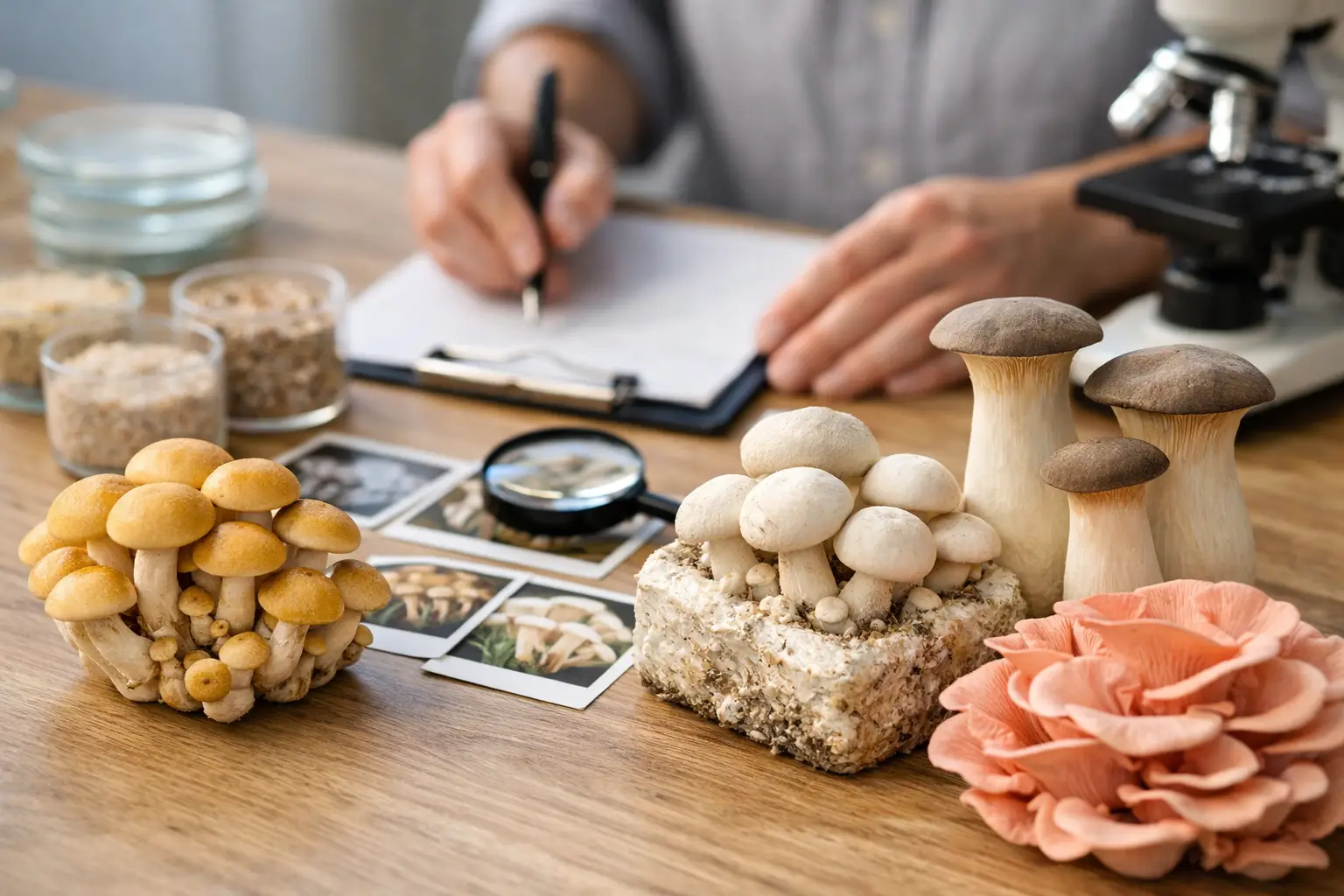
A name can get your attention, but it should not make the decision for you. Learning how to choose mushroom strains starts with looking past fan-favorite genetics and matching a culture or specimen to your actual setup, skill level, and goal. The right choice is the one you can handle confidently, observe closely, and enjoy working with from start to finish.
For some growers, that means a dependable edible culture that fits a kitchen grow. For collectors and microscopy-focused buyers, it may mean a clean print with distinct visual characteristics. Either way, strain selection is less about chasing hype and more about knowing what you want the genetics to do.
Start With Your Goal, Not the Strain Name
Before browsing categories, decide what a successful project looks like. Are you growing gourmet mushrooms for the table? Building skill with agar and culture work? Comparing spores under a microscope? Looking for a giftable bundle that gives you room to experiment? Your answer narrows the field quickly.
Edible cultures are usually the most direct route for growers who want a practical food crop. Oyster varieties, lion’s mane, shiitake, and chestnut mushrooms each bring different flavors, fruiting styles, and environmental preferences. A ready-to-inoculate option can also reduce the number of early variables, which is useful when you are learning how your space behaves.
Spores and prints suit a different kind of project. They invite observation, documentation, and genetic exploration, but they also require more patience and clean technique. If your goal is microscopy or building foundational lab skills, format may matter just as much as the strain itself.
How to Choose Mushroom Strains by Growing Conditions
Every strain has preferences. Temperature, fresh air exchange, humidity, substrate, and available space affect results far more than a catchy name on a listing. A genetics choice that performs beautifully in a dialed-in fruiting tent may be frustrating in a warm apartment or a low-humidity room.
Check the temperature range first
Temperature is one of the fastest ways to filter choices. Cool-fruiting varieties are often better suited to basements, garages, and climate-controlled spaces, while warm-weather varieties can be more forgiving in naturally warmer homes. If you cannot reliably manage temperature, choose genetics with a wider comfort range instead of trying to force a narrow-range variety into an unsuitable environment.
For edible species, this distinction is especially useful. Blue oyster mushrooms often prefer cooler conditions than pink oyster mushrooms, while lion’s mane generally rewards growers who can keep fruiting conditions steady. That does not make one objectively better. It simply makes one a better fit for the season and space you have.
Be honest about your humidity and airflow control
High humidity without enough fresh air can create weak, misshapen fruits. Too much airflow without proper humidity can dry surfaces before they develop well. Some varieties tolerate a little inconsistency better than others, but no strain completely ignores its environment.
If you are working with a basic tub, countertop fruiting chamber, or small tent, choose a project with manageable environmental demands. Once you can recognize what healthy mycelium and proper fruiting conditions look like, moving into more particular genetics becomes much easier.
Match the substrate to your workflow
Substrate is not an afterthought. Wood-loving gourmet cultures, for example, generally need a different approach than varieties that perform well on supplemented sawdust, straw, or other prepared media. A strain may be excellent, but it still needs a substrate it can colonize efficiently.
This is where ready-to-inoculate products earn their place. They simplify preparation and let you focus on inoculation, colonization, and fruiting rather than building every input from scratch. Experienced growers may prefer the control of making their own substrate, while newer cultivators often benefit from reducing avoidable steps.
Choose a Format That Matches Your Experience
The same genetics can be sold in several forms, and each format changes the project.
A spore syringe is a familiar option for microscopy work and hands-on cultivation practice. It is compact, versatile, and easy to store correctly before use. Because spores represent genetic diversity, results can vary more than they do with a stabilized culture. That variability is part of the appeal for many enthusiasts, but it is not always the fastest route to predictable performance.
A spore print is a classic collector and microscopy format. Prints are easy to catalog, compare, and preserve when handled with clean technique. They are also a strong choice for buyers who enjoy the visual side of mycology and want to work carefully from a dry specimen.
Liquid cultures and other ready-to-inoculate formats are generally appealing when speed and consistency matter. With active, clean mycelium, you are beginning further along in the process than you would with spores. The trade-off is that cultures have a more defined handling window and require attention to storage and freshness.
If you are buying your first item, do not assume the most advanced format is automatically the best. Choose the format you understand well enough to use properly. Good technique beats ambitious shopping every time.
Look at Traits, Not Just Reputation
Popular names become popular for a reason. Some are widely recognized, visually distinctive, or frequently requested by collectors. Still, reputation only tells part of the story. Read the available product details for notes on species, format, intended application, and handling guidance.
For edible genetics, focus on traits that change your grow and your meal: flavor, texture, fruiting temperature, colonization speed, and substrate preference. A fast colonizer can be appealing in a busy workflow, while a slower culture may be worth the wait if it produces a flavor or form you specifically want.
For spores and prints, pay attention to provenance, labeling, and presentation. Clear identification matters if you are organizing a collection, maintaining records, or comparing samples. A well-labeled product helps you build better habits from the first purchase.
It also helps to separate “easy” from “low maintenance.” An approachable strain still needs sanitation, suitable conditions, and patience. Easy simply means it may be more forgiving when your conditions are close, rather than perfect.
Build a Small, Useful Strain Lineup
New buyers sometimes order a long list of strains before they know what their setup can support. Variety is fun, but too many simultaneous projects make it harder to diagnose problems. If one container stalls, you want to know whether the issue was the substrate, temperature, moisture, handling, or genetics.
A better first lineup has a purpose. Choose one dependable edible culture for practical growing, one additional variety with different climate or substrate preferences, and one microscopy-focused item if observation is part of your hobby. That gives you contrast without turning your workspace into a confusing experiment.
Bundles can make sense when the products fit your plan rather than simply adding quantity. A mixed edible bundle can help you compare fruiting behavior across species. A print pack can be a smart way to expand a catalog. But if you only have capacity for one project, a carefully selected single item may give you better results and better notes.
Buy With Traceability and Care in Mind
Genetics are only as useful as the way they are stored, shipped, and handled. Choose products with clear format descriptions and practical information. When an item arrives, inspect the label, follow storage guidance, and keep a simple log of the arrival date, inoculation date, conditions, and observations.
That log becomes more valuable than memory after just a few grows. You may find that one culture loved your winter fruiting area while another performed better during warmer months. Over time, your own records will tell you more about what belongs in your rotation than any generic “best strain” list.
Use clean tools, avoid cross-contamination between projects, and follow local rules for the products and activities you choose. Mycology rewards careful work. Small habits, such as labeling containers and documenting changes, create much better outcomes than constantly switching genetics.
The Mycelium Network is built for that kind of curiosity: try a strain with a clear purpose, give it conditions it can actually use, and let your observations guide the next addition to your collection.