
Few mushroom names are as instantly recognizable as Penis envy mushrooms. Their unusual morphology, contested lineage stories, and wide range of related labels have made them a fixture in collector conversations for years. But the name alone does not tell you exactly what you are looking at – and that distinction matters when comparing spores, prints, cultures, and vendor descriptions.
For mycology enthusiasts, Penis Envy is less a single, fixed identity than a family of recognizable traits and community-used names. Knowing how those traits, labels, and formats fit together makes it easier to shop thoughtfully, catalog accurately, and avoid treating a dramatic listing name as a guarantee.
Why Penis Envy Mushrooms Stand Apart
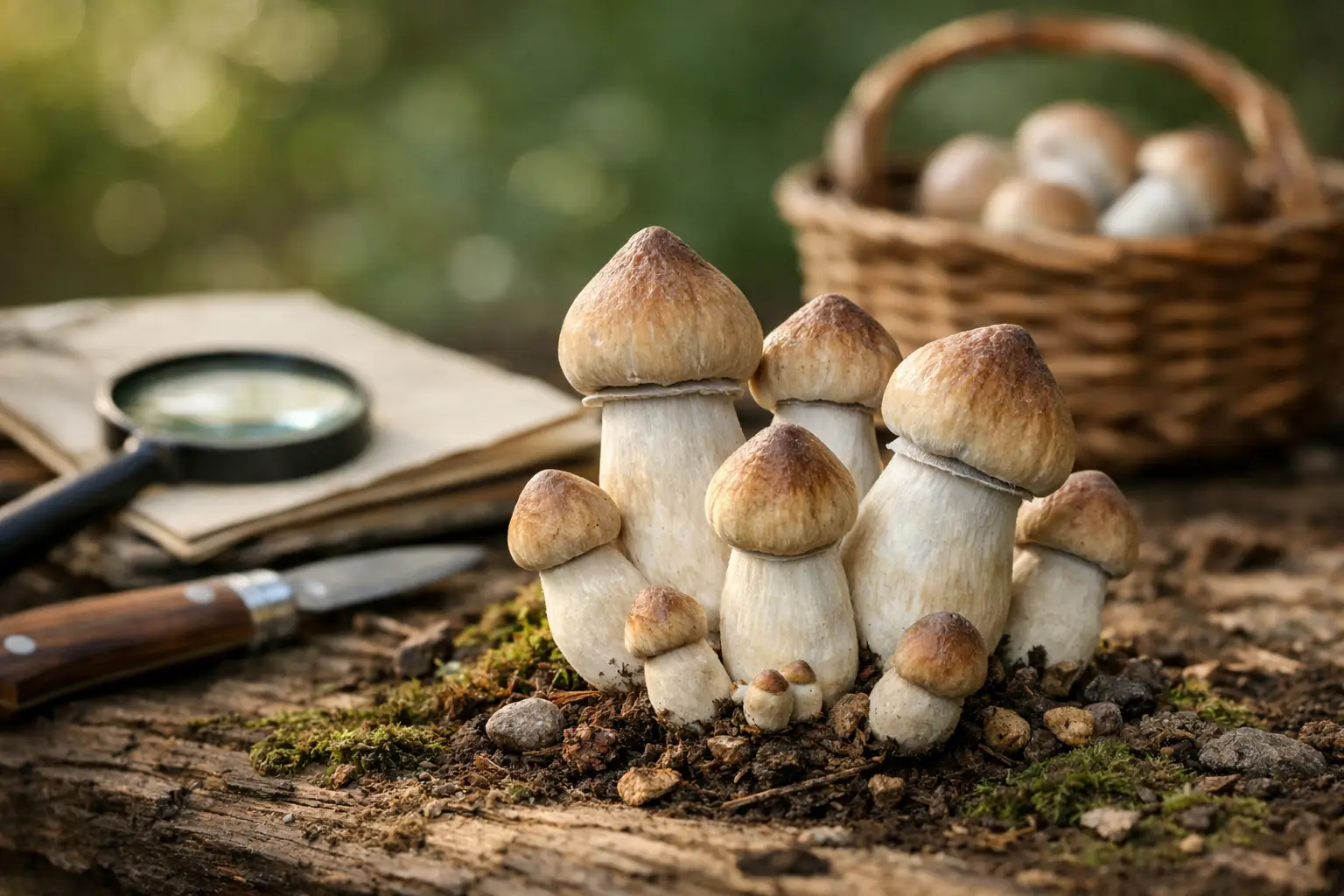
The defining visual idea behind Penis Envy is easy to understand: a notably thick, dense stem paired with a cap that may remain small, rounded, or less open than the classic umbrella-shaped mushroom silhouette. Mature examples can look compact and heavy-bodied rather than tall and delicate. That distinctive form is a major reason the variety became so well known.
However, mushroom morphology is variable. Environmental conditions, specimen maturity, handling, and lineage stability can all influence how a sample presents. A photo showing an exceptionally thick stem or tightly formed cap can be useful reference material, but it should never be treated as a standalone identification tool.
The name also carries a strong reputation within enthusiast communities. That reputation has led to plenty of exaggerated claims, inconsistent labeling, and lookalike listings. The practical takeaway is simple: evaluate the source, the stated lineage, the format, and the documentation together rather than relying on a name or photo alone.
The traits collectors often notice
Collectors commonly associate Penis Envy-type specimens with denser-looking stems, compact caps, slower or less typical-looking cap expansion, and dark blue bruising after handling. These are descriptive observations, not a field test or a guarantee of identity. Bruising can occur across multiple mushroom types and may vary substantially between samples.
Microscopy provides a more useful layer of context than surface appearance. Spore characteristics, print quality, labeling, and the condition of the sample can help a collector build a more complete record. Even then, morphology and microscopy should be viewed as parts of a larger identification process, not shortcuts.
Penis Envy Mushrooms Are Not One Fixed Lineage
One of the biggest sources of confusion is the assumption that every Penis Envy listing represents the same exact genetic line. In practice, vendors and communities may use the name for related phenotypes, established selections, cross-named varieties, or their own working labels. Two products carrying similar names can differ in presentation, history, and consistency.
That does not automatically make a listing unreliable. It means the details matter. A stronger product description explains what is being offered in direct terms: the stated variety name, the product format, the intended microscopy or collection use, and any relevant notes on appearance or source history. Vague superlatives are much less useful than specific information a buyer can record and compare.
Lineage stories are also worth treating with healthy skepticism. Mycology culture is full of memorable origin stories, but stories often get condensed or altered as a name travels from one collector to another. If provenance is important to you, preserve the label as sold, note the seller and date, and keep your own reference records instead of relying on forum lore alone.
Popular Penis Envy Labels and Variants
The wider Penis Envy category includes several names that appear frequently in specialty collections. Not every seller uses these labels in exactly the same way, so they are best understood as market and community reference points.
- Original Penis Envy: Usually used for a classic, thick-stemmed PE-style presentation. The exact history attached to this label can vary by source.
- Albino Penis Envy: Often shortened to APE, this label is associated with pale or reduced-pigment appearances. It is one of the most recognized names in the broader PE family.
- PE6: A long-circulating label commonly described as a PE-related cross or selection. Details may differ across catalogs.
- Uncut Penis Envy: A community-used name that generally refers to a particular PE-style phenotype or selection rather than a universal standard.
- Melmac: Frequently discussed alongside PE varieties because of its robust, dense appearance. Some vendors treat it as PE-adjacent, while others describe it as separate.
These labels are useful for browsing and conversation, but they are not substitutes for clear sourcing. If you are building a reference library, catalog each item under the seller’s full name first. You can add common shorthand afterward, but keep the original product label attached to your notes.
How to Compare Listings Without Guesswork
When several listings use related names, start with the information that can actually be verified. Product photos can show general presentation, but a detailed description and consistent source practices are more valuable over time.
Look for clarity around the format being sold. A spore print, spore syringe, swab set, and ready-to-inoculate product are not interchangeable from a collector’s perspective. Each has different handling expectations, documentation needs, and practical uses. A well-organized catalog should make the product type obvious before you add it to your collection.
It also helps to assess whether the seller distinguishes between a phenotype name and a broad category name. For example, a listing that simply says “Penis Envy” may be perfectly suitable for someone seeking a general PE reference. A collector looking for a specific variant, however, should seek a more precise label and supporting notes.
Freshness and storage matter, too. Spore materials and prints should be packaged and labeled in a way that supports clean organization. Once received, keep products in their original labeled packaging whenever possible, document the arrival date, and store them according to applicable product guidance and local requirements. Good records turn a growing collection into a useful mycology archive.
Format Matters for Collectors
A spore print is a classic format for microscopy-focused collectors. It is compact, visually interesting, and easy to catalog by date, supplier, and stated variety. Print quality can vary, so collectors often value clean presentation, clear labeling, and protective packaging as much as the name on the label.
Spore syringes offer a different kind of convenience. Their standardized packaging can make inventory management straightforward, especially when a collection includes multiple varieties. For buyers comparing options, the key is not which format is universally better. The better choice depends on the purpose of the purchase, local rules, and how you prefer to document your materials.
Ready-to-inoculate products and cultures are more specialized formats. Availability, lawful use, and restrictions can vary considerably by location. Before ordering, confirm that the format you want is permitted where you live and that you understand the seller’s stated use and handling information.
Legal and Responsible Collecting
Mushroom-related laws vary by country, state, city, and product format. A name that is widely discussed online is not automatically lawful to possess, study, ship, or use in every location. Responsible collectors check their local regulations before placing an order and do not ask vendors to mislabel shipments or work around restrictions.
Responsible sourcing also means avoiding overconfident identification claims. Never consume a mushroom or specimen based on an online photo, a strain name, or a casual comparison. Misidentification can carry serious health risks. Keep collection activities focused on lawful, clearly understood purposes and treat labels as records, not guarantees.
For sellers and buyers alike, transparent communication is the standard worth supporting. Clear product categories, accurate descriptions, careful packaging, and realistic expectations create a healthier marketplace than hype ever will.
Build a Better Penis Envy Reference Collection
The best collections are built with consistency, not impulse. Keep a simple record for every item: the full listing name, format, source, date received, packaging notes, and any microscopy observations. If a seller changes naming conventions later, your original documentation will still give the item context.
It is also smart to compare similar labels side by side over time. Rather than asking which Penis Envy name is “the best,” ask what information is available, how clearly the item is represented, and whether it fills a meaningful gap in your collection. That mindset turns a famous mushroom name into something more useful: a well-documented place in your personal mycology library.
Within The Mycelium Network, a thoughtful collector is never just chasing fan favorites. They are learning the language behind the labels, keeping better records, and choosing products with a clear purpose.