
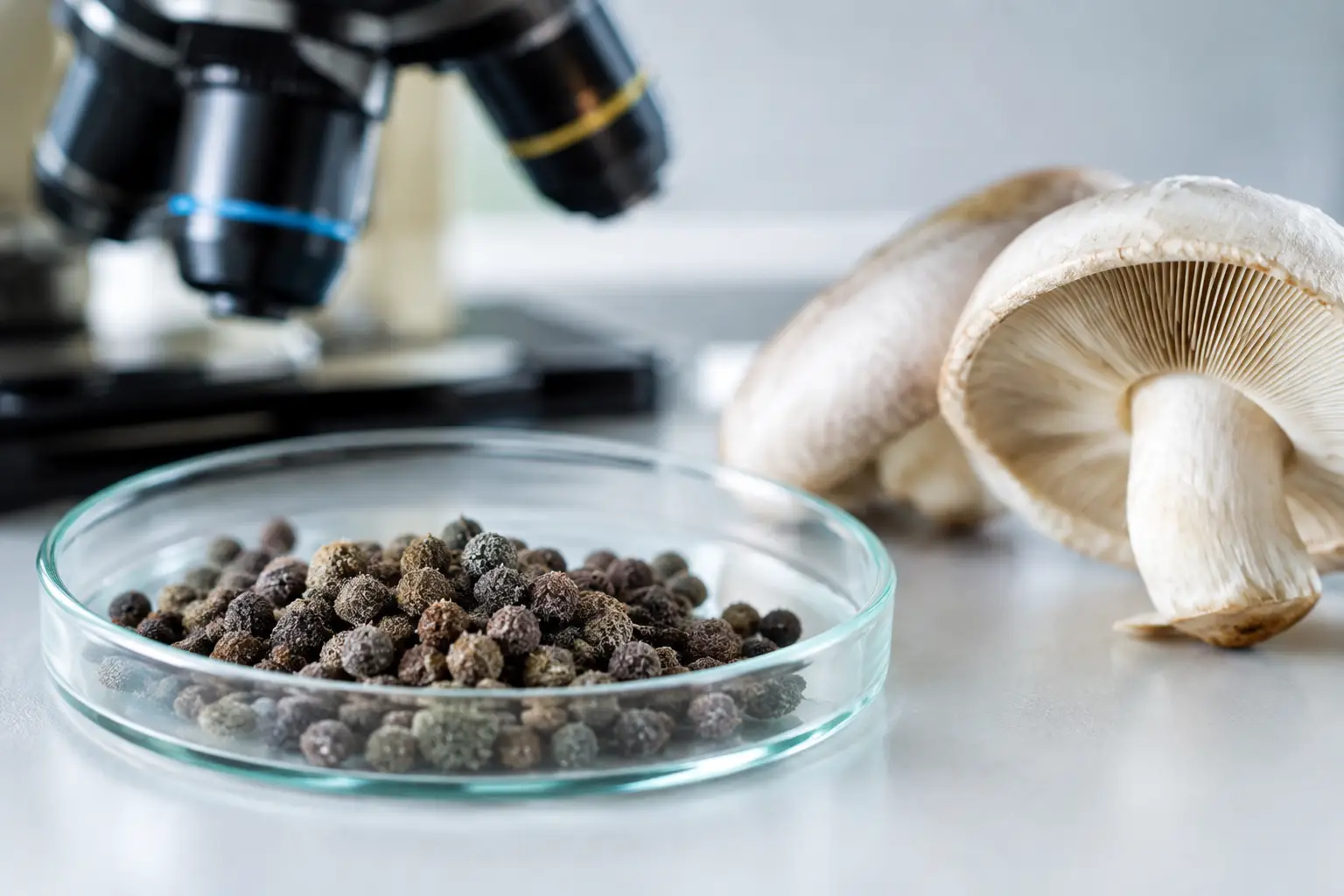
A spore print can look flawless and still fail to produce growth. A syringe can appear perfectly suspended yet deliver disappointing results. That is the practical reality of spore viability: visible appearance is only one small clue, while age, handling, storage, hydration, and cleanliness all influence whether spores can germinate when conditions are right.
For collectors, microscopy hobbyists, and cultivators working with legal gourmet species, viability is not an abstract lab term. It determines how confidently you can plan a project, compare formats, and decide whether a product has been stored in a way that respects the material. The goal is not to expect every spore to behave identically. It is to recognize the factors that stack the odds in favor of healthy, predictable germination.
What Spore Viability Actually Means
Spore viability is a spore’s ability to germinate and begin developing when it receives appropriate moisture, temperature, oxygen, and a suitable nutrient source. A viable spore is alive, but it is dormant. It does not need to look dramatic under a microscope or show obvious physical changes before it begins its next stage of growth.
This definition matters because viable does not automatically mean fast. Even a healthy sample may need time to hydrate and respond to its environment. Different species and varieties can also have different germination windows. One sample may show early signs of growth quickly, while another requires patience before a fair judgment is possible.
Viability also differs from purity. A sample can contain viable spores while also carrying unwanted contaminants from poor handling. On the other hand, a clean-looking sample can have reduced viability after excessive heat exposure or long-term storage. Germination potential and cleanliness work together, but they are not the same measurement.
Why Spores Lose Viability
Spores are built to survive more than active tissue, but they are not indestructible. Their protective outer layers help them tolerate dry periods and environmental change, yet repeated stress gradually takes a toll. The largest threats are usually heat, moisture, light, and contamination introduced through careless handling.
Heat Is the Fastest Problem
High temperatures can damage spores far faster than most buyers expect. A package left in a hot mailbox, vehicle, or sunny delivery area may experience conditions very different from the outdoor temperature. Brief warmth does not guarantee failure, but repeated or extended heat exposure can lower germination rates.
This is why shipping speed and prompt retrieval matter. Once a package arrives, avoid leaving it near windows, appliances, or other warm spots while you decide what to do with it. A cool, stable location is a better starting point than a kitchen counter that changes temperature all day.
Moisture Creates a Different Kind of Risk
Spores are commonly stored dry because moisture can activate biological processes without providing the controlled conditions needed for successful development. Condensation is particularly unwelcome for prints and swabs. It can encourage contaminants, cause spores to clump, and make handling more difficult.
For syringes, moisture is part of the format by design. The concern shifts from keeping the spores dry to maintaining a clean, stable solution and avoiding temperature extremes. Do not assume a syringe must look crystal clear or perfectly uniform to be useful. Spores may settle over time, and gentle mixing can redistribute them without aggressive shaking.
Light and Oxygen Add Up Over Time
Ordinary room light is rarely the single reason a sample fails, but long periods of direct sunlight are a poor storage choice. Ultraviolet exposure can damage biological material, while sunlight often brings heat along with it. Store prints, swabs, and syringes in a dark place rather than displaying them on a shelf.
Oxygen is less of an immediate concern than heat or moisture, but sealed packaging still has a purpose. It protects samples from environmental fluctuations and accidental contact. Once packaging is opened, work deliberately and avoid exposing the material longer than necessary.
Storage Choices That Protect Spore Viability
Good storage is simple. The best approach is usually cool, dark, dry, and stable. The word stable is key. A location that cycles between cold and warm every day may be less helpful than one that remains consistently moderate.
For sealed prints and swabs, a clean, dry container in a cool area is often appropriate. Add an extra protective layer if the original packaging is thin or likely to be disturbed. Keep items flat when possible, label them clearly, and avoid repeatedly opening the storage container just to check on them.
Syringes are generally best kept cool and protected from light. Refrigeration can be useful when done carefully, especially for longer storage, but avoid freezing. Freezing introduces risks that vary by solution, container, and storage conditions. If using a refrigerator, place the syringe in a clean protective bag or container away from areas prone to spills, condensation, or temperature swings.
Do not store spores in a freezer unless the product and preservation method are specifically designed for it. Home freezers tend to cycle temperatures, and a freeze-thaw event can be harsh on delicate biological material. Refrigeration is not a magic reset button either. It slows decline, but it cannot restore viability that has already been lost.
A practical organization system prevents many avoidable mistakes. Label each item with the species or variety, format, and date received. If you maintain more than a few samples, track storage location as well. The Mycelium Network mindset is simple: know what you have, where it is, and how long it has been waiting.
Prints, Swabs, and Syringes: Different Viability Trade-Offs
Format affects handling, storage, and how much uncertainty you are willing to manage. No single format is always best. The right choice depends on your workflow and how soon you expect to use the material.
Spore prints are compact, often store efficiently, and can contain a substantial amount of material when prepared and protected properly. Their main vulnerability is handling. Every unnecessary opening creates another chance for moisture, airborne debris, or direct contact to compromise the sample.
Swabs are convenient for controlled sampling and take up almost no space. They can be a smart option for collectors who want a compact format, but the swab head must stay protected. Crushing, moisture exposure, or rough packaging can create problems that are not obvious at first glance.
Spore syringes offer immediate convenience because the spores are already suspended in sterile water. They are often favored by hobbyists who value a ready-to-use format. The trade-off is that syringes have more sensitivity to heat during transit and should be stored with greater attention to temperature. They also depend heavily on clean preparation at the source.
When comparing products, do not reduce the decision to “more spores equals better.” A smaller, freshly prepared and well-stored sample can outperform a larger sample that has been poorly handled. Freshness, packaging quality, seller practices, and your own storage habits are more meaningful than a dramatic-looking spore load.
How to Set Realistic Germination Expectations
The most common mistake is deciding too early that a sample is nonviable. Germination timing varies with species, sample age, medium, temperature, and the overall cleanliness of the work. A lack of immediate visible activity is not a reliable diagnosis.
Start by making sure the conditions are actually appropriate for the species you are working with. Temperature ranges, nutrient preferences, and growth pace differ. If conditions are too cool, too warm, too dry, or otherwise unsuitable, viable spores may remain inactive or develop slowly.
Work from the cleanest practical setup you can manage. This is especially important when assessing a sample because contamination can obscure the result. If unwanted growth appears first, it does not necessarily prove that the spores were nonviable. It may simply mean the sample or handling environment was not clean enough for an accurate read.
Patience has a limit, of course. If a sample has had an appropriate amount of time under appropriate conditions with no sign of activity, it may be time to test another portion or reconsider storage history. Keep notes instead of relying on memory. Date the test, record the conditions, and note what you observed. Over time, those records help you separate a one-off issue from a pattern.
Common Handling Errors to Avoid
Many viability losses occur after purchase, not before it. Avoid leaving a delivery outdoors, storing samples beside a heat source, opening packaging repeatedly, or handling materials with bare hands. Keep your workspace clean, prepare what you need before opening anything, and return unused material to storage promptly.
Another frequent error is overcorrecting. Refrigerating and then warming a sample repeatedly, shaking a syringe aggressively, or moving prints through several containers can create more stress than benefit. Calm, consistent handling wins over constant tinkering.
If you are building a collection, buy in formats that match your real schedule. A ready-to-use syringe makes sense when you have a project prepared. A well-protected print or swab may make more sense when you are collecting varieties for future study. Good sourcing is not only about selection. It is about choosing material you can store and use responsibly.
Spore viability is never a promise of identical results from every sample. It is a living-material variable shaped by preparation, transit, storage, and technique. Give your samples a cool, clean, stable home, keep clear records, and let sound handling habits do the quiet work that healthy growth depends on.