
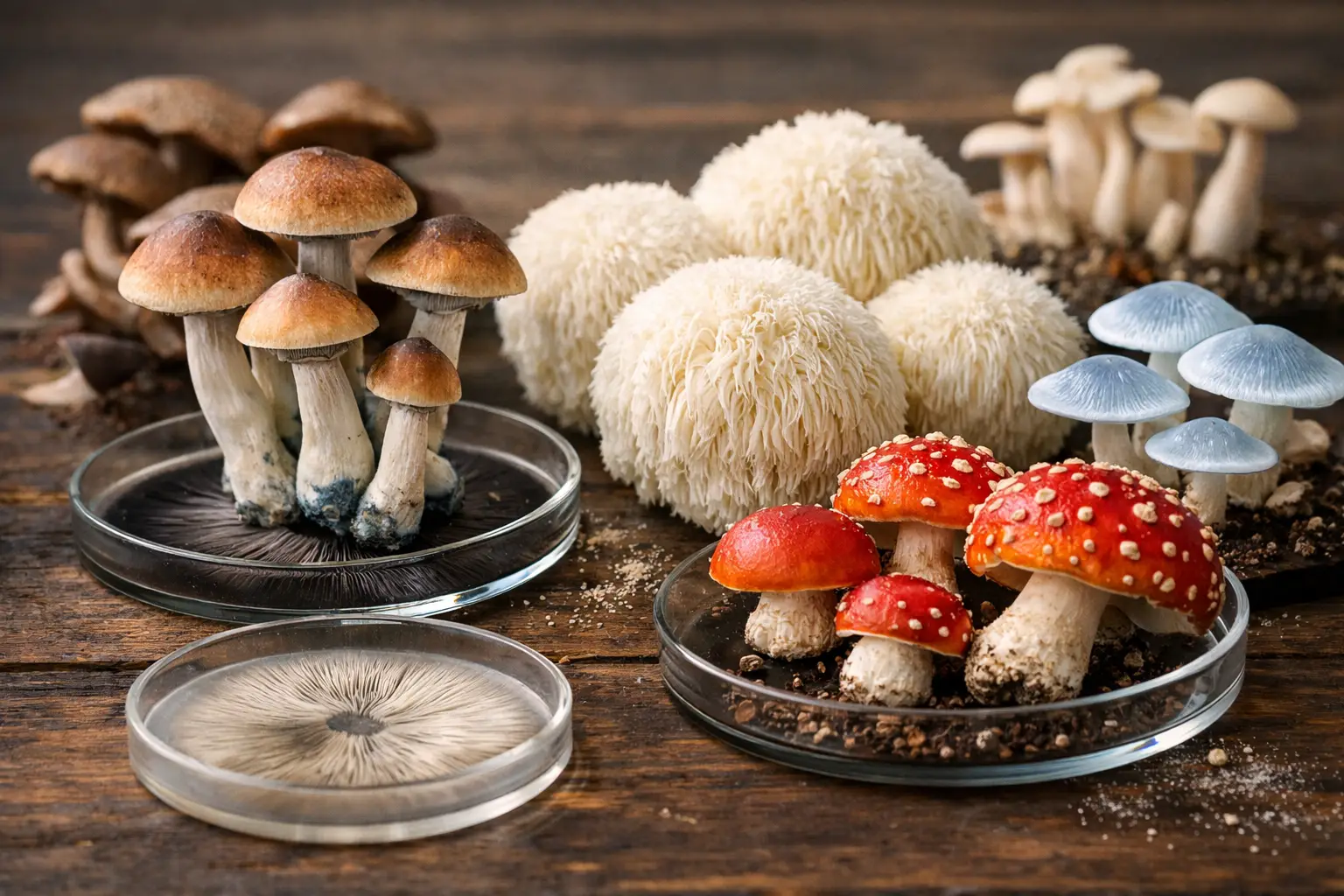
A standard catalog can get you started. Exotic mushroom spore varieties are where the search becomes more personal: unusual morphology, respected lineage names, regional history, distinctive print colors, and the simple appeal of adding something less common to a serious collection. For microscopy-focused buyers and mushroom enthusiasts, the point is not chasing the loudest name. It is knowing what makes a variety distinctive and selecting a format that fits your intended use and local laws.
The best collections balance familiar fan favorites with strains that have a story. Some are sought for their recognizable visual traits, others for the way a name connects to a historic region, a long-circulating lineage, or a dedicated community of collectors. That variety is exactly why a well-organized mycology shop matters. You should be able to compare options without bouncing between fragmented suppliers or guessing what a product name actually represents.
What Makes a Spore Variety Exotic?
“Exotic” is not a strict taxonomic label. In a retail setting, it usually refers to varieties that sit outside the most common entry-level selection. They may be less frequently stocked, visually unusual under a microscope, tied to a specific geographic origin, or recognized by collectors for a notable phenotype.
That distinction matters because a variety name is useful context, not a laboratory guarantee. Names can reflect a reported lineage, a regional association, a breeder-selected trait, or community shorthand. A responsible buyer reads the listing closely, looks for clear format and handling information, and treats every named variety as a chance to study variation rather than a promise of identical results.
For collectors, the appeal often starts with identity. A well-labeled print or syringe with a clear variety name has more value than a mystery sample, even when both look interesting. Documentation supports better organization, more meaningful comparison, and a collection you can revisit with confidence months later.
Exotic Mushroom Spore Varieties by Character
A useful way to shop is to think in terms of character rather than trying to crown one variety as universally “best.” The right pick depends on whether you are building a reference collection, looking for a striking microscopy subject, or expanding beyond the usual names in your lineup.
Classic names with lasting collector appeal
Some varieties earn their place because they have stayed relevant for years. Golden Teacher, B+, Blue Meanie, and Lizard King are recognizable examples that many enthusiasts encounter early in their research. Their popularity makes them useful reference points when comparing label conventions, print presentation, and the way different vendors categorize familiar lines.
A classic name is not automatically ordinary. A carefully prepared spore print from a well-known variety can be one of the most satisfying pieces in a collection, especially when it is clearly identified and stored correctly. Familiar varieties also make it easier to understand where more unusual names fit within the broader hobby.
Regional and heritage-inspired varieties
Regional names carry an immediate sense of place. They may refer to a country, island, mountain range, or climate zone associated with a reported origin story. Heritage-oriented varieties appeal to collectors who enjoy the cultural and geographic side of mycology as much as the sample itself.
Still, regional branding deserves a measured approach. Geographic associations can be meaningful, but they are not a substitute for transparent product details. Look for a seller that provides the variety name, product type, packaging information, and a clear statement of the product’s intended lawful use. Good labeling turns a compelling name into a more credible item for your records.
Distinctive morphology and pigment lines
Some exotic offerings stand out because of their reported visual characteristics. Unusual pigmentation, cap shape, stem structure, or spore appearance can make a variety especially interesting for microscopy and display-oriented collections. These are the listings that often catch the eye first, and for good reason.
The trade-off is that morphology can vary. Environmental conditions, sample handling, and natural biological variation all affect what someone sees. For that reason, choose these varieties for their study value and collector appeal, not because a product photo suggests every observation will look exactly the same.
Choosing the Right Format for Your Collection
The variety is only half the decision. The format changes how you receive, store, and work with your purchase. Myceli Nation’s product categories make it easier to shop according to the format you prefer instead of forcing every buyer into one path.
Spore prints are a natural fit for collectors who value a compact, traditional specimen. A clearly labeled print can be easy to archive and compare alongside other varieties. It also gives the product a tangible, old-school mycology feel that many enthusiasts appreciate.
Spore syringes offer convenience for buyers who prefer a ready-prepared format for lawful microscopy and research applications. When evaluating a syringe, pay attention to labeling, packaging quality, and handling guidance. A reputable listing should make the format clear rather than leaving you to infer what is included.
Multi-packs and bundles are worth considering when you already know the direction of your collection. A themed group of varieties can provide stronger contrast than several random single selections. The best bundle is not simply the one with the biggest count. It is the one with enough variety to make each item feel purposeful.
What to Check Before You Buy
Specialty spores are easier to shop for when you use a consistent filter. Before adding an item to your cart, review four essentials:
- Variety identification: The product should have a specific, readable name rather than vague “exotic” labeling alone.
- Format and quantity: Confirm whether you are selecting a print, syringe, or another product type, along with the stated amount.
- Packaging and handling details: Quality retailers communicate how products are packaged and any applicable storage expectations.
- Local legality: Laws and regulations vary by jurisdiction. Buyers are responsible for understanding the rules where they live and purchasing only for lawful purposes.
These checks are not glamorous, but they prevent most avoidable disappointments. Clear product information is especially valuable with exotic varieties, where names can be unfamiliar and availability may change quickly.
Build a Collection With a Point of View
The strongest collections are not built by grabbing every new name that appears. They are shaped by a question. You might collect varieties with regional naming traditions, compare classic fan favorites against less common lines, or focus on the visual range found across spore prints. A point of view gives your purchases continuity and makes every new addition more interesting.
Keep simple records as you go. Note the variety name, format, date received, seller, and any visible details that matter to you. This is useful for organizing a growing collection, but it also helps separate a memorable product from a merely flashy listing. Over time, your notes become part of the hobby.
Availability is another reason to shop with intention. Exotic selections often rotate, and limited drops can disappear faster than standard catalog items. That does not mean every limited item is a must-have. It means that when a variety fits your collection goals, it is worth reviewing the listing carefully and making a considered choice rather than waiting for a restock that may not arrive soon.
The Value of a Better Selection
Exotic mushroom spore varieties are compelling because they turn mycology shopping into more than a repeat purchase. They invite comparison, curiosity, and a deeper appreciation for the names, histories, and visual details that make the hobby feel alive. Whether you prefer a recognizable classic, a heritage-inspired line, or an unusual collector specimen, choose products with clear identification and shop with a collection goal in mind.
A great next addition is not always the rarest one. It is the variety that gives your collection a new angle to study, a better story to tell, and a reason to keep exploring The Mycelium Network.