
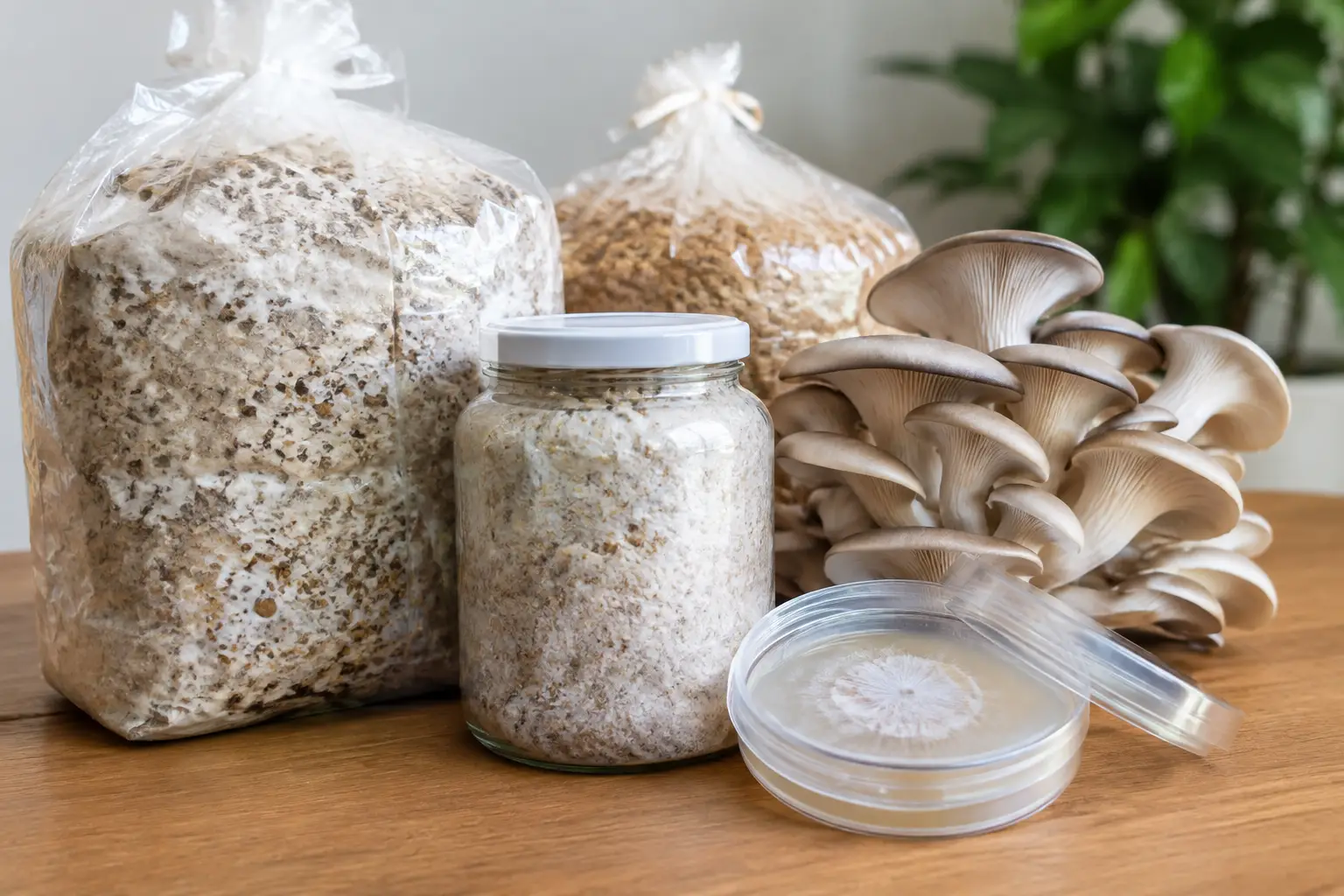
A culture can look like a small purchase on a product page, but it sets the direction for every bag, jar, and fruiting block that follows. This mushroom culture ordering guide is built for growers who want to order with purpose: choosing the right species, the right format, and the right amount for the project in front of them.
The best order is rarely the biggest one. It is the one that matches your substrate, grow space, timeline, and experience level. Whether you are filling a monotub with oyster mushrooms, dialing in a gourmet grow tent, or building a rotation of reliable edible varieties, a little planning keeps the culture from becoming the weak link.
Start With What You Want to Grow
Species selection comes before format, price, or bundle size. Every culture has its own preferred temperature range, colonization speed, fruiting conditions, and substrate strengths. A variety that thrives on hardwood sawdust may not be the best choice for a simple straw setup. Likewise, a culture suited to cooler fruiting conditions can be frustrating if your grow area stays warm year-round.
For newer growers, dependable edible species with broad substrate compatibility are usually the smart place to start. Oyster varieties are popular because they colonize aggressively and work with several common substrates. Lion’s mane, shiitake, chestnut, and pioppino each bring distinct growth habits and more specific environmental preferences. That does not make them difficult by default. It means your setup should guide your choice.
Before adding a culture to the cart, answer three practical questions: What substrate are you preparing? Where will the culture fruit? How much time can you spend maintaining temperature, humidity, and fresh-air exchange? A clear answer prevents the classic mistake of ordering a fascinating culture that does not fit the equipment you actually have.
Choose the Right Culture Format
When shoppers say “culture,” they may mean several different products. The labels matter because each format serves a different stage of cultivation.
Liquid culture
Liquid culture contains living mycelium suspended in a nutrient solution. It is ready for inoculation and is a practical choice when you want to move directly into prepared grain, liquid culture media, or another compatible sterile medium. Many growers like it for fast expansion and easy portioning.
The trade-off is that liquid culture demands clean handling. A healthy syringe is only one part of the equation. Your receiving grain or medium, inoculation technique, and workspace all need to be on point. If you are comfortable with sterile workflow and want an efficient path to larger volumes, liquid culture is often the right call.
Agar culture
Agar plates or slants provide a visible way to assess mycelium before expansion. They are especially useful for growers who enjoy culture work, want to make transfers, or need a more deliberate quality-control step before inoculating grain.
Agar is not always the fastest format for a first-time grower, but it gives you information that a sealed syringe cannot show at a glance. It also makes sense for anyone building a small culture library over time. Expect a little more hands-on work and plan for proper sterile tools and storage.
Ready-to-inoculate products
Ready-to-inoculate options can reduce the number of variables between culture arrival and colonization. They are convenient for growers who want a more direct project, particularly when paired with a species appropriate for the included substrate.
Convenience has a trade-off: these products are less flexible than building your own workflow from separate culture, grain, and bulk substrate components. For many hobby growers, that is a fair exchange. For those running repeated grows, ordering culture separately may offer better control over scale and substrate choice.
Read Product Details Like a Grower
A product name is only the starting point. The product description should tell you the culture type, species or strain, approximate volume or plate count, recommended storage, and any handling notes. If the listing identifies preferred fruiting temperatures or substrate recommendations, compare them to your actual conditions rather than treating them as background information.
Pay attention to volume without assuming more is automatically better. One syringe can be enough for a modest project when used carefully. Larger volumes and multipacks make more sense when you are inoculating multiple containers, testing several recipes, or maintaining a regular production cycle.
Bundles can be a strong value when every item has a job. A mixed gourmet bundle is useful if you want to compare species or keep your grow schedule active across several fruiting windows. It is less useful if you only have room for one project and half the cultures will wait too long in storage. Buy for your next realistic few weeks, not for an imaginary warehouse operation.
Freshness, Shipping, and Arrival Timing
Living cultures are not shelf-stable collectibles. They are active biological material, and transit conditions matter. Order when you can receive the package promptly rather than leaving it outdoors, in a hot mailbox, or in an unheated entryway.
Check the seller’s shipping policy before ordering, especially if you are outside the continental US or purchasing during periods of extreme heat or cold. Worldwide availability can be valuable, but longer transit windows may affect how you plan delivery and storage. If your local weather is severe, consider waiting for a milder shipping week when possible.
When the package arrives, inspect the contents promptly. Confirm that the label matches your order, check for damage, and follow the product-specific storage directions. Do not leave a culture on the counter simply because you are not ready to inoculate that night. Refrigeration is commonly appropriate for many culture products, but the listing and included instructions should always be the final word.
Plan Your Order Around Your Workflow
The most successful culture orders are placed backward from inoculation day. Start with the date you can prepare your grain, substrate, or ready-to-grow materials. Then account for shipping time, delivery flexibility, and the time needed to organize a clean workspace.
If your supplies are scattered across different orders, wait until you know they will arrive together. Culture should not be the first item sitting in storage while you search for filter bags or realize your pressure cooker gasket needs replacing. A simple checklist helps: culture, receiving medium, substrate, containers, sanitation supplies, labels, and a fruiting plan.
For repeat growers, keep notes on every order. Record the culture name, arrival date, inoculation date, substrate, incubation conditions, and fruiting results. After a few runs, those notes become more useful than generic advice because they reveal what performs in your own environment. You may find that one oyster variety handles your summer conditions better, while another earns its spot in cooler months.
Avoid Common Ordering Mistakes
The first mistake is ordering based on a photo alone. Fruit body color and shape are appealing, but cultivation performance is tied to your setup. A beautiful specialty species may require conditions that are not practical in a basic grow tent.
The second is treating all cultures as interchangeable. Species, formats, and storage windows differ. Match the format to your skill level and project goals rather than choosing solely by what appears to be the fastest option.
The third is overlooking space. A small culture can become several colonized bags quickly. Know where incubation will happen, where fruiting will happen, and how you will manage humidity and fresh air before scaling up. A controlled small grow teaches more than an overloaded shelf full of competing projects.
Finally, buy from a seller that presents clear categories, straightforward product information, and options that fit how you grow. Myceli Nation is built for that kind of shopping, with culture choices and cultivation supplies gathered in one mycology-focused storefront. Still, the right product is the one you can use well, not merely the one with the most impressive name.
Your Mushroom Culture Ordering Guide, Put to Work
A good culture order starts with a realistic grow plan and ends with a clean, timely inoculation. Choose a species that fits your conditions, select a format that fits your workflow, and order only what you can properly receive, store, and use. That approach leaves more room for the part that keeps growers coming back: watching a healthy culture take hold and turn careful preparation into a harvest.