
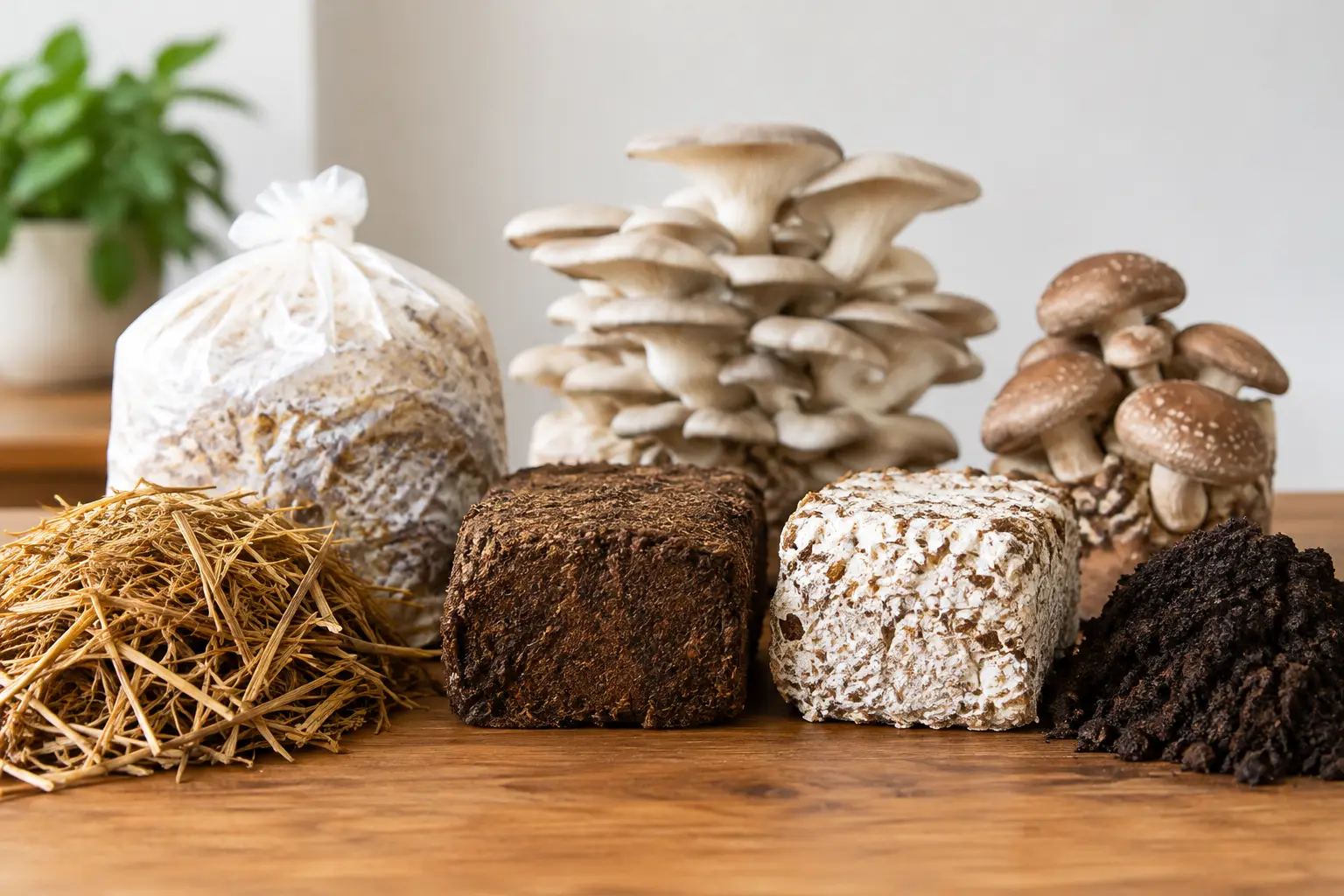
A bag of hardwood pellets and a tub of coco coir can both look like practical grow media, but they do very different jobs. Knowing how to compare mushroom substrates starts with one simple question: what does your chosen species naturally colonize? The best substrate is not the richest or cheapest option on the shelf. It is the material that gives your culture the right food, structure, moisture, and clean starting conditions.
For hobby growers, substrate selection is where a grow can become either wonderfully repeatable or needlessly frustrating. Compare the material to the mushroom, then compare the prep work to your setup. That approach keeps you from buying a bulk bag of something that works in theory but creates more labor, contamination pressure, or inconsistent results than your grow space can handle.
How to Compare Mushroom Substrates by Species
Substrates are not interchangeable because mushrooms are not interchangeable. Different species evolved around different food sources, and their mycelium performs best when that preference is respected.
Wood-loving species such as oyster mushrooms, lion’s mane, chestnut mushrooms, and shiitake generally respond well to hardwood-based media. Hardwood fuel pellets, sawdust, and supplemented hardwood blocks provide the lignin-rich structure these species recognize. Oyster mushrooms are especially flexible and can also run through chopped straw, while shiitake usually rewards a more wood-forward, patient approach.
Straw is a classic option for fast-growing species that naturally thrive on agricultural residues. It is light, affordable, and offers plenty of air space when prepared properly. Its trade-off is lower nutrition than a supplemented hardwood block and a larger physical footprint if you are processing loose material.
Manure-based blends and composted materials suit species with a natural preference for nutrient-dense soils. These substrates require tighter hygiene and preparation standards because richer media can also support competitor organisms. They are not automatically “better” than wood or straw. They are simply a closer match for certain genetics and growing methods.
Before comparing brands, bag sizes, or prices, identify your species‘ preferred substrate family. This one decision narrows the field faster than any product description can.
Compare the Material, Not Just the Name
A product labeled “mushroom substrate” may be a ready-to-fruit block, a bulk material, a supplemented blend, or a plain base awaiting hydration and pasteurization. Read what is actually inside.
Hardwood pellets are compact, easy to store, and consistent from batch to batch when sourced as clean, untreated fuel pellets. Once hydrated, they create fine sawdust with excellent contact points for mycelium. The drawback is density. A pellet-based mix can compact if handled too wet or packed too tightly, reducing the air exchange your culture needs.
Sawdust offers similar value but varies more by particle size and wood species. Fine sawdust colonizes quickly because there is more surface area, but overly fine material can become dense. Coarser sawdust improves structure but may colonize more slowly. A blend often gives the most balanced texture.
Straw creates natural air channels and is easy for vigorous mycelium to move through. Look for clean, dry straw with minimal dust, mold, or chemical odor. Chopping it into shorter lengths makes it easier to hydrate, pack, and colonize evenly. Whole long straw is workable, but it can be awkward in bags and tubs.
Coco coir is valued for water retention and a clean, uniform texture. It is commonly used as a moisture-holding bulk component rather than a high-nutrition food source. Coir quality varies, so check that it is low in salt and free of added fertilizers or fragrances.
Agricultural byproducts such as soybean hulls, bran, and other supplements add nutrition to otherwise low-nutrient bases. That extra food can speed colonization and increase yields with compatible species. It also raises the stakes: nutrient-rich blends usually need more thorough sterilization, not just casual heat treatment.
Judge Nutrition Against Contamination Risk
Nutrition is where new growers often overcorrect. A substrate loaded with supplements sounds productive, and under ideal conditions it can be. But the same nutrients that benefit mushroom mycelium can feed molds and bacteria if your culture, inoculation method, or sterile technique is not on point.
Plain hardwood, straw, and coir-based media are generally more forgiving because they are less attractive to many competitors. They can be a smart choice when you are dialing in hydration, learning pasteurization, or working with a culture that is already aggressive and reliable.
Supplemented sawdust blocks offer more performance potential, especially for wood-loving gourmet species, but they demand cleaner workflow. Think of them as a higher-output setup with less room for shortcuts. If you do not have a pressure sterilizer or a dependable source of properly prepared blocks, a simpler substrate may deliver better real-world results.
When comparing two mixes, ask whether the extra supplementation solves a real need. If you are growing a species that does well on plain straw, a heavily enriched formula may add expense and risk without giving you a meaningful advantage.
Compare Moisture and Structure Together
Field capacity is the practical target for most hydrated mushroom substrates. The material should feel evenly moist, with water available to the mycelium but not pooling at the bottom of the bag or tub. A handful squeezed firmly should release only a few drops, not a stream.
Still, moisture cannot be judged separately from texture. Fine coir can hold substantial water while staying usable, whereas fine sawdust at the same apparent wetness may compress into an air-starved mass. Straw needs enough hydration to stay flexible and colonizable, but too much water can settle in its hollow structure and create sour, anaerobic pockets.
Look at how a material behaves after hydration. Does it expand evenly? Does it clump? Does it drain? Can you break it apart without turning it into paste? Those details affect colonization speed more than a generic claim that the substrate is “moisture retentive.”
A practical small-batch test is worth more than guessing. Prepare a modest amount, document how much water you used, and watch how it performs with one culture. Repeatable notes on hydration, bag weight, and colonization time will help you refine your mix far faster than changing every variable at once.
Factor in Preparation Method and Equipment
The right substrate also has to fit your workflow. If you want ready-to-inoculate convenience, prepared bags or blocks can save time and reduce handling. They cost more per pound, but the value is in consistent formulation and less setup work.
If you prefer to build your own media, compare what each option requires before purchase. Straw usually needs chopping and pasteurization. Hardwood pellets need hydration and, if supplemented, sterilization. Coir-based blends are easy to hydrate but still need clean handling. Compost and manure-based media require careful preparation and are less forgiving of rushed work.
Consider storage as well. Dry pellets and compressed coir store neatly for long periods. Loose straw takes up room and must stay dry. Pre-hydrated bags are convenient but have a shorter practical window and need clean, appropriate storage. The lowest sticker price is not always the lowest total cost once labor, space, equipment, and failed batches enter the picture.
Use This Substrate Comparison Checklist
When you are choosing between two products or building a custom mix, compare these five points side by side:
- Species fit: Does the base material match what your mushroom naturally colonizes?
- Nutrient level: Is the mix plain, supplemented, or heavily enriched, and can your process support it?
- Moisture behavior: Will it hold water evenly without becoming compacted or soggy?
- Preparation needs: Does it require pasteurization, sterilization, hydration, chopping, or specialized equipment?
- Total value: Include shipping, storage, labor, batch consistency, and the likely cost of mistakes.
This is also where format matters. A ready-to-inoculate bag may be the better buy for a small grow, while bulk pellets or straw can make much more sense once you have a proven process and enough production to justify the prep time.
Let Your Results Choose the Winner
There is no universal champion among mushroom substrates. The right choice depends on species, culture vigor, climate, equipment, and how much hands-on preparation you actually enjoy. Keep a simple grow log with substrate recipe, hydration amount, inoculation date, colonization speed, and fruiting results. After a few runs, patterns will show up.
Myceli Nation is built for growers who want more than a one-size-fits-all supply list. Start with a substrate that matches your species, keep the first run simple, and make one informed adjustment at a time. The most useful grow medium is the one you can prepare cleanly and repeat with confidence.