
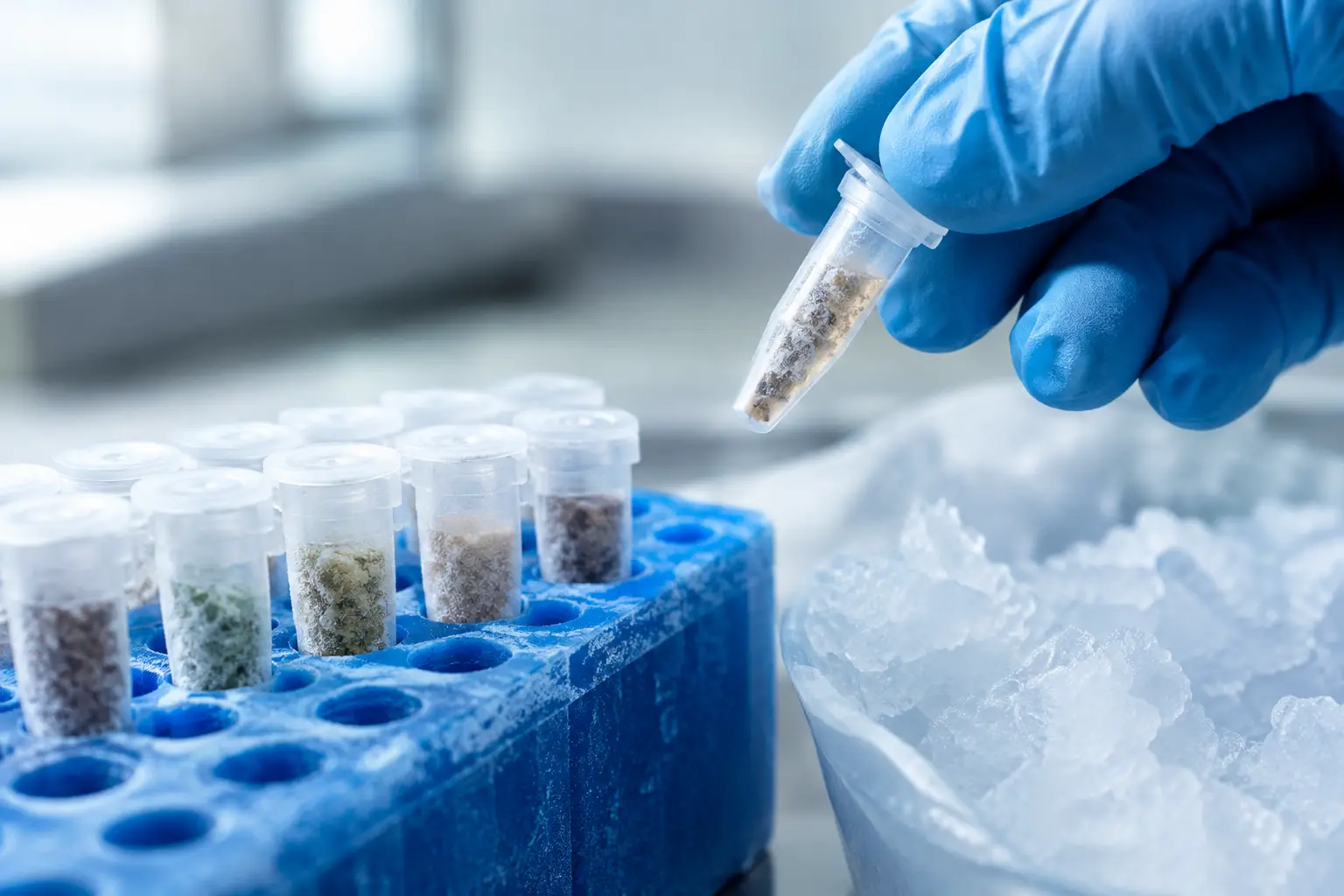
A spore print left in a freezing car, a syringe delivered during a winter cold snap, or a vial tucked into the back of a freezer can raise the same question: can spores survive freezing? Often, yes. But survival is not the same as ideal storage, and freezing can create problems that only show up later when viability is tested.
For collectors, microscopy hobbyists, and cultivators working with edible species, the practical answer depends on the format, water content, packaging, and whether the spores experience one brief freeze or repeated freeze-thaw cycles. Temperature matters, but moisture is usually the factor that turns cold storage into a gamble.
Can Spores Survive Freezing in Different Formats?
Fungal spores are built for persistence. Their outer walls provide protection against drying, environmental change, and periods that would be fatal to active mycelium. Many species encounter freezing conditions outdoors as part of their normal life cycle, so cold alone does not automatically make spores nonviable.
Dry spores generally have the best chance of tolerating a short freeze. A properly prepared spore print, kept dry and protected from condensation, is far less vulnerable than spores suspended in water. With very little free water inside or around the spores, there is less opportunity for damaging ice crystals to form.
Spore syringes are a different case. Freezing a water-based syringe can form ice throughout the solution, potentially stressing spores and creating pressure that affects the syringe or seal. Some spores may remain viable after freezing, but a household freezer should not be treated as a reliable long-term storage method for syringes.
Agar plates, liquid cultures, and other live mycelium products are more sensitive still. Mycelium is actively growing tissue, not a dormant spore. Freezing without controlled cryopreservation methods can rupture cells, alter the culture, or stop growth entirely. If you are storing an edible culture, refrigeration is typically the more sensible short-term option unless a species-specific preservation protocol says otherwise.
Why Moisture Changes the Outcome
The biggest risk is not simply that the sample gets cold. It is what water does as it freezes and thaws.
When water freezes, ice crystals can damage biological structures. In a spore syringe, this may affect individual spores, while expansion can place physical stress on the container. On a print, moisture can arrive from a less obvious source: condensation. A cold package brought into a warm room may collect water if it is opened too soon, leaving the print exposed to humidity exactly when it should stay dry.
This is why a dry print in a sealed bag may handle a brief accidental freeze reasonably well, while the same print can lose quality if it is repeatedly moved between a freezer, counter, and refrigerator. Each temperature swing adds another chance for condensation and moisture exposure.
Species also make a difference. Spore size, wall thickness, maturity, and natural habitat all influence cold tolerance. There is no universal promise that every spore sample will perform identically after freezing. Treat cold exposure as a condition to manage, not a guaranteed preservation technique.
A Freezer Is Not the Same as Cryopreservation
It is easy to assume that colder always means better preservation. In professional collections, ultra-low-temperature storage can preserve biological material for extended periods. But that process is controlled. Samples may be prepared with cryoprotective agents, cooled at specific rates, and held at stable temperatures in specialized equipment.
A kitchen freezer does none of that. It cycles temperatures as the compressor runs, warms slightly during defrost events, and is opened frequently. The door and front-facing areas experience the most fluctuation. Frost-free freezers are convenient for food, but their cycling can be especially unhelpful for biological samples that need stable conditions.
For most home mycology storage, the goal is simpler: keep the sample cool, dark, dry, clean, and stable. A freezer is not automatically the best way to reach that goal.
What to Do After a Sample Freezes Accidentally
If a package, print, or syringe was exposed to freezing temperatures during shipping or storage, avoid making the situation worse with rapid handling. Let the sealed item return gradually to room temperature before opening it. That reduces the chance that warm, humid air condenses directly on the sample.
Inspect the packaging after it has equilibrated. For prints, look for signs of moisture, smearing, damaged paper, or compromised wrapping. For syringes, check for cracks, leaks, separated components, or unusual cloudiness. Physical damage is often easier to identify than viability loss.
A sample that looks normal may still be viable, especially if the freezing event was brief. If it is intended for microscopy or legal edible cultivation, test a small portion using clean technique rather than assuming the entire sample has failed. Keeping a backup from a separate source or batch is a smart habit when a collection matters.
Better Storage for Prints, Syringes, and Cultures
Storage should match the product format. The following practices reduce avoidable losses without overcomplicating your setup:
- Spore prints: Keep them dry, flat, light-protected, and sealed inside clean packaging. A cool drawer, cabinet, or dedicated storage box is usually preferable to a freezer for routine storage.
- Spore syringes: Store them upright or secured where they will not leak, overheat, or freeze. A stable, cool location away from direct sunlight is generally safer than the freezer compartment.
- Edible cultures: Follow the supplier’s storage guidance, especially for refrigerated live culture formats. Minimize unnecessary handling and avoid letting cultures sit in hot vehicles, near heaters, or in freezing conditions.
- Long-term collections: Label every item with the species, format, source, and date received. Organization prevents old samples from being repeatedly opened, moved, and exposed while you search for the right one.
For dry materials, a moisture absorber stored nearby can help maintain a dry storage environment, but it should not directly touch the print itself. The point is to manage ambient humidity, not to press desiccant against delicate material.
Shipping in Winter: When to Worry
Cold-weather delivery is not automatically a loss. A well-packed dry print can often tolerate a short period in cold transit better than a warm, humid, or poorly sealed sample. The concern rises when a package sits outdoors for days, experiences extreme cold, or contains liquid-based products that may freeze solid.
Bring winter deliveries indoors as soon as possible. If the package feels very cold, allow it to warm unopened before inspecting the contents. Do not place it directly on a heater, radiator, or sunny windowsill to speed things up. Gentle, gradual warming is the safer approach.
When ordering specialty mycology supplies during severe weather, choose a delivery window when someone can receive the package. That small bit of planning can matter more than trying to rescue a sample after extended exposure on a porch or in a mailbox.
The Practical Takeaway for Home Storage
Spores can survive freezing, particularly when they are dry, mature, well-protected, and exposed only briefly. Still, freezing is not a universal storage upgrade. Water-based products, repeated thawing, condensation, and unstable freezer conditions all raise the risk of reduced viability.
Build your storage routine around stability rather than extreme cold. Keep each format in the conditions it is designed for, label it clearly, and handle it only when needed. A calm, dry, organized storage setup will do more for a healthy collection than a crowded freezer ever will.