
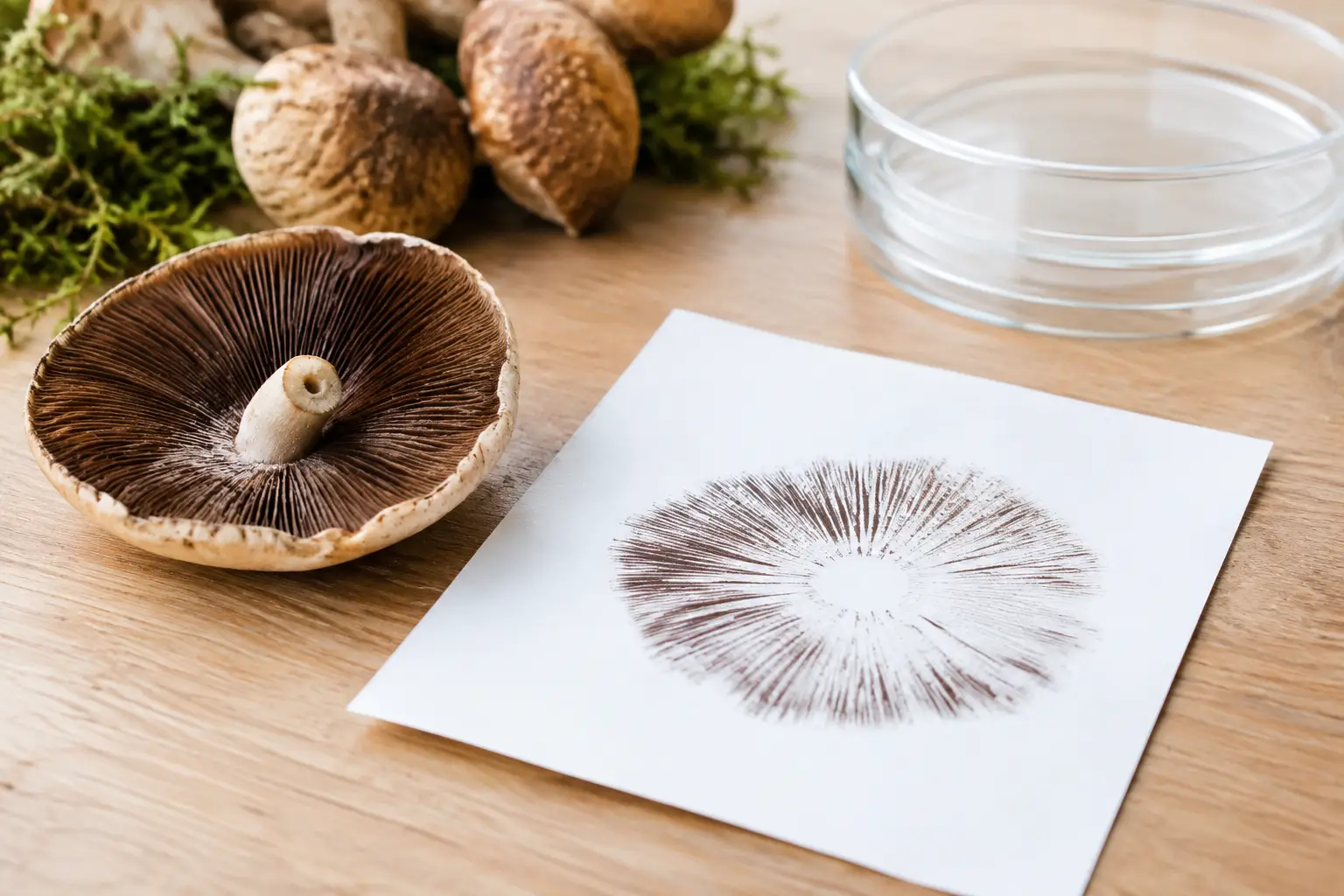
A spore print can look perfectly fine long after it was collected, which is why age alone is a poor way to judge its condition. Spore print freshness is really about how the specimen has been handled from collection through storage: exposure to moisture, heat, light, and contamination matters far more than the date written on the foil or paper.
For collectors, microscopy-focused buyers, and edible mushroom enthusiasts, knowing what “fresh” means helps set realistic expectations. A recently prepared print may be easier to handle and examine, but a carefully stored older print can remain a valuable specimen. The difference comes down to preservation, not marketing language.
What Spore Print Freshness Actually Means
Freshness is not a single measurable trait. It is a practical shorthand for the condition of a print and the likelihood that its spores still reflect the quality they had when collected. A fresh print generally has been dried properly, packaged cleanly, and kept away from the environmental factors that cause degradation.
The visible appearance can offer clues, but it cannot tell the whole story. Dense, evenly deposited spores may indicate a well-made print, while a light print is not automatically poor quality. Different species and strains naturally produce different colors, densities, and patterns. A dark, heavy print may be visually impressive, but proper handling still matters more than how bold it looks against the foil.
It also helps to separate freshness from purity. A print can be recent but poorly handled, or older but clean and carefully preserved. For microscopy, clean packaging and dry storage are often the details that make the biggest difference in the quality of your observation.
What Changes as a Print Ages?
Time puts pressure on every biological specimen. Spores may gradually lose resilience, especially when storage conditions fluctuate. That process is rarely obvious at a glance. A print may retain its familiar color even after repeated heat exposure or contact with humid air has reduced its overall condition.
Moisture is usually the first concern. A print that was not fully dry before packaging can clump, smear, or develop a dull, uneven appearance. Humidity can also introduce unwanted variables, particularly if the package is opened often or stored in a damp room. Once moisture gets involved, a clean-looking print can become harder to evaluate with confidence.
Heat is another quiet problem. Leaving specimens in a hot vehicle, near a radiator, or in direct sun can shorten their useful life. Light is less dramatic than heat and humidity, but prolonged direct exposure is still unnecessary. The best storage environment is boring: cool, dry, dark, and stable.
Frequent handling has its own cost. Every time a print is opened, moved, or exposed to the air, there is a greater chance of accidental moisture transfer, surface disturbance, or contamination. That does not mean a print must remain untouched forever. It means intentional handling beats casual checking.
Fresh Does Not Always Mean Better
A newly collected print may have a shorter history, but it is not automatically the better specimen. If it was packaged before drying, shipped carelessly, or stored under poor conditions, its age offers little reassurance. On the other hand, a print stored dry in a sealed protective sleeve can remain suitable for collection and microscopy purposes much longer than many buyers expect.
This is why trustworthy sourcing matters. Product details, clear packaging, careful fulfillment, and a retailer that understands specialty mycology supplies all contribute to the experience before a print reaches your collection. A broad catalog is useful, but good specimen care should always sit behind the selection.
How to Protect Spore Print Freshness at Home
Once a print arrives, the goal is simple: do not create new problems. Store it in the original protective packaging whenever possible, and avoid opening it until you have a real reason to inspect it. If you keep several prints, organizing them by date, species, source, or collection purpose makes it easier to avoid unnecessary handling.
A drawer, storage box, or cabinet away from kitchen steam, bathrooms, windows, and heating vents is usually a sensible choice. The area does not need special equipment. It needs stable conditions. A cool closet is often better than a garage, shed, basement corner, or vehicle where temperatures and humidity can swing sharply.
For longer-term collecting, an additional sealed outer container can provide another layer of protection. Keep the container clean and dry, and avoid packing it so tightly that prints bend, rub, or become difficult to remove. A simple label with the acquisition date can be helpful, but do not treat the date as a verdict on quality. Use it as one piece of your record keeping.
Avoid the temptation to refrigerate or freeze prints unless you already understand the moisture risks involved in moving specimens between temperatures. Condensation can be more damaging than a stable room-temperature storage setup. For most buyers, dry and consistent beats overly complicated.
Signs a Print Needs Closer Inspection
Not every visual change is a reason to discard a print. Natural variation happens, and packaging pressure can alter how a print looks. Still, there are a few signs that call for caution: obvious moisture damage, fuzzy growth, an unusual odor, major smearing, or packaging that appears to have been compromised.
If a print looks damp, do not assume it will simply recover on its own. Opening and repeatedly checking it can make the situation worse. Keep it isolated from other specimens until you can assess it carefully. Collection hygiene matters because one poorly stored item should not affect the rest of your library.
For microscopy work, an irregular sample can sometimes still offer useful visual information, depending on your purpose. If you are comparing morphology, documenting color, or building a reference collection, the criteria may differ from those of someone looking for a pristine archival specimen. Context matters, and that is one reason experienced enthusiasts keep clear labels and notes.
Buying With Freshness in Mind
When comparing spore prints, avoid relying on broad claims like “freshest” without considering the details behind them. Ask yourself whether the seller presents products clearly, uses protective packaging, maintains reliable inventory practices, and treats specimen care as part of the customer experience.
Format matters, too. Prints appeal to collectors because they are compact, visually distinctive, and easy to catalog. They can also be a practical choice for microscopy enthusiasts who prefer working from a dry specimen. Ready-to-use formats may suit a different workflow, while edible cultures often make more sense for enthusiasts focused on legal culinary species. The right option depends on your intended use, storage space, and comfort with handling.
At Myceli Nation, the goal is to make it easier to shop across the mycology supply spectrum without treating every buyer as if they need the same format. Whether you are building a specimen collection, refreshing your microscopy supplies, or comparing fan-favorite varieties, informed purchasing starts with knowing how you plan to care for what you order.
A Better Standard Than “Fresh”
Instead of asking only whether a print is fresh, ask whether it has been protected. Was it dry before packaging? Has it been kept away from heat and humidity? Is the packaging intact? Has it been stored with enough care that you can confidently add it to your collection?
Those questions lead to better decisions than a date alone. Treat each print like the specialized mycology item it is, keep storage conditions steady, and let careful handling preserve the value you bought it for.