
A cart full of random syringes, grain bags, and gear can feel like progress right up until one missing item stalls the whole project. This home mycology shopping checklist is built for shoppers who want to buy with a clear purpose, compare formats confidently, and set up their workspace without paying twice for supplies they overlooked the first time.
The best order is not always the biggest one. It is the order that matches your goal, your space, your preferred workflow, and the time you can realistically give to the hobby. Whether you collect prints for microscopy, want to work with edible cultures, or are restocking the basics, start with the outcome and shop backward.
Start Your Home Mycology Shopping Checklist With a Goal
Before comparing strains or adding a bundle, decide what you are actually trying to do. A microscopy-focused buyer needs different materials than someone planning a legal edible mushroom project. A first-time hobbyist may value a more guided, ready-to-use format, while an experienced cultivator may prefer selecting each component separately.
Your goal also determines how much variety makes sense. It is tempting to sample every fan favorite, but a smaller, organized selection is easier to label, store, and learn from. If you are trying a new process, keep the variables limited. When you are comfortable with your workflow, expand into different cultures, prints, or specialty options.
Think through three practical questions: What format do you prefer? What materials do you already have? How much room do you have for clean storage and careful handling? Honest answers prevent the classic checkout problem: buying interesting products without the supporting supplies to use them well.
Choose the Right Product Format
Spore syringes, spore prints, liquid cultures, and ready-to-inoculate options serve different needs. None is automatically better. The right choice depends on your experience, intended use, and whether you want convenience, flexibility, or a more hands-on process.
Spore Syringes
Spore syringes are a familiar choice for collectors and microscopy enthusiasts because they are compact, straightforward to store, and available across a wide range of varieties. They can also be an accessible option for shoppers who know exactly which variety they want and prefer a ready-measured format.
When comparing syringes, look beyond the name. Check the listed volume, expected storage guidance, packaging details, and whether a multi-pack offers real value for your plan. A bundle makes sense when you will use each included item. It is less useful when it simply creates a crowded drawer of untracked inventory.
Spore Prints
Prints appeal to collectors who appreciate a traditional format and buyers who work with microscopy materials. They are flat, easy to catalog, and often a smart choice when you want to build a focused collection without filling your workspace with duplicate products.
A print is not a shortcut product, so purchase it because the format fits your interest and handling preference. Keep your organization system ready before it arrives. Labeling the variety, date received, and source immediately saves guesswork later.
Edible Cultures and Ready-to-Inoculate Products
For legal edible mushroom projects, cultures and ready-to-inoculate products can reduce the number of separate shopping decisions. They are especially useful for buyers who would rather begin with compatible components than piece together every item individually.
Convenience comes with a trade-off. Ready-to-use products can simplify a project, but they do not replace clean technique, appropriate storage, or patience. Read each product description closely so you know what is included and what remains on your own supply list.
Build the Supply Side of the Cart
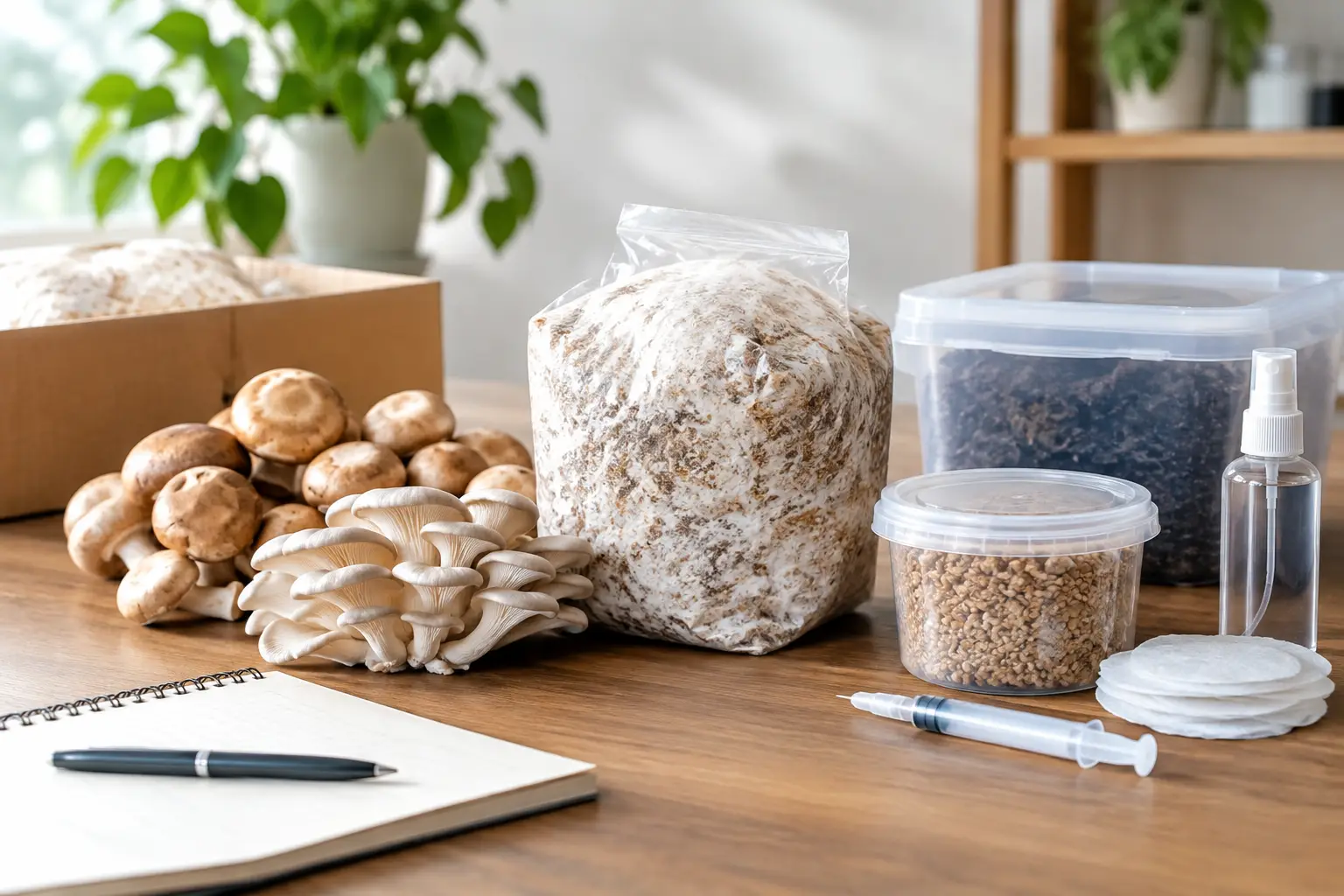
A strong shopping cart includes more than the featured culture or collectible. Supporting gear is what keeps the project organized and helps prevent avoidable interruptions. If you are building or refreshing a home setup, make sure you have the basics covered:
- Clean disposable gloves, appropriate surface cleaner, and a dedicated work area
- Labels and a permanent marker for dates, varieties, and project notes
- Sealable storage for keeping products protected and clearly separated
- A notebook or digital log for observations, batch details, and repeat purchases
- Any format-specific tools required by the product instructions
Buy the amount that matches your habits. A hobbyist doing occasional projects may only need a compact supply kit, while a frequent grower or collector benefits from buying everyday items in larger quantities. The goal is not to turn a shelf into a warehouse. It is to avoid stopping mid-project because you ran out of labels, gloves, or clean storage.
Compare Variety Names Without Shopping on Hype
Recognizable variety names can be a useful way to browse, but they should not be the only reason you buy. For many enthusiasts, the appeal is part collector culture, part curiosity, and part personal preference. That is valid, as long as the product format and your intended use still come first.
Use product pages to compare the details that affect your purchase: format, quantity, bundle contents, handling notes, availability, and whether the item suits your existing setup. If you are choosing between several options, narrow the decision to two or three and ask what each one adds to your collection or project. If the answer is only “the name sounds cool,” it may be a future purchase rather than today’s purchase.
This is where category shopping helps. Start broad with spores, prints, edible cultures, or supplies, then filter down by what you need. Myceli Nation is built around that kind of straightforward browsing, with category-based shopping that makes it easier to compare standard picks, specialty options, and bundles without bouncing between unrelated suppliers.
Check Bundles for Fit, Not Just Savings
Bundles can be excellent value, especially when they group formats or varieties you already planned to buy. They can also introduce you to options you might not have searched for individually. But a discounted bundle is only a good buy if most of it has a place in your setup.
Before adding one, check for overlap with products you already own. Consider storage capacity, expected use, and whether you can keep each item accurately labeled. A three-pack you can track and enjoy is better than a ten-pack that gets mixed up in a cabinet.
For repeat buyers, bundles are often most useful when restocking familiar items or sharing a shopping plan with a trusted household member who has their own clearly separated materials. Do not rely on memory to distinguish similar packages later. Build labeling into your routine from day one.
Confirm Shipping, Timing, and Storage Plans
Specialty mycology products deserve a little more planning than everyday retail purchases. Confirm the shipping destination, any regional restrictions, estimated dispatch timing, and the seller’s stated handling information before checkout. International shoppers should also review local rules and import requirements for the items they are considering.
Then plan for delivery day. If your schedule makes package retrieval difficult, choose a shipping option or delivery location that minimizes exposure to unsuitable conditions. Once the order arrives, inspect the packaging, confirm the items against your order, and move them into the recommended storage conditions promptly.
Keep your order confirmation and product details with your project notes. That record is useful if you reorder a favorite, need to compare formats later, or want to identify what worked best for your own process.
A Cleaner Cart Makes a Better Home Setup
The most useful home mycology shopping checklist is not a fixed list of trendy products. It is a quick decision tool: buy for a specific purpose, choose the format that fits that purpose, add the supplies that support it, and make sure you can store and track what arrives.
Leave a little room in your cart for curiosity, but let your plan make the final call. A well-chosen first order gives you more than new materials to explore. It gives you a setup you can return to with confidence, clear notes, and a reason to keep learning.