
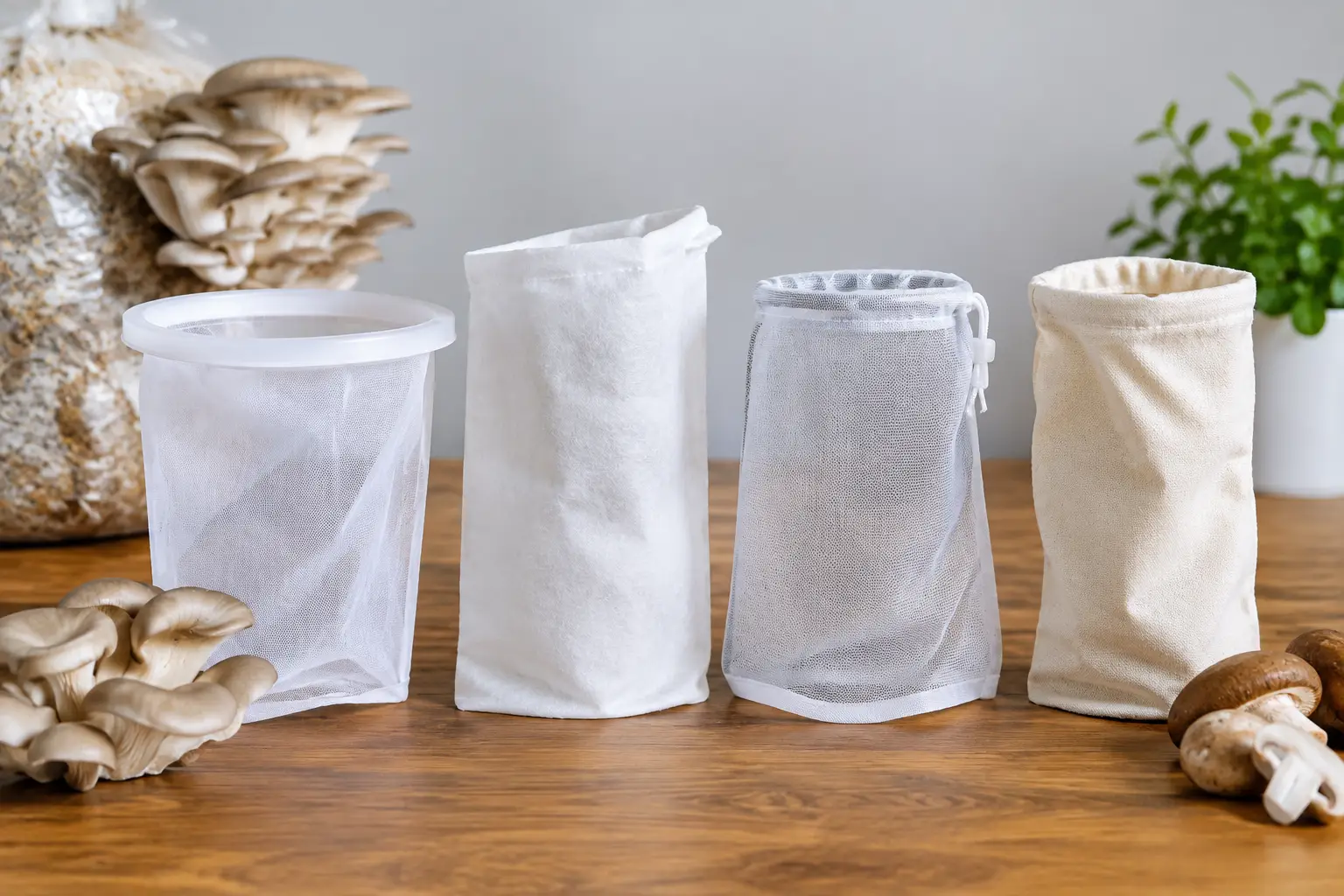
A filter bag can look like a minor supply choice until a seal fails, a block dries too fast, or your workspace becomes crowded with bags that do not fit your process. This filter bag comparison focuses on the details that actually affect mushroom cultivation: bag size, polypropylene thickness, gusset shape, filter patch rating, and how each style works with your preferred substrate.
The best bag is not automatically the biggest or the one with the finest filter. It is the bag that gives your culture enough room, holds up through sterilization, and fits the way you inoculate, incubate, and fruit your blocks. For growers building a repeatable workflow, that distinction saves substrate, shelf space, and frustration.
Filter Bag Comparison: Start With Your Substrate
Before choosing a filter patch or ordering a case of bags, decide what the bag needs to hold. A grain-based bag, a supplemented hardwood block, and a bulk straw mix place very different demands on plastic and airflow.
Smaller bags are often a practical choice for grain spawn. They are easier to shake, colonize more evenly, and fit neatly inside a pressure sterilizer. A compact bag also limits the amount of material at risk if one bag does not perform as expected. For hobby growers testing a new edible culture or dialing in a recipe, this can be a smarter move than committing every run to large blocks.
Larger bags make more sense for sawdust-based fruiting blocks and high-volume substrate mixes. They offer room for a substantial block, give you a broader surface area for fruiting, and reduce the number of individual units you need to prepare. The trade-off is physical: large bags are heavier, take longer to cool after sterilization, and require more headspace in both the sterilizer and incubation area.
Bag dimensions matter as much as stated capacity. A tall, narrow bag may fit a sterilizer well but produce an awkward block that tips on a shelf. A wide bag with side gussets can create a stable, squared-off block, though it needs more horizontal room. Measure your equipment and shelving before buying in bulk. A bag that is technically large enough for your substrate is not necessarily the best fit for your setup.
Understanding Filter Patch Ratings
The filter patch is the working part of the bag. It allows gas exchange while helping keep unwanted particles out. Filter ratings are commonly expressed in microns, and the number should be selected for the substrate and stage of cultivation rather than treated as a universal quality score.
A finer 0.2-micron filter patch is commonly favored for grain spawn and other nutrient-dense substrates where careful contamination control is a priority. It offers restricted airflow compared with a more open patch, which is often appropriate when the bag is being used mainly for colonization. For growers preparing clean, shakeable grain bags, this is usually the logical starting point.
A 0.5-micron patch allows more gas exchange and is often used for sawdust-based blocks or other bulk substrates that benefit from greater airflow during colonization and fruiting. That added exchange can support vigorous development in a dense block, especially when the bag will remain in use through the fruiting stage. It is not automatically better, however. More airflow also means the bag can lose moisture faster when environmental conditions are not managed well.
Patch size deserves attention too. A larger patch can improve exchange in bigger blocks, while a smaller patch may be fully adequate for a modest grain bag. Think of filter area as part of the total system. A large substrate block packed tightly into a bag with minimal filter area may not behave like the same formula in a bag designed for more exchange.
Bag Material and Thickness Affect Reliability
Most cultivation filter bags are made from heat-resistant polypropylene because it can tolerate high-temperature sterilization when used correctly. Still, not all bags feel or perform the same. Material thickness influences puncture resistance, seal quality, and how confidently the bag handles dense substrate.
Thinner bags can be easier to fold, load, and seal. They may work well for lighter runs and growers who want to keep supply costs down. Their downside is a lower margin for rough handling. Sharp grain, hardwood chips, rack edges, and hurried mixing can all create weak spots.
Heavier bags are better suited to dense sawdust blocks, larger fills, and frequent handling. They are less likely to puncture during loading or transport, and they tend to hold their shape more effectively once filled. The trade-off is that thicker plastic can be less forgiving if your impulse sealer is not properly adjusted. Always test your seal settings with an empty bag before trusting a full sterilized run.
Look closely at the seams as well. Side seals should be even and firmly bonded, with no thin spots or wrinkles. A cleanly manufactured bag helps, but your own handling matters just as much. Avoid overstuffing, leave enough material above the substrate for a dependable seal, and do not let a hot bag rest against sharp metal surfaces.
Gusseted vs. Flat Filter Bags
Flat bags are straightforward and useful for smaller substrate volumes. They are easy to store, simple to fill, and can be a good fit for grain bags that will be shaken and later expanded into bulk substrate. If your priority is clean organization and consistent small batches, flat bags are hard to beat.
Gusseted bags have folded sides that expand as the bag fills. This creates a wider base and lets the substrate form a more stable block. For fruiting blocks, that shape is useful because it keeps the bag upright and creates a predictable profile for shelf placement, side fruiting, or top fruiting.
The decision is mostly practical. Choose flat bags when mobility and smaller volumes matter most. Choose gusseted bags when you want a stable block and are working with larger substrate loads. Neither style fixes a poor substrate formula or inconsistent sterilization, but the right shape makes the rest of the workflow easier.
Match the Bag to Your Cultivation Stage
One reason growers get mixed results is that they expect one bag format to serve every purpose equally well. A better approach is to choose bags around the job they will perform.
For grain spawn, a smaller polypropylene bag with a fine filter patch is usually efficient. Leave enough room for shaking and breaking up the grain after colonization. A bag filled to the very top may seem economical, but it is harder to mix and easier to damage.
For masters mix, hardwood pellets, or supplemented sawdust, a gusseted bag with enough volume and a more breathable patch is often the better choice. These blocks are dense, retain substantial moisture, and may stay in the bag from inoculation through harvest. Stability and gas exchange become more relevant than easy shaking.
For low-supplementation bulk material, your choice depends on whether the bag is a temporary processing container or the final fruiting vessel. If it is only used for pasteurization or holding substrate, a specialized filter patch may not be necessary. If it will incubate a nutrient-rich mix, choose a true cultivation bag designed for the heat and airflow demands of the job.
Buying Bags Without Creating New Problems
A low per-bag price is attractive, especially when you are scaling up, but the cheapest option can become expensive if seals split or sizing is inconsistent. Buy a small quantity first when trying a new bag style. Run it through your actual sterilization cycle, use your normal substrate fill, and test it with the same sealer and shelving you use every week.
Keep a simple record of bag dimensions, patch rating, substrate weight, and results. After a few runs, patterns become obvious. You may find that a smaller bag gives faster, more manageable colonization, or that a larger gusseted format reduces labor enough to justify its added cost.
At Myceli Nation, the goal is to help growers keep their supply choices practical, whether they are building their first edible culture setup or refining a full shelf of blocks. Your home for mycology supplies should make it easier to match the right format to the work ahead.
The right filter bag should disappear into the process. It should seal cleanly, hold its shape, provide the exchange your substrate needs, and let you focus on dialing in the parts of cultivation that make each run better.