
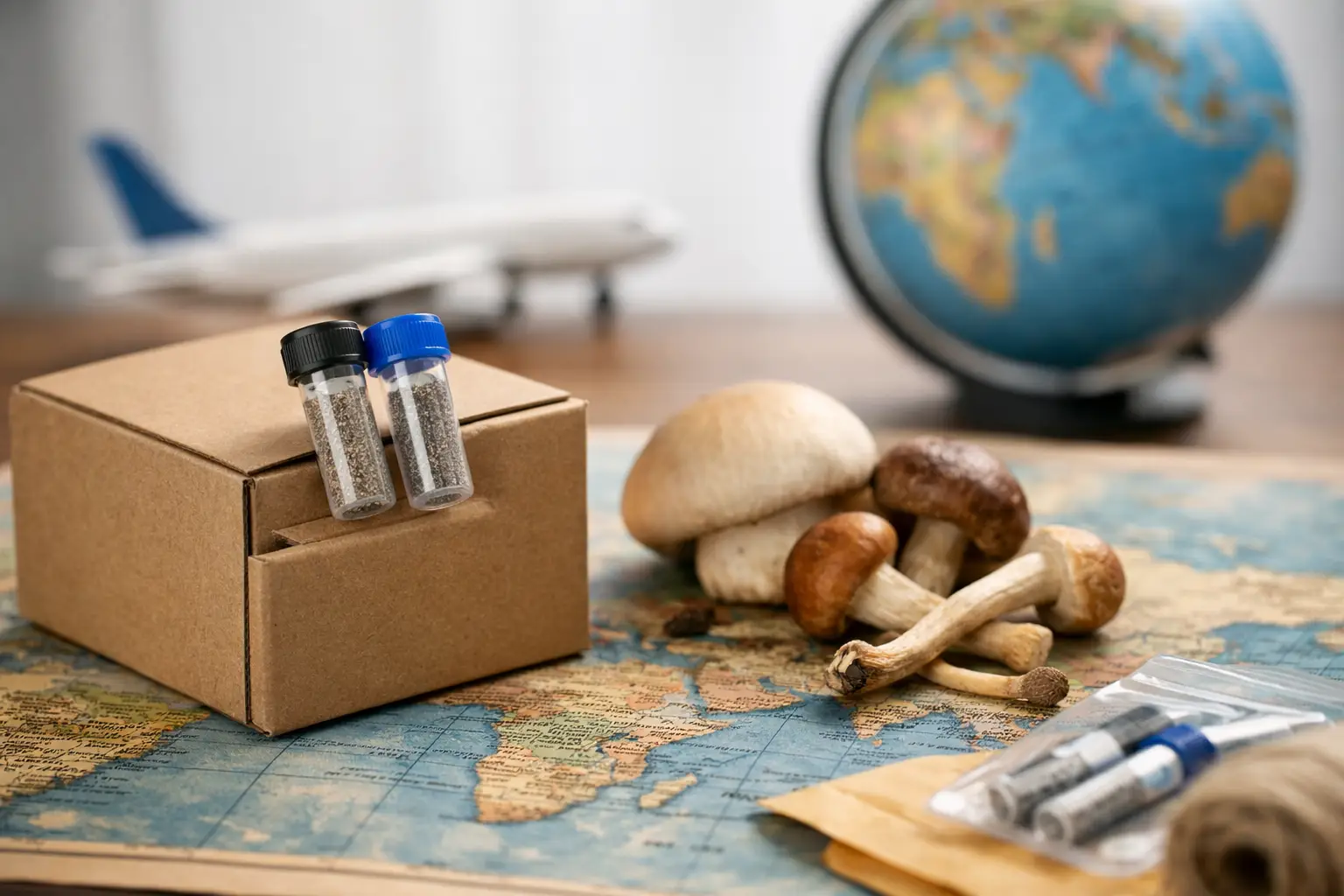
A great spore selection means very little if it cannot make it through the mail correctly. Worldwide mushroom spore shipping is not simply a matter of choosing a strain, adding it to cart, and waiting for delivery. Destination rules, carrier service, product format, weather, customs processing, and accurate address details all influence what a smooth international order looks like.
For collectors, microscopy-focused buyers, and edible mushroom enthusiasts, the smart move is to understand the shipping side before checkout. That protects your order, sets realistic expectations, and helps you choose the format that makes the most sense for your location and project.
What Worldwide Mushroom Spore Shipping Involves
International orders move through more hands than domestic ones. A package may pass from the originating postal network to an export facility, customs authorities, an inbound carrier, and finally a local delivery service. Each handoff can add time, and some regions experience longer processing periods than others.
The first consideration is always destination eligibility. Rules governing spores, cultures, biological materials, agricultural goods, and imported fungi vary by country, state, province, and territory. An item that is available for delivery in one place may be restricted, require additional documentation, or be unavailable in another. Buyers are responsible for knowing the rules that apply where they live before placing an order.
This is not just a checkout detail. It is part of responsible collecting and cultivation. A reliable specialty shop can organize its catalog clearly and ship with care, but it cannot override local import restrictions or customs decisions.
Destination Rules Come First
Before comparing shipping speeds, check whether the product format is appropriate for your destination. Spore prints, spore syringes, liquid cultures, agar products, and ready-to-inoculate items are not treated identically by every jurisdiction. Some locations may permit one format while placing tighter controls on another.
It also matters whether you are ordering for microscopy, collection, research, or edible cultivation. The intended use does not replace local regulations, but it should guide your product choice. If a destination has strict agricultural controls, a dry print may be easier to evaluate than a live culture, while an edible culture may be the practical choice for a permitted gourmet project. It depends on both local rules and what you actually intend to work with.
When in doubt, verify current import requirements through the relevant local authority before ordering. Regulations change, and old forum posts are not a substitute for current guidance.
Choosing the Right Product Format for Shipping
The format you select affects transit resilience, handling, and the type of experience you will have after delivery. There is no universal best option. The right pick depends on your project, your level of experience, and the distance the package needs to travel.
Spore prints are compact, low-profile, and often well suited to collectors and microscopy users. They take up very little space and do not introduce the same leak concerns as liquid products. For buyers who value long-term storage potential and a broad strain library, prints can be a practical addition to the collection.
Spore syringes offer convenience for buyers who prefer a prepared liquid format. They are popular because they reduce preparation steps, but they require thoughtful packaging to prevent damage or leakage during transit. Temperature extremes can also be more relevant with liquid-based items, especially when shipping routes are long or seasonal weather is severe.
Edible cultures and ready-to-inoculate products are often chosen for hands-on gourmet cultivation. These products can be especially time-sensitive compared with dry materials. If you are ordering a live product internationally, plan for the possibility of customs delays and choose a shipping method that provides tracking whenever available.
For large orders, mixed-format bundles can be a good way to build out a collection or cultivation shelf. Just remember that combining several formats does not eliminate destination restrictions. Every item in the package should be suitable for import to your delivery address.
Packaging, Discretion, and Product Protection
A quality shipment starts with packaging designed for the material inside. Prints need protection from bends, moisture, and crushing. Syringes need secure containment and cushioning. Culture products need stable packing that limits movement while helping protect them from ordinary shipping stress.
Discreet, professional packaging benefits everyone. It helps prevent unnecessary attention during transit, keeps the order organized, and reduces the chance of accidental damage. Clear internal labeling also helps buyers identify what they received without turning unpacking into a guessing game.
Weather is the variable no one controls. Extreme summer heat, winter cold, and delayed regional delivery can affect some formats more than others. If your area is facing a major weather event, postal disruption, or holiday backlog, waiting for a more stable shipping window may be the better call. A few extra days before dispatch can be preferable to a package sitting in an unpredictable transit loop.
Tracking Is Useful, But It Is Not a Customs Shortcut
Tracked shipping is usually the best choice for international orders because it gives both buyer and seller a clearer view of the package journey. Tracking can show acceptance, export movement, arrival in the destination country, customs processing, and final delivery attempts.
Still, tracking does not guarantee a fixed delivery date. Once an order enters customs, the carrier may have limited control over timing. A scan may remain unchanged while a package is being reviewed, transferred between facilities, or awaiting the next local update. That can be frustrating, but it is common with cross-border shipments.
Use tracking as an information tool, not a countdown clock. Check it periodically rather than refreshing it every hour, and make sure your delivery address, postal code, apartment number, and contact details are complete before placing the order. Address errors are among the most avoidable reasons an international shipment gets delayed or returned.
What to Do If a Package Is Delayed
First, read the latest tracking status closely. “In transit” can mean movement between facilities, while “held,” “awaiting clearance,” or a local delivery exception may point to a specific next step. If the carrier requests information or payment of applicable duties, respond through the carrier’s official channel promptly.
Avoid assuming a parcel is lost just because tracking pauses. International scans can lag, particularly after a package reaches the destination country. If there has been no meaningful movement beyond a reasonable transit window, contact the seller with your order number and the current tracking details. Keep the message specific and factual so the support team can assess the shipment quickly.
Customs, Duties, and Buyer Responsibilities
Customs authorities make the final call on items entering their jurisdiction. A seller can prepare an order accurately, but cannot guarantee admission, release speed, or a waiver of taxes and duties. Buyers should expect that cross-border purchases may involve fees set by their own country.
Do not ask a seller to misstate contents, alter values, or bypass documentation requirements. That can create bigger problems for the order and may jeopardize future shipments. Accurate paperwork is the better long-term approach for a healthy mycology community and a dependable international marketplace.
The same goes for local compliance. Specialty genetics, spore products, cultures, and cultivation supplies deserve thoughtful sourcing. Know what you can receive, know what you can possess, and choose products that align with the rules where you live.
Ordering Smarter From The Mycelium Network
A well-planned order is easier to pack, easier to track, and less likely to create surprises. Start by selecting products that fit your destination and intended use. Then choose the shipping option that balances cost with visibility, especially if your order includes live or liquid formats.
Before you submit payment, review your cart one more time. Confirm your exact address, use a deliverable location where someone can receive the package, and avoid ordering immediately before travel. If you are building a collection, consider whether a larger order makes sense for your budget and destination rules rather than placing several small international shipments.
Myceli Nation is built for enthusiasts who want a wider mycology catalog without hopping between scattered suppliers. Whether you are browsing fan-favorite spore varieties, adding prints to a microscopy collection, or stocking up on edible cultures and supplies, shipping awareness belongs in the same decision as product selection.
International ordering works best when buyers treat it as a shared process: the seller packs responsibly, the carrier moves the parcel, customs applies local rules, and the buyer orders with accurate information and realistic expectations. Take those few minutes before checkout, and your next shipment has a far better chance of arriving as planned.