
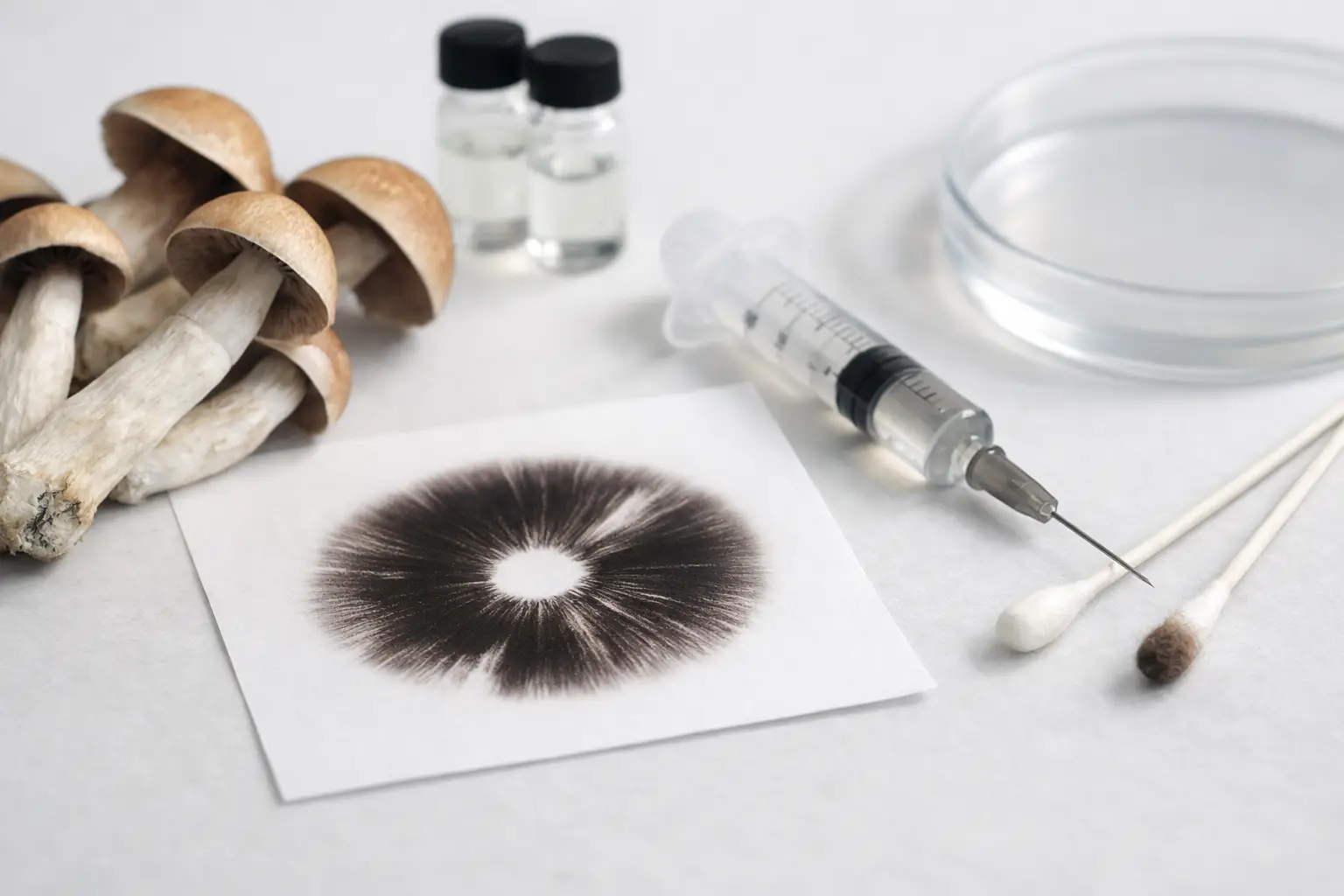
A dark spore print on foil, a labeled syringe in a sterile bag, or a clean swab pack may look like small additions to a mycology setup. But mushroom spores are where identification, microscopy, collecting, and many culture projects begin. The format you choose affects how you store it, observe it, and fit it into the rest of your workflow.
For collectors and hobbyists, the goal is not simply to grab the first listing with a familiar name. It is to match the format to the project, check how the product was prepared and packaged, and keep expectations realistic. A print, syringe, and swab each offer a different kind of flexibility.
What Are Mushroom Spores?
Spores are microscopic reproductive cells produced by fungi. They are the fungal equivalent of a starting point, carrying genetic material that can be examined, preserved, or used in appropriate culture work. A mature mushroom releases an enormous number of spores, though only a small fraction would ever encounter the conditions needed to continue naturally.
That is part of what makes spores so compelling to mycology enthusiasts. They are compact, varied, and biologically complex. Under a microscope, details such as color, shape, size, and surface texture can help support identification. For collectors, a well-made print is also a physical record of a specimen and its spore deposit.
Spores are not the same as live culture. A culture typically contains established fungal growth, while spores must first germinate before they develop further. This distinction matters when you are comparing products. If you want a ready-to-work edible option, culture products may suit the project better. If you value microscopy, collecting, or genetic variety, spores are often the more natural choice.
Mushroom Spores Come in Several Formats
The best format depends on what you want to observe, store, or work with. There is no universal winner. The right choice comes down to handling preference, equipment, and intended use.
Spore Prints
A spore print is a visible deposit of spores collected from a mushroom cap, usually on foil or another clean surface. It is one of the most recognizable formats in the mycology world, and it has lasting appeal for both collectors and microscopy-focused buyers.
Prints are compact and easy to catalog. Many enthusiasts appreciate being able to inspect the color and density of the deposit directly before preparing a slide. They also make sense for anyone building a physical collection organized by variety, date, source, or region.
The trade-off is handling. A print requires careful, clean technique whenever material is transferred for observation or other lawful work. It is less immediately convenient than a prepared syringe, but that extra hands-on step is exactly what some hobbyists enjoy.
Spore Syringes
A spore syringe suspends spores in sterile water inside a sealed syringe. For buyers who prefer a ready-to-use format for microscopy preparation or appropriate culture applications, the convenience is obvious. It can be easier to dispense a small, controlled amount of liquid than to work from a dry print.
A quality syringe should be clearly labeled and packaged with care. Look for practical details: the variety name, volume, a secure cap, and packaging that helps protect the product during transit. Once received, inspect the package before opening it and follow any product-specific storage guidance.
Syringes are popular because they reduce preparation time, but they are not automatically better than prints. A collector may prefer the permanence of foil prints. A microscopy hobbyist who wants repeatable slide preparation may prefer a syringe. Both belong in a well-rounded mycology supply lineup.
Spore Swabs
Swabs place spores on the tip of a sterile applicator. They are a clean, minimal format often chosen for close handling and compact storage. Compared with prints, swabs contain less visibly obvious material, so they may feel less satisfying to collectors who want a displayable specimen. Still, they can be highly practical for specific microscopy and culture workflows.
Because the material is not presented as a visible deposit, clear labeling matters even more. Keep swabs in their original packaging until needed, and avoid mixing labels, sleeves, or storage containers between varieties.
Choosing the Right Format for Your Goal
Start with the question that actually matters: what do you want to do with the product? A casual collector who enjoys building a reference archive will often get more value from prints. Someone preparing microscope slides regularly may find syringes easier to portion. A hobbyist with limited storage space may appreciate the simplicity of swabs.
It also depends on your existing setup. If you already keep clean work materials, slides, labels, and basic microscopy gear on hand, each format can fit naturally into your routine. If you are starting from scratch, avoid overbuying. Choose one format, learn how it behaves in your own workspace, and build from there.
Variety selection deserves the same level of attention. Names can be useful for organizing a collection and comparing product types, but a name alone does not tell the full story. Read the listing for its format, quantity, preparation details, and intended category. A broad catalog is valuable when it helps you compare options clearly, not when it turns every purchase into guesswork.
Storage and Handling Make a Real Difference
Spores are small, but careless storage can create unnecessary problems. Keep products in a cool, dry place away from direct sunlight, excessive heat, and frequent temperature swings. Avoid leaving packages in a car, near a radiator, or on a sunny windowsill.
Labels should stay with the product from arrival through storage. If you transfer an item to a different container or organizer, label it immediately with the variety, format, and date received. This sounds basic, yet it prevents one of the most common collector mistakes: ending up with an unidentified print or syringe weeks later.
Clean handling is equally valuable. Set up a tidy work surface, use fresh materials for each observation session, and minimize exposure to household dust and open-air clutter. You do not need to turn a hobby bench into a laboratory to benefit from good habits. Consistency is more useful than complicated rituals.
How to Shop Mushroom Spores With Confidence
Online shopping makes it easier to find specialized varieties and formats without piecing together orders from scattered sellers. Still, product presentation should do the work of reducing uncertainty. Strong listings identify the format, describe what is included, and make it simple to compare individual options with bundles or category selections.
Before ordering, check the basics: whether you want a print, syringe, or swab; how many items you need; the seller’s shipping coverage; and the product’s stated purpose. If you are trying several varieties for a collection, a bundle can offer better value and keep your order organized. If you are evaluating a new format, a single item may be the smarter first move.
Myceli Nation is built around that kind of choice, with mushroom supplies organized for collectors, microscopy-focused buyers, and edible culture enthusiasts who want fewer dead ends between browsing and ordering. The best purchase is still the one that matches your own project rather than the one with the loudest name.
Build a Collection You Can Actually Use
A useful spore collection is not necessarily the biggest one. It is the one you can identify, store properly, and revisit with purpose. Keep a simple record of what you have, when it arrived, the format, and any microscopy notes that matter to you. That record becomes more valuable as your interest grows.
Mushroom spores reward patience and curiosity. Start with a format that fits your current setup, treat each item as something worth labeling and handling carefully, and leave room for your collection to develop alongside your skills.