
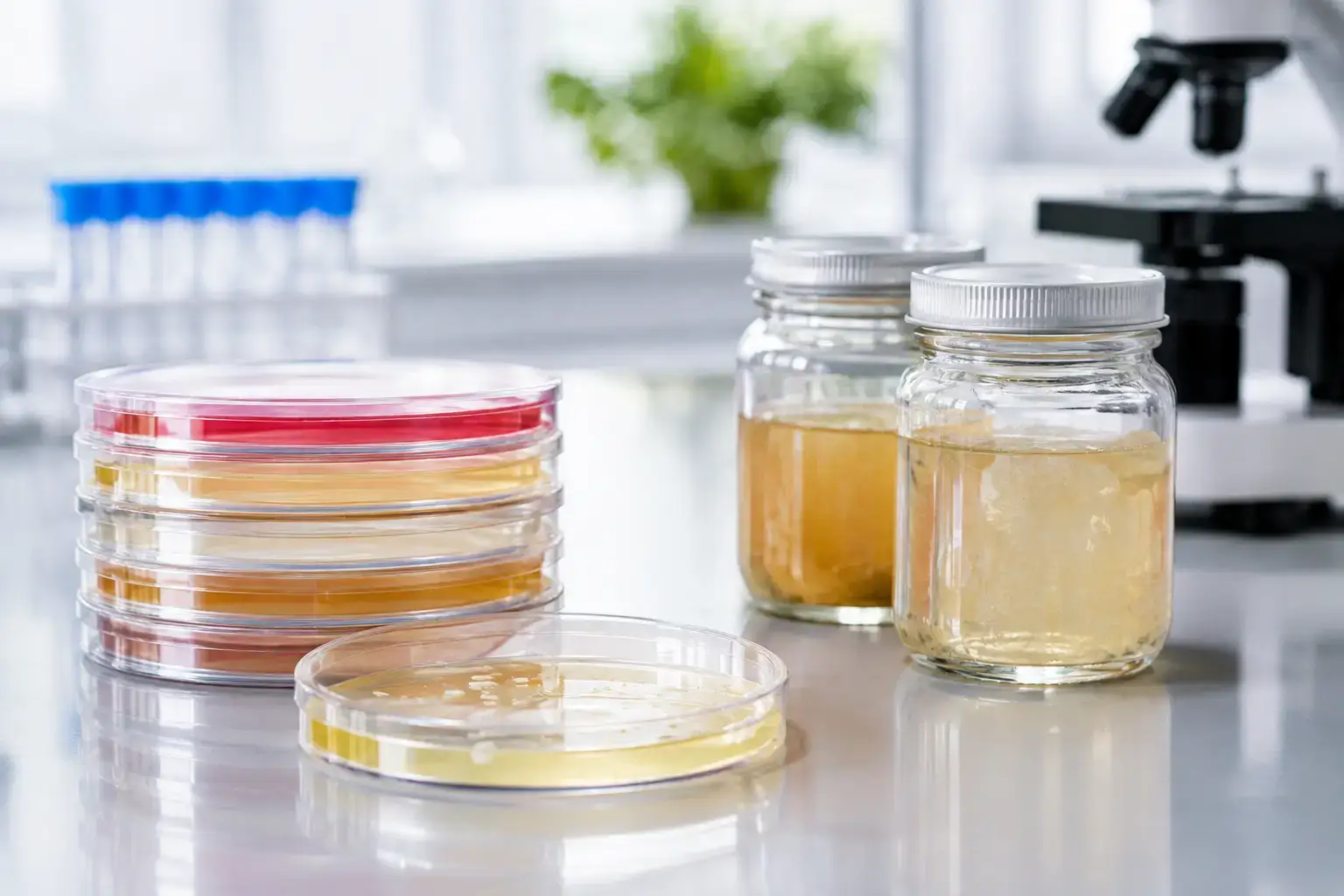
A clean culture can look very different depending on what it is growing in. The practical question behind culture plates versus jars is not which vessel is universally better. It is which one gives you the visibility, access, capacity, and workflow you need at this stage of your grow.
Plates are the standard for close inspection and precise culture selection. Jars bring durability, volume, and a format that can make more sense for storage or larger-scale preparation. Both have a place on a serious mycology bench, but they solve different problems.
Culture Plates Versus Jars: The Core Difference
Culture plates usually refer to shallow Petri-style dishes poured with agar. They create a broad, flat surface where mycelium can spread outward in visible sectors. That visibility is the main advantage. You can watch growth patterns, identify clean leading edges, spot suspicious growth early, and take targeted transfers from exactly where you want them.
Culture jars may refer to agar in small glass jars, media bottles, or reusable containers with modified lids. They can also mean liquid culture jars, which are a different tool altogether. An agar jar and an agar plate are comparable because both grow mycelium on solid media. A liquid culture jar is better viewed as a multiplication vessel, not a direct replacement for a plate.
For clean culture work, plates give you a map. Jars give you a container with more protection and often more staying power.
Why Plates Are the Go-To for Isolation and Transfers
If you are starting from spores, cloning tissue, or cleaning up a culture, plates are hard to beat. The flat agar surface makes it easy to see whether growth is even, rhizomorphic, tomentose, fast, slow, or mixed with something you do not want. You are not guessing through curved glass or working around a narrow opening.
A plate also makes selective transfers straightforward. Once a healthy section reaches the outer edge, you can take a small wedge from clean growth and move it to fresh agar. Repeating that process lets you separate desirable growth from questionable areas and build a more reliable culture line over time.
This is especially useful when you are working from a spore print, syringe, or wild clone. Early growth can be variable. Plates let you observe that variation rather than committing the entire culture to a larger container before you know what is happening.
Plates are also efficient for side-by-side work. You can run several recipes, temperatures, or culture samples at once without dedicating much shelf space. For hobby cultivators who enjoy comparing growth, that quick visual feedback is a major part of the appeal.
The trade-off is that plates are more exposed during handling. Each time a dish is opened for an inoculation or transfer, technique matters. Condensation can obscure the surface, and thin plastic dishes are easier to crack, warp, or accidentally contaminate than a sealed glass jar. Plates are excellent working tools, but they reward clean habits.
Where Culture Jars Earn Their Place
Agar jars are a strong option when durability and reusability matter more than maximum visibility. A small glass jar with a lid can be pressure sterilized, washed, and used again. For cultivators who want to reduce disposable dish use, that is a meaningful advantage.
The lid also provides more protection for cultures that need to sit for a while. A properly prepared jar is less likely to be bumped open or dried out quickly compared with a loosely sealed plate. This makes jars useful for holding backup cultures, especially when you are not planning frequent transfers.
Jars can be practical when working with larger agar volumes as well. A wider-mouth jar gives enough room to take transfers while offering a sturdier vessel than a plate. Still, the opening shape matters. Narrow-mouth jars can make accurate transfers frustrating, and deep containers limit your angle when using a scalpel or inoculation loop.
Visibility is the compromise. Mycelium may grow across the surface, but the curved walls and lid can create glare. Condensation can collect on the glass, and it is harder to inspect fine details at the edge of a colony. If your goal is choosing the cleanest sector from a mixed plate, jars are usually not the first choice.
For many growers, the best use of jars is not replacing plates entirely. It is keeping a few dependable cultures in a protected, reusable format after the selection work is done.
Do Not Confuse Agar Jars With Liquid Culture Jars
Liquid culture has a different job. Instead of growing across agar, mycelium develops in a nutrient broth. When the culture is healthy and clean, liquid culture can help expand a selected line and inoculate more material efficiently.
The challenge is verification. A clear-looking liquid culture is not automatically clean. Fine contamination can be difficult to spot in a jar of broth, particularly for newer cultivators. That is why many experienced growers test a liquid culture on agar before relying on it for larger projects.
A reliable workflow often looks like this: begin or clean up a culture on agar, select healthy growth, expand the chosen culture in the format that fits the next stage, and keep a backup on agar. Plates and jars are not competing endpoints. They can be connected parts of the same culture library.
Choose Based on Your Actual Workflow
If your priority is inspection, isolation, and learning how different cultures behave, start with plates. They are the clearest window into what the mycelium is doing. This is the format that makes sense when you want to make repeated transfers, compare multiple samples, or catch contamination before it spreads through your workflow.
If you value reusable equipment, tougher storage, and a more protected vessel, agar jars deserve bench space. They are particularly handy for cultivators who prefer glassware, prepare small batches of media, or want cultures to hold securely between projects.
Space matters too. Plates stack neatly and are easy to organize by date, variety, and transfer generation. Jars take up more vertical room and weigh more, but they are less delicate when you are moving supplies or storing cultures in a busy workspace.
Your budget may influence the choice. Disposable plates offer convenience and consistent sizing, while jars cost more upfront but can pay off over repeated use. The right calculation depends on how often you work with cultures and whether washing and sterilizing glass fits your routine.
A Practical Setup for Most Cultivators
For most home culture work, a mixed setup is more useful than choosing one side of the culture plates versus jars debate. Keep plates available for active projects: germination, cloning, transfers, and culture evaluation. Use jars or other reusable containers for selected backups and longer holds when their durability is an advantage.
Label everything immediately. Include the culture name, date, transfer number, and media type. A plate or jar without a label becomes a mystery fast, especially once you have several projects moving at different speeds. Clear labeling is one of the simplest ways to protect the time you put into clean culture work.
Also keep your media and technique consistent while you are comparing formats. If one culture is on fresh agar and another has been sitting for weeks, the container alone is not the reason their growth looks different. Give yourself a fair comparison by using similar media, incubation conditions, and inoculation methods.
Build a Culture Library That Works for You
The best culture collection is not the one with the most containers. It is the one you can inspect, track, and use without confusion. Plates help you make better decisions when a culture is still being evaluated. Jars help you protect and retain cultures that have already earned a place in your lineup.
Myceli Nation is built for cultivators who want more than a single purchase – they want a connected supply bench, a growing library, and the confidence to keep improving their process. Start with the vessel that matches the task in front of you, then let your workflow tell you what to add next.