
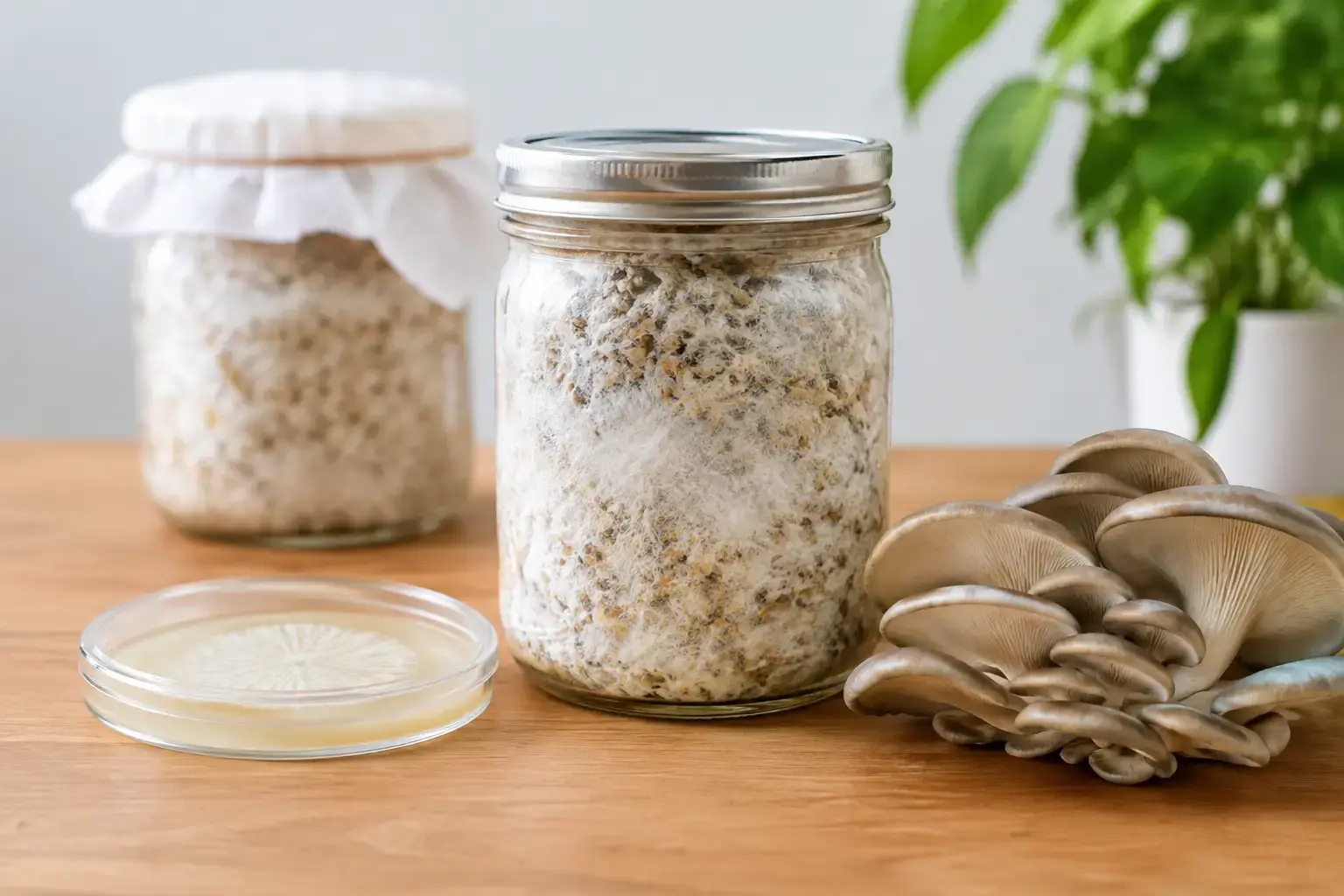
A clean culture can be one of the most useful things in a cultivator’s library. But are mushroom cultures reusable in the way a tool is reusable? Not exactly. A culture can be expanded, transferred, stored, and used across multiple projects, but every handling step adds age, contamination risk, and the possibility of losing the traits that made it worth keeping.
The practical answer is yes: mushroom cultures are reusable when they are kept clean, handled with solid sterile technique, and refreshed before they decline. The better question is how many times to reuse a culture, and which format makes sense for the job.
Are Mushroom Cultures Reusable for Multiple Grows?
A mushroom culture is living mycelium, not a one-and-done supply. If you have a clean agar plate, a healthy liquid culture, or a properly stored slant, you can use it to start more than one batch. The culture is a genetic source, while the material it inoculates is usually the production step.
For example, a clean agar plate can provide several small transfers to fresh plates or other prepared media. A liquid culture can inoculate multiple sterile jars or bags. A culture on a slant can be transferred back to fresh agar when you are ready to bring that line into active use.
That does not mean every container should be reused indefinitely. The original plate, jar, or slant has a working life. Once it has been opened repeatedly, looks stressed, or shows any questionable growth, its value drops fast. Experienced cultivators protect their best genetics by maintaining a clean master culture rather than relying on the same working plate month after month.
The Culture Format Changes the Answer
“Culture” covers several formats, and each has a different reuse pattern. Knowing the difference keeps a promising line from becoming an avoidable cleanup project.
Agar cultures are made for selection and transfer
Agar is usually the easiest format for judging culture health. You can see the mycelium, watch its growth pattern, and isolate clean sections away from any suspicious area. A healthy plate can be used to make several transfers, but it should not become the permanent source for every future project.
The standard move is to transfer vigorous, clean growth from the leading edge to fresh agar. That new plate becomes a working culture. If the original plate is a verified clean master, keep its handling to a minimum and make copies from it only when needed.
Agar also gives you a chance to spot sectoring. With multispore cultures, different genetic expressions may appear across the plate. That is normal. With a selected clone culture, unexpected changes in texture, color, or growth rate deserve a closer look before you expand it.
Liquid cultures are productive, but less forgiving
Liquid culture is efficient because it can distribute mycelium across several inoculation points. It is also harder to inspect with confidence. Cloudiness, sediment, or a strange smell can suggest trouble, but a jar can look normal and still carry contamination.
For that reason, treat liquid culture as a working expansion tool, not the only record of a favorite culture. Test it on agar before committing a larger project whenever possible. Starting a new liquid culture from a clean agar transfer is generally more dependable than repeatedly expanding liquid-to-liquid.
A fresh, clean liquid culture can serve multiple projects. An old one that has been warmed, opened often, or kept past its prime is not a bargain. It is a gamble that can waste prepared materials and time.
Grain spawn has a shorter role
Colonized grain can sometimes be used to expand more grain under clean conditions, but it is not the strongest choice for long-term culture maintenance. Grain is nutrient-rich, which makes it productive but also leaves less room for error. Repeated grain expansion can increase contamination risk and move the culture farther from its original clean source.
Use grain primarily as a production step. Keep the genetics you care about on agar or slants, where they can be monitored and refreshed with more control.
Reuse Is Not the Same as Endless Expansion
Every transfer is a generation of handling. Even when a culture appears healthy, repeated expansion can gradually introduce issues: hidden contamination, reduced vigor, changing growth behavior, or simple confusion about which line came from where.
Some cultures hold their performance for a long time. Others slow down after repeated transfers or storage cycles. The exact limit depends on species, genetics, media, storage conditions, and how consistently clean your workflow is. There is no universal number of transfers that guarantees success.
This is why cultivators often separate cultures into three roles: a master culture for preservation, a working culture for regular transfers, and production material for inoculation. That small system creates a buffer. If a working plate contaminates, you still have the master. If production material performs poorly, you can return to a clean point instead of trying to rescue a tired line.
For hobby growers, even a simple labeling habit makes a major difference. Include the strain or species name, transfer number, date, and source. “Plate 3” is not useful six weeks later. “Blue Oyster clone, T2, 4/12” tells you what you are actually working with.
When Should You Retire a Mushroom Culture?
Retire a culture when it gives you a reason to doubt it. Contamination is the obvious reason, but it is not the only one. Slow recovery after transfer, weak growth, unusual texture, excessive moisture, discoloration, or an off odor are all signals to pause.
Do not assume a questionable culture will correct itself in the next batch. A clean transfer from clearly healthy leading growth may be worth trying on agar, especially if the culture is valuable. But if you cannot confidently identify a clean section, starting again from a reliable source is usually the smarter move.
Age matters too. A culture stored too long can remain viable while losing the vigor you want for production. Viability means it can still grow. Vigor means it grows well. Those are not the same thing.
Watch for these common warning signs
A culture deserves scrutiny when you see growth that changes from its normal pattern, colors that do not belong, a sour or sweet odor, unexplained wet spots, or growth that stalls after a fresh transfer. One sign does not always prove failure, but several signs together are enough to stop expanding it.
When in doubt, isolate and test on fresh agar rather than introducing uncertainty into every part of your grow setup.
How to Keep a Reusable Culture Useful
The goal is not to make one plate last forever. The goal is to preserve a clean genetic line while giving yourself fresh, reliable material for active projects.
Start with clean handling. Work deliberately, keep surfaces organized, minimize how long containers stay open, and never treat a questionable culture as clean because it looks close enough. Contamination spreads cheaply at the plate stage and expensively after you have committed larger materials.
Store cultures at stable, appropriate temperatures for the format and species you are working with. For longer preservation, slants are a practical option because they reduce the need for frequent transfers. For active projects, fresh agar plates provide better visibility and easier quality control.
Avoid overhandling your best culture. Make a few working copies, then use those copies for testing, transfers, and production. It is a simple practice that protects the lines you would hate to lose.
Build a Small Culture Library
You do not need a lab-sized collection to benefit from good culture management. A small library of clearly labeled master cultures and working plates can make your growing process more consistent and far less frustrating.
Keep only the lines that earn their space. Favor clean growth, reliable performance, and traits you actually want to revisit. If a culture repeatedly causes uncertainty, it is taking up more room in your workflow than it deserves.
For cultivators building out their supplies, Myceli Nation is your home for mycology essentials, from culture-ready materials to the formats that fit your next project. Start clean, label carefully, and let your best cultures stay protected while your working cultures do the heavy lifting.