
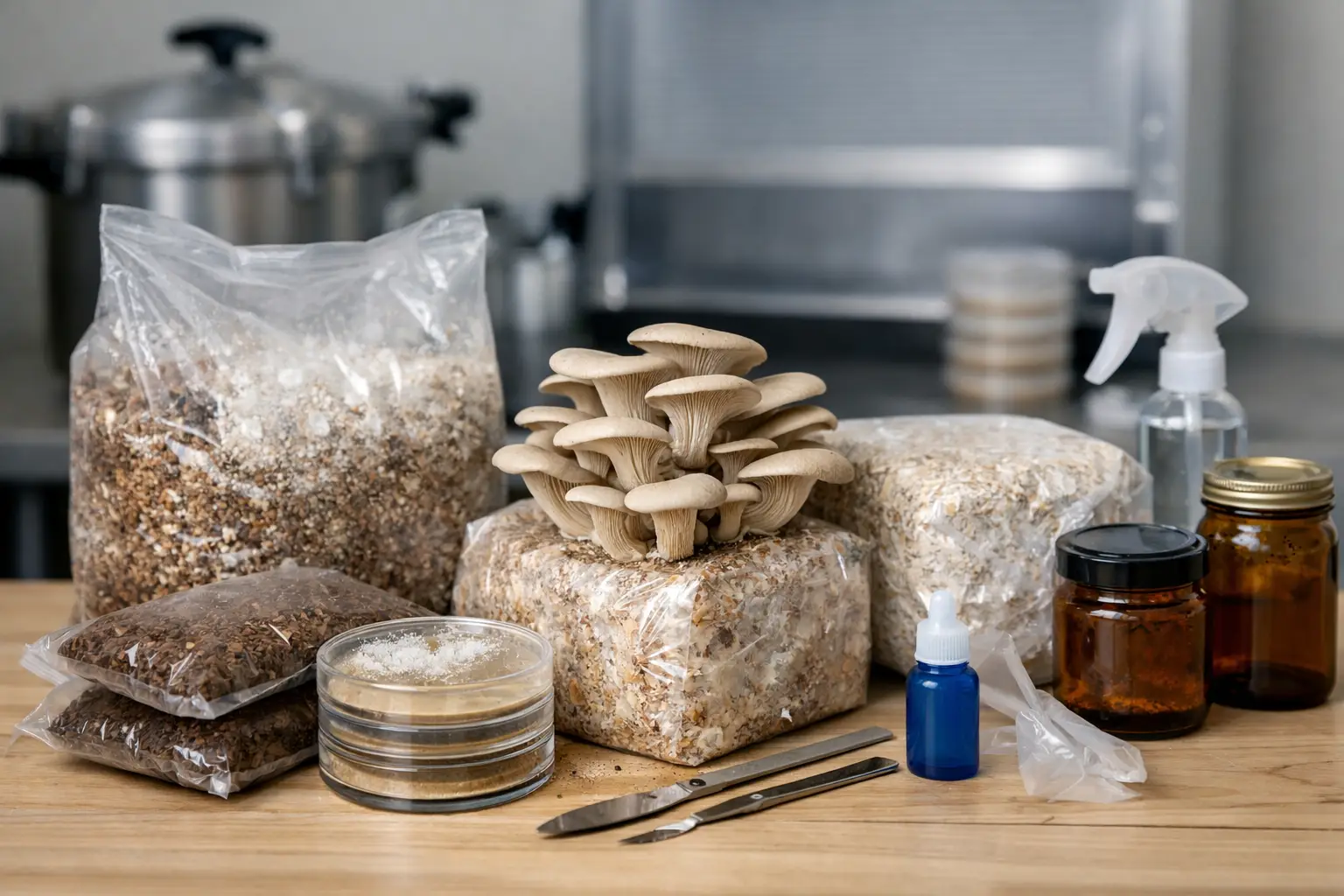
A great grow setup can be derailed by one weak link: a mislabeled culture, a dried-out syringe, a grain bag that arrives damaged, or basic supplies bought from five different shops with five different delivery windows. A smart mycology supply sourcing guide helps you build your order around compatibility, quality signals, and the way you actually work at the bench.
For hobbyists, collectors, and microscopy-focused buyers, the goal is not simply to find the lowest price. It is to source the right format, from a seller with clear product information, practical shipping standards, and enough inventory depth to keep your next project from becoming a scavenger hunt.
Start With the Format, Not the Strain Name
Strain names get attention, and for good reason. Fan favorites such as Golden Teacher, B+, Blue Meanie, and Lizard King are familiar points of reference for many enthusiasts. But before choosing a name, decide which format fits your purpose and experience level.
Spore syringes are a familiar option for microscopy work and for buyers who value compact, ready-to-use packaging. Look for clear labeling, a stated volume, and packaging that protects the syringe during transit. A syringe should not be treated as interchangeable with every other starting material just because the name on the label is similar.
Spore prints appeal to collectors and microscopy enthusiasts who want a classic, low-profile format. A quality print should be securely packaged, clearly identified, and handled in a way that minimizes unnecessary exposure during shipping. If you are building a collection, consistent labeling matters as much as the individual variety.
Edible cultures are a separate category with their own sourcing priorities. Here, vigor, species identification, format, and the supplier’s handling practices carry more weight than flashy naming. If your plans involve culinary varieties, source cultures from a shop that makes it easy to distinguish them from spore products and related supplies.
Ready-to-inoculate products can simplify shopping when you want to reduce the number of components in an order. The trade-off is that these products are more sensitive to fulfillment timing, storage conditions, and shipping distance. Check availability before planning around them, especially during periods of extreme heat or cold.
Mycology Supply Sourcing Guide: Build Around Compatibility
Buying each item individually may feel flexible, but it can create avoidable friction. A better approach is to map the core pieces of your project before filling the cart: starting material, sterile work supplies, containers or prepared media, labels, cleaning supplies, and storage considerations. You do not need every possible accessory. You need products that make sense together.
For example, a buyer focused on microscopy may prioritize prints, slides, sterile water, labeling materials, and reliable storage. Someone shopping for edible culture projects may need cultures, appropriate prepared products, gloves, sanitation supplies, and a backup option in case a favorite variety sells out. The right cart depends on the project, not on a generic starter list.
Bundles are worth a close look when they combine products you would genuinely purchase on their own. A multi-pack can lower the cost per item and give you more variety, but only if every item fits your interests. Avoid buying a bundle just because it looks like a deal. The best bundle reduces repeat shipping costs and fills real gaps in your collection or supply shelf.
It also helps to separate essentials from nice-to-haves. Sterile consumables, clear labels, and dependable packaging are often more useful than novelty gear. Build the reliable base first, then add variety as your routine develops.
Read Product Pages Like a Buyer, Not a Browser
A polished storefront is helpful, but the product page does the real work. Before ordering, look for specific details: product format, quantity or volume, variety name, handling notes, what is included, and any relevant shipping restrictions. Clear categorization is another good sign. You should be able to tell at a glance whether you are viewing spores, prints, edible cultures, ready-to-inoculate products, or cultivation supplies.
Pay attention to naming consistency. If the same product is called three different things across category pages, product titles, and bundle descriptions, it becomes harder to compare what you are actually buying. Reliable sourcing starts with information you can understand without guessing.
Photos matter, but they should support the description rather than replace it. Packaging images can show scale and presentation, while written details answer the questions that affect your order. If you are comparing several options, make a quick note of format, size, price, and availability instead of relying on memory after ten tabs.
Stock status deserves extra attention. Some specialty items move quickly, and waiting to assemble a perfect cart can mean missing the one culture or print you actually wanted. If a product is central to your order, confirm it is available before adding secondary items.
Evaluate the Seller’s Fulfillment Standards
Specialty mycology products do not benefit from vague shipping language. A seller should make it reasonably easy to understand where they ship, when orders are processed, how products are packaged, and what customers should do if an item arrives with an issue.
Worldwide shipping can be valuable for buyers outside the United States, but it also adds variables. International customers should account for transit time, customs processes, local import rules, and potential weather exposure. Faster is not always possible, so choose products and shipping methods with realistic expectations.
For domestic orders, weather still matters. High heat, freezing temperatures, and long carrier delays can affect sensitive supplies. Consider your local conditions before ordering, and avoid leaving deliveries unattended when possible. If you are stocking up, it may be smarter to order before a holiday rush rather than during it.
Customer support is another sourcing signal. You do not need a dramatic guarantee for every item, but you should be able to find a clear policy and a straightforward way to contact the seller. Transparent policies tend to reflect a retailer that understands the realities of specialized inventory.
Balance Variety With Repeatability
A huge catalog is exciting, especially when you are curious about exotics, new edible varieties, or different collection formats. Still, buying too many unfamiliar products at once makes it harder to learn what you prefer. Variety is useful when it gives you meaningful comparisons. It is less useful when it creates clutter and confusion.
A practical pattern is to choose one or two reliable favorites, then add a small number of new options per order. That keeps your supply shelf organized and makes reordering easier. Once you know which formats, packaging styles, and categories suit your needs, you can expand with more confidence.
Repeatability also means keeping records. Note the date of purchase, supplier, product name, format, and any relevant lot or label information. A simple notebook or spreadsheet is enough. When you find a product that fits your routine, those notes make the next order faster and more intentional.
Shop With Local Rules and Responsible Use in Mind
Mycology products can be subject to different laws, regulations, and seller policies depending on the product type and where you live. Review the rules that apply in your location before purchasing, particularly when ordering across state lines or internationally. Responsible sourcing includes knowing what you are permitted to possess, collect, study, or use.
It is also worth respecting product labels and stated intended uses. Specialty retailers organize their catalogs to help customers find products efficiently, but the buyer is still responsible for making informed choices. When in doubt, ask questions before ordering rather than after a shipment is already in motion.
Make Every Order Easier Than the Last
The strongest supply source is one you can return to without redoing all the research. That usually means clear categories, dependable stock, useful bundles, transparent shipping information, and enough selection to support both familiar favorites and new interests. Myceli Nation brings those pieces together as part of The Mycelium Network, helping buyers shop spores, prints, edible cultures, and cultivation supplies from one dedicated storefront.
Treat your next order as the start of a better system, not a one-time purchase. Source carefully, keep notes on what works for you, and let each well-planned cart make the next project simpler.