
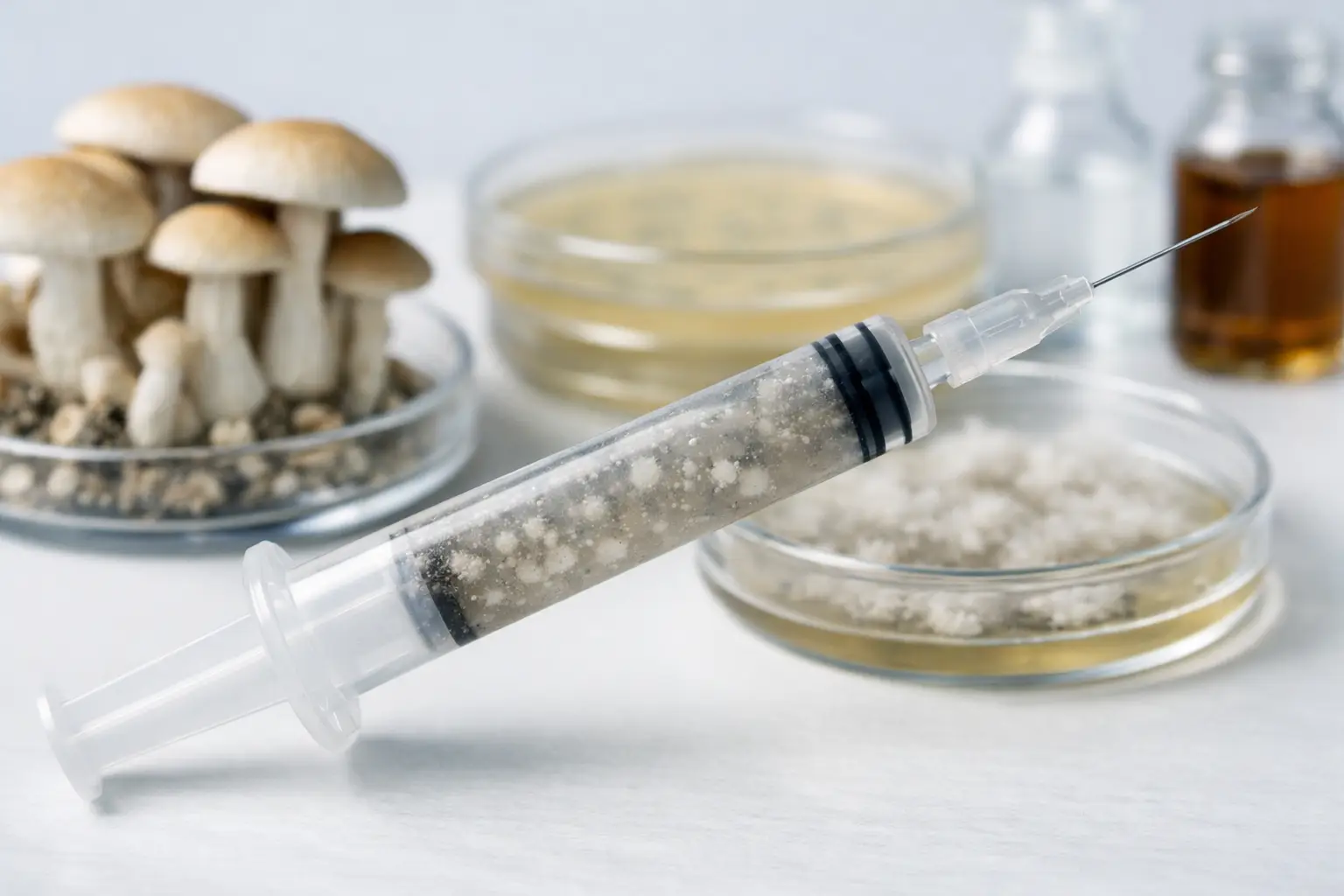
A syringe that looks darker or cloudier than expected can stop a microscopy project before it starts. So, why is spore syringe cloudy? In many cases, the answer is simply that the spores have been disturbed and are suspended in the water. In others, a persistent milky haze, unusual particles, or a sudden change in appearance can point to a quality issue worth taking seriously.
The key is separating normal spore behavior from signs that a syringe may not be in good condition. A little visual context goes a long way before deciding whether to store it, inspect it more closely, or contact the seller.
Why Is a Spore Syringe Cloudy? Start With Spore Density
A spore syringe is typically sterile water carrying a suspension of microscopic spores. Those spores do not always distribute evenly. When the syringe has been shaken during shipping, handled frequently, or recently mixed, the water can look smoky, grayish, brownish, or nearly opaque depending on the variety and concentration.
This is especially common with a dense syringe. A heavier spore load can create visible swirls, clusters, and dark streaks that make the liquid appear cloudy. That appearance alone is not automatically a red flag. Let the syringe rest upright for several hours or overnight at a stable temperature. If much of the material settles toward the bottom while the water above becomes clearer, you are most likely seeing normal sedimentation.
Spore clumps are normal, too. Spores can adhere to one another, particularly after sitting in storage. A gentle, controlled shake can break up some of those clusters and redistribute the contents. The goal is even suspension for observation, not a perfectly clear liquid. A clear syringe is not necessarily better, and a dark one is not necessarily defective.
Normal Haze vs. a Concerning Cloudy Syringe
The word “cloudy” can describe several different looks. A normal spore suspension often has a particulate quality. You may see fine specks, wispy trails, or darker material that moves when the syringe is tilted. The water may clear noticeably once it rests.
A concerning haze is more likely to look uniform and milky, with little visible definition between the water and the suspended material. It may resemble diluted milk, have a dull film-like appearance, or remain equally opaque after sitting undisturbed. This does not prove contamination by itself, but it gives you a reason to pause rather than assume the appearance is normal.
Color matters in context. Dark brown, purple-brown, or blackish specks can be consistent with spores. A pink, orange, green, or intensely yellow cast is less typical and deserves careful inspection. The same goes for unexpected floating mats, fuzzy-looking masses, oily droplets, or stringy material that does not resemble dispersed spores.
Odor is not a reliable test. A sealed syringe should remain sealed until you are ready to use it for its intended purpose, and opening it simply to smell it introduces unnecessary variables. Visual inspection, storage history, packaging condition, and the supplier’s support policy are more useful starting points.
Four Signs to Document Before Contacting Support
If you suspect that your syringe is not right, take clear photos before handling it further. The most helpful details are:
- A uniform, milk-like cloudiness that does not settle after resting
- Unusual colors such as pink, green, orange, or bright yellow
- Visible debris, floating films, or unexpected jelly-like material
- A damaged seal, leaking package, loose cap, or compromised sterile packaging
Photos taken against a plain light background, plus the product label and lot information if provided, make it much easier for a retailer to assess the issue. Avoid relying on a single photo immediately after shaking, since freshly suspended spores can look dramatically darker than they do after settling.
Shipping and Storage Can Change How It Looks
Temperature swings are one of the most overlooked reasons a syringe may arrive looking different from the product photo. Packages can sit in warm trucks, cold sorting facilities, or mailboxes for longer than planned. Those conditions can change how spores clump and settle, even when the package remains intact.
Movement is another factor. A syringe travels through conveyors, bins, and delivery vehicles before it reaches your door. By arrival, the contents may be fully agitated. Letting it rest is often the simplest first move. Do not judge the appearance solely at unboxing.
For storage, keep the syringe sealed, protected from light, and at a cool, stable temperature. Avoid freezing, direct sun, hot vehicles, and repeated warm-to-cold cycles. More handling means more agitation, and more agitation makes it harder to tell whether you are seeing normal suspended spores or a truly unusual change.
A labeled storage bag or container also helps prevent mix-ups. When you have several varieties in rotation, it is easy to forget which syringe looked dense from the start and which one changed over time. A quick arrival photo gives you a useful baseline.
What Not to Do When a Syringe Looks Off
Do not try to “fix” cloudiness by opening the syringe, transferring its contents, adding water, or filtering it. Those actions can compromise sterility and make the original condition impossible to evaluate. They can also prevent a seller from meaningfully reviewing a quality concern.
Do not assume every speck is contamination. Spores are visible material, and their natural clumping can look unfamiliar if you expect clear water. On the other hand, do not ignore a syringe that has an obviously damaged seal or a strikingly abnormal color. The balanced approach is to let it rest, compare what you see with normal particulate suspension, and document anything that remains concerning.
It also helps to avoid comparing every syringe to one idealized standard. Different varieties, batches, and spore concentrations can look noticeably different. One may show a light dusting of spores, while another has bold dark clusters. Consistency within a single syringe matters more than whether it matches a photo from another variety.
When to Reach Out to Your Supplier
Contact the supplier when the cloudiness remains uniform after settling, the packaging is compromised, or the contents show clearly unusual color or material. Be direct and specific: include your order number, the date received, storage conditions, whether the syringe was shaken, and photos taken after it has rested.
A reputable specialty retailer should be able to explain what normal appearance looks like for its products and tell you what information it needs for a quality review. This is more productive than guessing from color alone. It also helps the supplier track any possible shipping or batch issue.
If the syringe only appears dark immediately after movement and then separates into clearer water with visible sediment, it is generally behaving as expected. Store it correctly, keep the packaging clean and intact, and handle it only as needed. For collectors and microscopy-focused enthusiasts building a varied library, that small amount of patience protects both product quality and your peace of mind.
Cloudiness is a visual clue, not a verdict. Give the contents time to settle, look for the difference between defined spores and a uniform haze, and save your documentation. That practical habit makes every new addition to The Mycelium Network easier to evaluate with confidence.