
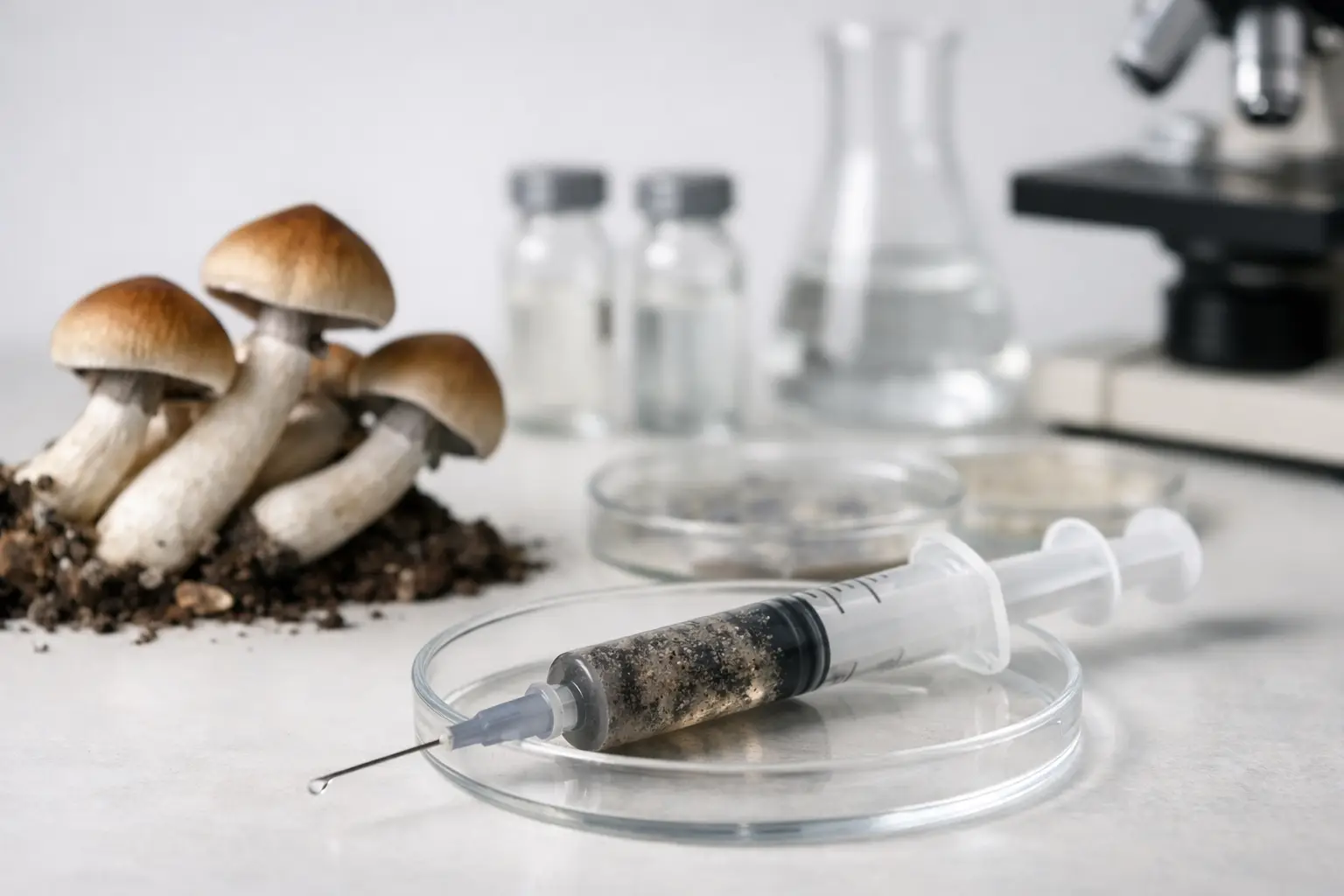
A mushroom spore syringe guide should do more than tell you which syringe to add to cart. It should help you recognize a well-prepared product, match it to your intended project, and handle it in a way that respects the work that goes into clean mycology. Whether you are building a microscopy collection, starting an edible culture project, or comparing fan-favorite varieties, the small details matter.
A spore syringe is simple in format: sterile water, suspended spores, and a sealed syringe fitted with a needle. But selecting the right one, storing it properly, and working cleanly can make the difference between a confident first attempt and a frustrating mystery. Here is what experienced buyers look for before, during, and after ordering.
What a Mushroom Spore Syringe Actually Is
A mushroom spore syringe contains microscopic spores suspended in sterile water. The syringe format is popular because it is compact, easy to label, and designed for controlled dispensing. With a gentle shake, the spores redistribute through the water so a small amount can be applied where it is needed for a lawful mycology, microscopy, or edible cultivation project.
Spores are not the same thing as live culture. A spore syringe begins with spores, which may need time to germinate and develop before you can evaluate the resulting growth. An edible liquid culture, by comparison, contains established living mycelium and is usually chosen when speed and consistency are the priority. Neither format is universally better. The right choice depends on whether you want to observe genetics from spores, preserve a collection, or work from an established culture.
The liquid in a syringe can look mostly clear, lightly cloudy, or show small dark clusters after spores settle. Appearance alone is not a complete quality test. Spores are microscopic, and different varieties can settle differently. Clear labeling, careful packaging, proper storage, and a trusted specialty supplier are stronger buying signals than expecting the water to look dramatically dark.
Choosing the Right Spore Syringe
Start by identifying your goal. Collectors and microscopy-focused buyers often choose varieties based on taxonomy, visual interest, or a desire to compare spore characteristics. Edible mushroom growers may prioritize species that suit their preferred growing conditions and cooking plans. If you are new to the format, do not let a long strain name make the decision for you. Read the product details, confirm the species or variety, and make sure it fits the project you actually intend to run.
A useful product listing should make the basics easy to find: the variety name, syringe volume, included needle information, handling guidance, and any relevant legal or regional restrictions. Buy from a source that treats labeling as part of quality control. A syringe you cannot confidently identify later is not a bargain, especially once your collection grows.
Consider volume realistically. More volume is not automatically more useful if your project is small. A standard syringe can support multiple carefully planned applications, while a smaller format may be ideal for testing or for buyers who want to sample a wider range of varieties. Bundles make sense when they provide genuine variety or when you already know how you will organize and use each syringe.
At Myceli Nation, the value of browsing a broad mycology catalog is being able to compare formats side by side: individual syringes, prints, edible cultures, and bundles each serve a different purpose. Shop for the format first, then narrow down the variety.
Spore Syringes vs. Spore Prints
A spore print is another compact way to collect and preserve spores. It is often favored by collectors and people who want a long-term archival format. A syringe is more immediately convenient because the spores are already suspended in sterile water and ready for controlled use.
The trade-off is preparation. Prints require you to prepare a sterile suspension before use, while syringes remove that step. If you value convenience and are working on a near-term project, a syringe is usually the straightforward choice. If you are building a catalog or prefer a compact backup format, a print can be a smart addition.
Clean Handling Starts Before the Cap Comes Off
Most avoidable problems come from rushed handling, not from the syringe itself. Before opening any package, set up a clean, uncluttered work area. Wash your hands thoroughly, disinfect the surface, and gather every item you will need so you are not reaching across the workspace halfway through the process.
Keep the syringe capped until the moment you are ready to use it. Avoid touching the needle, the cap interior, or any sterile contact surface. If the needle is packaged separately, open it only when your station is prepared. These habits are basic, but they are the backbone of reliable work.
Before dispensing, gently shake the syringe to redistribute settled spores. Do not treat it like a cocktail shaker. A few calm motions are enough. Then use steady, minimal pressure on the plunger. Forcing liquid quickly can make a precise application harder and create unnecessary mess.
If your project involves sterile media or prepared material, follow the product-specific handling instructions closely. Different materials have different moisture levels, access points, and ideal application amounts. More solution does not always mean better results. Excess moisture can create its own complications, so measured application is usually the better move.
Storage That Protects Your Purchase
Spore syringes should be kept cool, dark, and clean. Refrigerated storage is commonly preferred for longer-term holding, provided the syringe is protected from freezing and stored where it will not be crushed, punctured, or exposed to frequent temperature swings. A dedicated container or clean resealable bag helps keep labels readable and the syringe separate from household spills.
Do not freeze a spore syringe. Freezing can damage the format and create avoidable uncertainty. Leaving it in direct sunlight, a hot car, or near a heat source is equally unhelpful. If a shipment arrives during very warm or cold weather, bring it inside promptly rather than letting it sit outdoors.
Label discipline pays off fast. Keep the original label intact, then record the variety, arrival date, and intended use in a notebook or digital log. If you purchase several syringes at once, this simple habit prevents accidental mix-ups later. For collectors, a photo of each label can provide an extra backup.
Common Mistakes That Waste Good Material
The first mistake is assuming every issue is visible. A syringe may look clear and still contain spores, while a darker syringe is not automatically superior. Evaluate the supplier, packaging, label accuracy, and your own handling process instead of relying on one visual cue.
The second is skipping sterile technique because the project seems small. Contamination does not care whether you used one drop or one milliliter. Clean hands, clean surfaces, protected tools, and minimal exposure all reduce the number of variables you have to troubleshoot.
The third is treating spores and cultures as interchangeable. Spores can produce genetic variation, which is part of their appeal for observation and selection, but that variation also means outcomes may differ. A culture is often more predictable because it begins from established mycelium. Choose based on the result you need, not just the product name that sounds most familiar.
Finally, do not ignore local laws and product restrictions. Mushroom-related rules can vary by species and location. Responsible buyers confirm what is permitted where they live and use products only for lawful purposes.
A Better Way to Build Your Mycology Collection
Instead of ordering randomly, build around a clear plan. You might keep a small microscopy selection, a separate group of edible varieties, and a few prints for archival interest. Organize each item by format, date, and project type. This makes repeat ordering easier and helps you learn what formats genuinely fit your workflow.
For new buyers, one or two well-labeled syringes can teach more than a large assortment stored without a plan. For experienced enthusiasts, bundles can be worthwhile when they fill a real gap in the collection or support a series of comparisons. The best shelf is not the fullest one. It is the one where every label has a purpose.
Good mycology rewards patience, clean habits, and careful records. Start with a syringe you can identify, store it like it matters, and give every project enough attention to teach you something useful.