
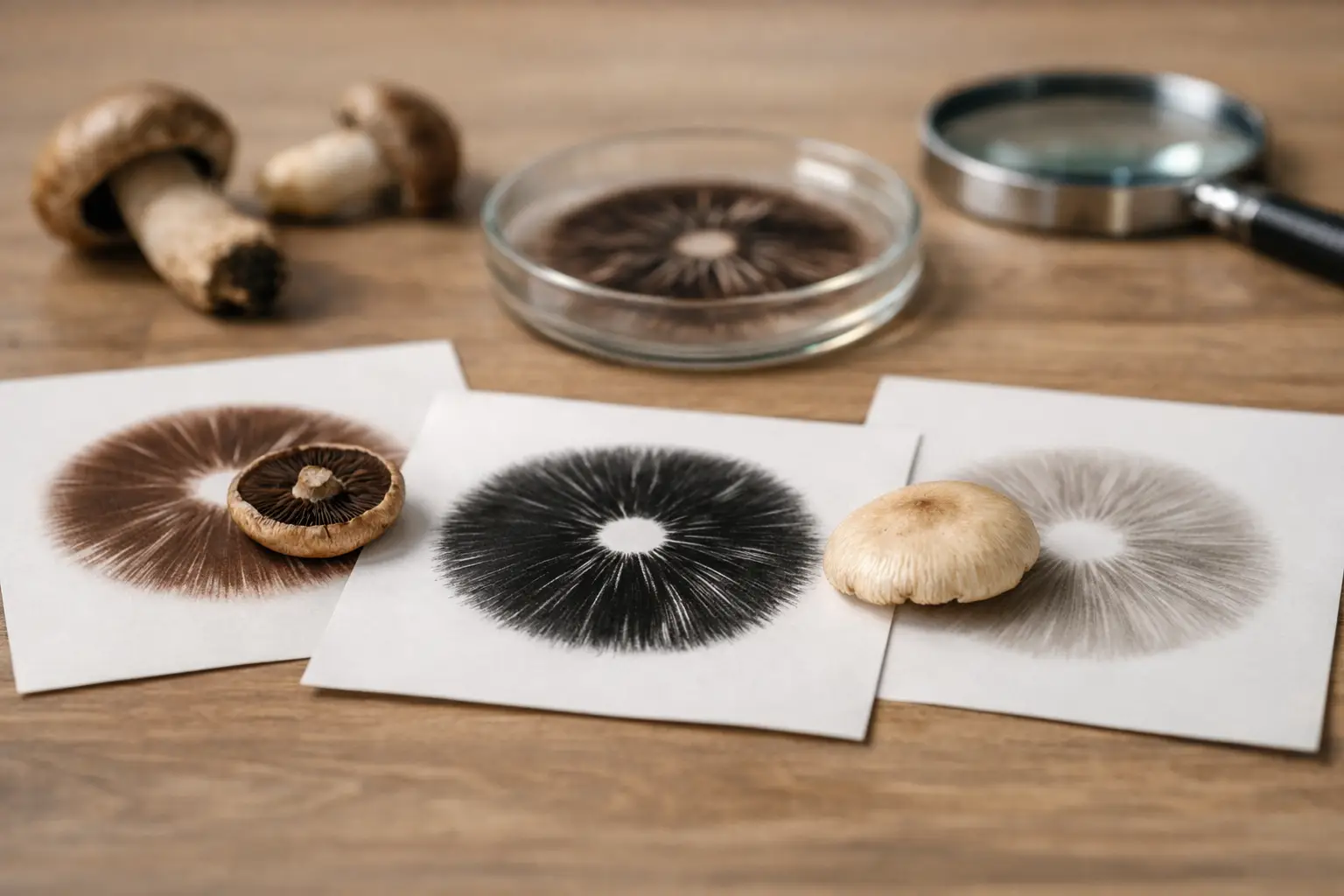
A fresh print can look almost unchanged months later, which is why so many collectors ask the same thing: how long do spore prints last? The short answer is that a well-made, well-stored print can remain usable for years. The less satisfying but more accurate answer is that storage conditions, handling, moisture, and contamination matter just as much as age.
If you are building out a personal collection or deciding between formats, shelf life is one of the main reasons prints stay popular. They are compact, easy to store, and reliable when treated correctly. But they are not indestructible, and assuming every old print is still in top condition is where people get disappointed.
How long do spore prints last in real conditions?
In practical terms, many spore prints can last 1 to 3 years without major issues when stored in a cool, dark, dry place. Some remain viable beyond that, sometimes much longer, but that is where the phrase it depends really starts doing heavy lifting.
A print stored carefully in foil or sterile paper, sealed against moisture, and left undisturbed in stable temperatures has a much better chance of aging well than one kept in a humid drawer, handled often, or exposed to heat. Viability tends to decline gradually, not all at once. That means an older print might still contain viable spores, just fewer of them or less predictable performance compared with a newer sample.
For microscopy-focused buyers and hobbyists who want dependable material on hand, age alone is not the best measure. Condition is. A two-year-old print that stayed dry and sealed can easily be in better shape than a six-month-old print that picked up condensation or contamination.
What actually affects spore print shelf life?
The biggest factor is moisture. Spores hate swings between dry storage and accidental humidity exposure. If a print absorbs moisture during storage, contamination risk goes up fast, and viability can drop just as quickly. This is one reason foil prints and properly sealed packaging are so common in the mycology space.
Temperature is next. Room temperature is usually fine for shorter-term storage, but cooler and more stable is generally better for long-term preservation. Heat accelerates degradation. A print left in a hot car, near a sunny window, or in a warm grow area is going to age much faster than one stored in a dark cabinet or refrigerated properly.
Light matters too, though usually less than moisture and heat. Direct sunlight is the real issue. UV exposure can damage spores over time, and clear storage without protection is not ideal.
Then there is handling. Every time a print is opened, touched, moved around loosely, or exposed to open air, the chance of contamination rises. Even if the spores themselves remain viable, a contaminated print becomes less useful and less trustworthy. The more a print is treated like a collectible that needs protection rather than a scrap of paper to be checked constantly, the longer it tends to hold up.
Best storage practices if you want prints to last
If your goal is to maximize lifespan, the basic rule is simple: keep prints dry, cool, dark, and sealed. That sounds obvious, but most shelf-life problems come from ignoring one of those four.
Foil is a common favorite because it helps protect the print surface and keeps handling to a minimum. If the print is already in foil, there is usually no reason to repackage it unless the original packaging has been compromised. From there, placing it in a sealed bag or container with minimal air exposure helps create a more stable storage environment.
For longer-term storage, refrigeration can help, but only if done carefully. The refrigerator itself is not magic. In fact, a poorly sealed print in a fridge can pick up condensation, which creates the exact problem you were trying to avoid. If you refrigerate, the print should be well sealed and allowed to return to room temperature before opening the container. That reduces the chance of moisture forming on the surface.
Freezing is more controversial. Some growers avoid it because ice crystal formation and moisture issues can damage material if packaging is not perfect. For most hobbyists, a cool, dry refrigerator setup is safer and more practical than trying to deep-store prints in a freezer.
Signs a spore print may be too old or poorly stored
Age by itself is not a red flag. What you want to look for is evidence that the print has been compromised.
If the print shows visible moisture damage, smearing beyond normal handling marks, odd discoloration, or anything fuzzy or suspicious on the surface or packaging, that is a sign the sample may not be in great condition. A musty smell or any obvious contamination is another warning. Prints should not look wet, moldy, or heavily disturbed.
Sometimes there are no dramatic visual clues, and the only issue is reduced viability from age. That is harder to spot. An older print can appear perfectly fine while still performing less reliably than a fresh one. That is one reason serious collectors and enthusiasts often rotate stock rather than treating prints as permanent inventory.
Are spore prints longer lasting than syringes?
Often, yes. Spore prints are widely valued for storage life because they are a relatively simple, low-moisture format. Syringes can be extremely convenient, but they contain water, and that changes the shelf-life equation.
A properly stored print often has the edge in long-term storage because dry material generally keeps better than liquid-based material. That does not mean prints are always the better choice. It depends on what you need. If convenience and ready-to-use format matter more, syringes may still be the right fit. If you are thinking about building a collection or storing material for longer periods, prints are often the more durable option.
For buyers comparing formats, this is one of those practical trade-offs that matters more than hype. Prints usually win on compact storage and longevity. Syringes often win on ease and speed. Neither format is automatically better in every situation.
How to make older prints more worth keeping
If you already have prints that have been sitting for a while, the first step is to stop introducing new risk. Do not repeatedly open and inspect them unless you have a reason. Keep them sealed, protected from humidity, and organized by date so you know what you are working with.
Labeling matters more than people think. A print with no date, no strain identification, and no record of storage conditions becomes guesswork fast. If you collect multiple varieties, good labeling helps you rotate older stock first and avoid letting useful material disappear into the back of a drawer.
It also helps to store prints in a dedicated container rather than mixed in with miscellaneous supplies. Grow areas, kitchens, garages, and bathrooms are all bad long-term homes because they tend to have temperature swings, moisture, or both. A stable closet, cabinet, or sealed refrigeration setup is usually a better move.
So, how long do spore prints last if you do everything right?
If you keep them dry, sealed, and cool, spore prints can remain viable for several years, and sometimes longer. The realistic answer for most enthusiasts is that peak reliability is usually in the earlier part of that window, while older prints become more variable rather than instantly useless.
That is why storage discipline matters so much. Shelf life is not just about the calendar. It is about whether the print stayed protected from the three biggest enemies: moisture, heat, and contamination.
For anyone shopping formats, comparing inventory, or planning ahead, prints remain one of the most practical options in the mycology world. They store small, travel through your collection easily, and reward careful handling better than almost any other format. Treat them like long-term inventory, not an afterthought, and they will usually return the favor.
If you want your collection to stay dependable, the best time to protect a print is the day you get it, not the day you realize it has been sitting in a humid drawer for a year.