
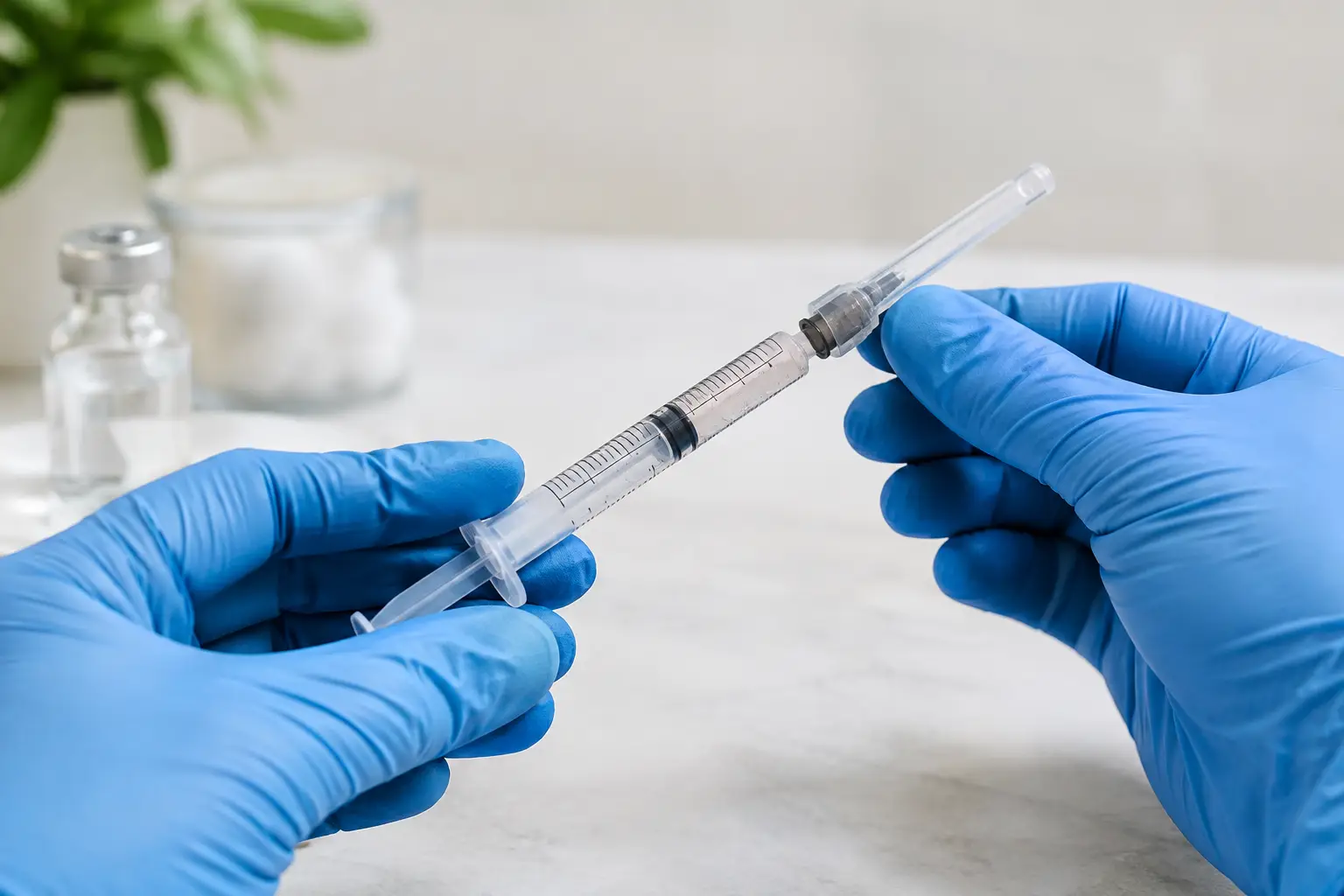
A spore syringe can look simple at first glance: sterile water, suspended spores, a capped needle, and a label. But knowing how to inspect a spore syringe before you use it or place it in storage helps you catch shipping damage, labeling mix-ups, and handling concerns early. For microscopy-focused collectors and serious mycology hobbyists, that quick check is part of keeping a clean, organized collection.
A good inspection does not mean trying to judge everything by appearance alone. Spores are microscopic, and a syringe that looks clear or shows visible dark material cannot tell you every detail about viability or purity. What you can assess is condition: packaging, labeling, suspension, storage history, and whether the syringe arrived as expected.
How to Inspect a Spore Syringe Step by Step
Start before removing anything from its packaging. A careful first look takes only a few minutes and gives you a reference point if you need to compare multiple syringes from a bundle or organize them by variety later.
Check the outer packaging first
Look for a sealed protective sleeve or bag that is intact and dry. The syringe should not arrive loose in a way that exposes the needle or allows the plunger to move freely during transit. Check for punctures, crushed areas, moisture inside the packaging, or a cap that appears detached.
Shipping can be rough, especially during long-distance deliveries. Minor cosmetic wear on an outer mailer is not automatically a concern, but damage that reaches the syringe package deserves a closer look. If the protective packaging is wet, torn around the needle, or clearly compromised, document its condition before handling further.
Confirm the label and variety
Read the label before you set the syringe aside. Confirm the variety name, quantity, and any identifying information provided by the seller. This is especially useful when you order several fan favorites at once or purchase a mixed bundle.
Labels should be readable and securely attached. A handwritten label is not inherently a problem, and neither is a simple retail label. What matters is that you can identify the syringe confidently and keep that identification intact through storage and future microscopy work.
If you maintain a collection, add your own organization system now. A small storage note with the arrival date, variety, and order reference can prevent confusion later. Avoid writing directly over important supplier details.
Examine the syringe body
Hold the sealed syringe against a bright, neutral background. You are looking for an intact barrel, a secure plunger, and a properly fitted cap. The barrel should not be cracked, deeply scratched, warped, or leaking around the tip or plunger seal.
Check the liquid level as well. Small differences in volume can happen during preparation and shipping, so do not assume a slightly uneven fill means there is a problem. A visibly empty syringe, significant leakage, or liquid pooled inside the protective sleeve is different and should be treated as a handling issue.
Do not remove the cap just to inspect the needle. Keeping the syringe closed preserves the condition in which it arrived and reduces unnecessary exposure to airborne debris. A visual check from outside the packaging is usually enough to confirm that the needle cap is present and aligned.
Look at the spore suspension without overreading it
The liquid in a spore syringe is commonly clear, while spores may appear as tiny dark flecks, fine clouds, or small clusters. Depending on the variety, concentration, and how long the syringe has been resting, those visible patterns can vary substantially.
It is normal for spores to settle during storage. A settled cluster is not automatically a sign of a problem, and a completely clear-looking syringe does not prove that no spores are present. Many spores are too small or dispersed to be obvious without magnification.
Avoid trying to evaluate a syringe by color alone. Lighting, background color, and the angle of the barrel can make the suspension look darker or lighter than it is. Instead, look for major changes that are easy to identify: unusual cloudiness throughout the liquid, unexpected residue, discolored fluid, or material that appears inconsistent with the rest of your order. When in doubt, compare it with another syringe from the same shipment under the same lighting.
Inspect the plunger and tip seal
The plunger should sit securely in the barrel without appearing partially pulled out or forced inward. A plunger that has shifted slightly during transit may still be usable, but any sign of leakage around the stopper is worth noting.
At the tip, confirm that the cap is firmly seated. The needle itself should remain protected. Bent, exposed, or damaged needle components are a practical concern because they affect safe handling, regardless of how the suspension looks.
What a Visual Inspection Can and Cannot Tell You
A visual inspection is a quality-control habit, not a laboratory test. It can help identify shipping damage, missing labels, leaks, broken seals, and obvious irregularities. It cannot reliably confirm spore identity, sterility, or microscopic characteristics from the outside of the syringe.
That distinction matters because hobbyists sometimes expect a dense dark suspension to mean a better syringe. More visible material is not a universal quality marker. Concentration can differ by preparation style, settling time, and the natural appearance of a given sample. A cleanly packaged, correctly labeled syringe with a stable seal tells you more at receipt than trying to rank quality based on the darkness of the water.
For microscopy work, the slide itself is where observation becomes meaningful. A prepared sample viewed under appropriate magnification can reveal the spore characteristics that a naked-eye inspection cannot. Keep the purpose clear: inspect the package and syringe visually, then use microscopy for microscopic questions.
Common Issues to Watch For
Most syringes arrive with no concerns at all. Still, a few issues are worth recognizing early:
- A cracked barrel, loose cap, bent needle, or visible leak points to physical shipping damage.
- An unreadable, missing, or mismatched label creates an identification problem, particularly in multi-syringe orders.
- Moisture inside the sealed protective packaging may indicate that the syringe leaked or the package was exposed to damage in transit.
- Heavy cloudiness, unexpected color changes, or floating debris that differs sharply from normal settled spores may warrant a closer review.
The key is context. One tiny spore cluster is not a red flag. A small air bubble is generally not a red flag either. A package with several physical issues at once deserves attention.
Handle and Store It Like a Collection Item
Once you have completed your inspection, keep the syringe capped and return it to a clean, protected storage location. Heat, direct sunlight, and repeated temperature swings are harder on delicate mycology supplies than a stable, dark environment. Store syringes where labels remain readable and the barrel cannot be crushed beneath heavier items.
Organization is part of good handling. Keep varieties separated, retain original labels, and avoid letting loose syringes roll around in a drawer. A simple labeled container or divided storage box makes it easier to find what you need without repeatedly handling every item.
For new additions to your collection, inspect on arrival rather than weeks later. It is much easier to compare packaging, confirm order details, and address a concern while shipment information is still fresh. Take clear photos if something appears damaged, including the outer package, protective sleeve, label, and syringe condition.
When to Contact the Seller
Contact the seller promptly when you receive a damaged syringe, visible leak, missing product, incorrect label, or packaging that arrived compromised. Be direct and specific. Include the order information, the item name, and photos that show the concern clearly.
At Myceli Nation, clear product identification and careful packaging support the kind of collection management that makes shopping for mycology supplies simpler. Whether you are adding a single syringe or sorting a larger order, a quick inspection gives you confidence that every item is properly accounted for before it goes into storage or under the microscope.
A few calm minutes at delivery can save a lot of guesswork later. Check the seal, confirm the label, observe the suspension without making assumptions, and keep your collection organized from day one.