
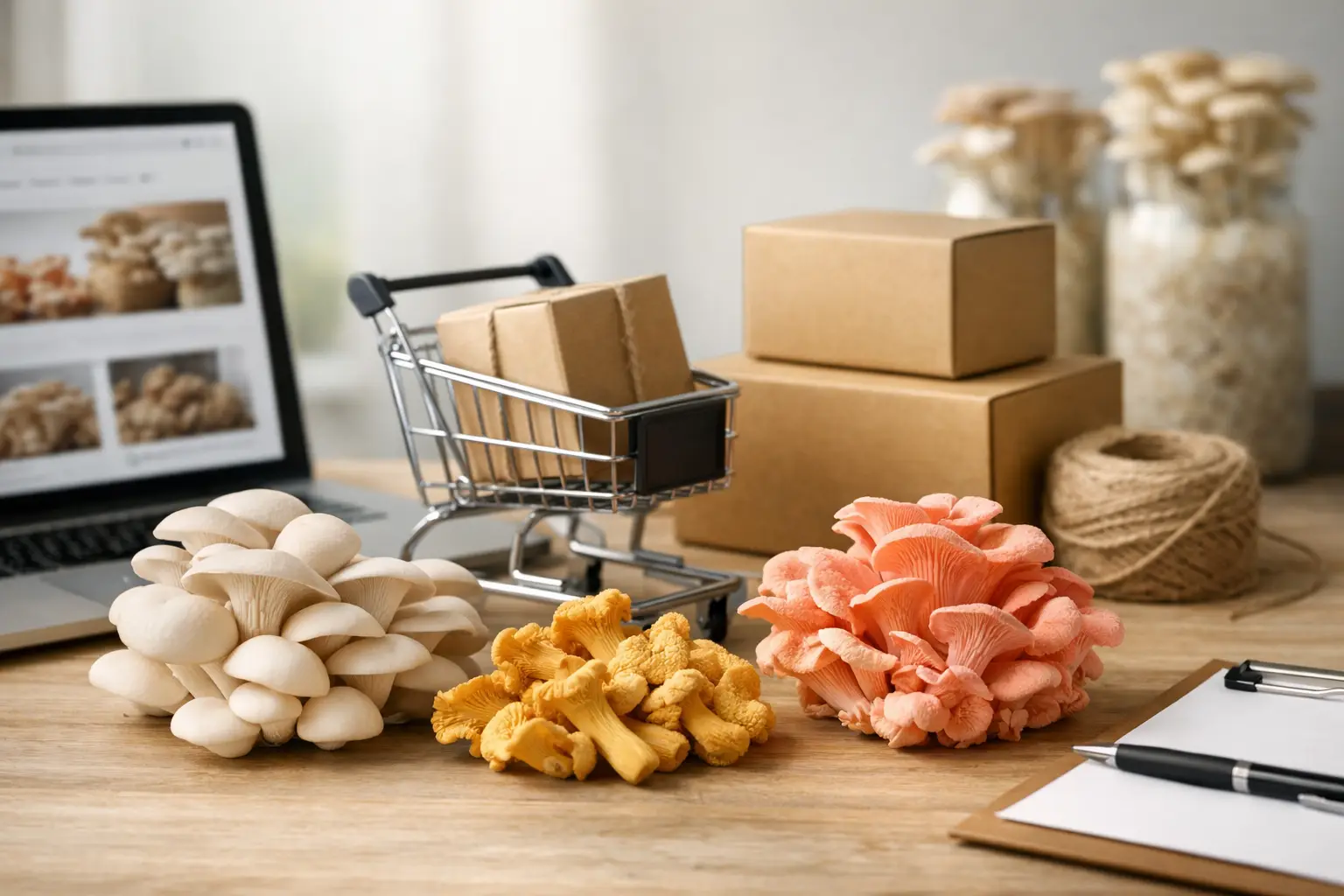
A shopper looking for an oyster culture, a microscopy-ready spore print, or a clean starter bundle does not want to sort through a generic garden catalog to find it. That is where mushroom dropshipping earns its place. A focused storefront can put the right formats, clear product details, and dependable fulfillment in front of a mycology-minded customer without requiring the seller to hold every item on a shelf.
For aspiring store owners, the appeal is obvious: less money tied up in inventory, a broader catalog from the start, and more time to focus on merchandising, customer education, and community. But this model works only when the supplier, catalog, and customer experience are handled with care. Mycology buyers tend to notice vague descriptions, poor packaging, and slow communication immediately.
What Mushroom Dropshipping Actually Means
Mushroom dropshipping is an e-commerce fulfillment model in which a store markets products while a partner supplier packages and ships the order directly to the buyer. The seller manages the storefront, product positioning, payment flow, and customer relationship. The supplier manages inventory, packing, and dispatch.
That division can be useful in a category with many formats and fast-moving customer interests. Instead of buying bulk stock across every culture, print, syringe, grow supply, and accessory category, a seller can build a catalog around products that fit their audience and let supply follow actual demand.
It is not a hands-off shortcut. The buyer sees your store name, not the operational chain behind it. If an item arrives late, a listing is unclear, or the package does not match expectations, the customer will come to you for answers. A good dropshipping operation is less about avoiding inventory and more about owning the experience without owning every box.
Why a Niche Store Can Beat a Giant Catalog
General dropshipping stores often lose trust because they sell unrelated items with no point of view. Mycology is different. Customers may be looking for a particular species, cultivation format, or collection-friendly print, and they want to buy from a shop that understands the difference.
A smaller, intentional catalog usually converts better than an oversized collection of loosely related products. Start with products that serve a clear buyer path. An edible cultivation customer may need cultures, substrate-related supplies, and clean labeling. A collector or microscopy-focused customer may care more about strain selection, print quality, storage guidance, and discreet, professional packing.
Your store should make those paths easy to recognize. Organize collections by product format and purpose, not just by what happens to be available from a supplier. Clear category names, accurate availability, and concise descriptions do more work than a wall of products with nearly identical titles.
This is also where bundles can help. A thoughtfully assembled starter set can make a first purchase easier, while a multi-item collection gives returning customers a reason to explore beyond a single product. Bundles should feel useful, not like excess inventory pushed into a package.
Choosing Products for a Mushroom Dropshipping Store
The best products are not always the cheapest products. A low wholesale cost means little if the item creates support requests, arrives inconsistently, or gives customers no reason to return.
Look for products with stable demand, clear specifications, and a supplier that can maintain consistent quality. Edible cultures and cultivation supplies can support practical repeat purchasing. Spore syringes and prints can support variety-driven browsing, especially when listings distinguish format, intended use, handling requirements, and collection details. Accessories can raise average order value, but only if they are genuinely relevant to the buyer’s purchase.
Before publishing an item, make sure you can answer the questions a serious customer will ask: What exactly is included? How is it packed? Is the product in stock? What are the storage considerations? When does it ship? What happens if there is a fulfillment issue?
If the supplier cannot give direct, consistent answers, do not make up for the gap with polished copy. Remove the item or wait until you can represent it accurately.
Product Pages Need More Than a Name
A strong product page feels like it was written by someone who has handled the category before. Use a descriptive title, then explain the format, contents, selection details, and any relevant handling information in plain language. Avoid exaggerated promises or claims that cannot be supported.
Photos should reflect the actual product or packaging as closely as possible. If imagery is representative, say so. Customers are generally reasonable about natural variation in mycology products, but they are less forgiving when the listing creates a different expectation than the package delivers.
Include a visible policy for order changes, damaged shipments, and support. This is not filler. Clear policies reduce friction before the sale and prevent avoidable conflict after it.
Supplier Standards Make or Break the Model
The supplier is an extension of your brand. Before launching, place test orders to yourself. Review the package as a customer would: delivery speed, exterior condition, labeling, product protection, packing materials, and whether the included materials match your listing.
Ask about inventory synchronization and how often availability is updated. Nothing drains trust faster than taking payment for products that cannot ship. Also ask who handles replacements, how tracking is shared, and what happens when a package is delayed or damaged in transit.
A supplier relationship should be operationally transparent. You need realistic processing windows, product-level stock information, and a defined contact method for exceptions. Cheap fulfillment is not a bargain if every customer problem turns into a week of unanswered messages.
For sellers building around a curated mycology catalog, a dedicated network such as Myceli Nation can make more sense than trying to connect unrelated suppliers and force them into one store. The advantage is category alignment: products, terminology, and fulfillment expectations are built around the same buyer rather than adapted from a generic marketplace model.
Compliance Is Part of Good Merchandising
Specialty mushroom products are not a category for careless listing practices. Rules can vary by location, product type, and shipping destination. A responsible store verifies applicable requirements before offering an item, restricts sales where necessary, and keeps product descriptions factual.
Do not rely on vague disclaimers as a substitute for understanding your catalog. Your checkout settings, shipping zones, age-related policies where applicable, and promotional language should all match the products you are permitted to offer. Review these details regularly, especially when expanding internationally.
This approach also protects the customer experience. Clear boundaries make a store look more professional, not less. The buyers you want to keep are looking for reliable access, straightforward information, and a seller who does not create uncertainty around an order.
Marketing a Store Without Sounding Generic
A mushroom store has a built-in advantage: the audience is naturally curious. Use that curiosity with useful merchandising instead of empty hype. Feature best sellers, seasonal favorites, new culture releases, and format-based collections. Give customers a reason to check back without training them to wait for constant discounts.
Email can be especially effective when it feels like a useful signal rather than a nonstop sale alert. A brief restock notice, a new bundle announcement, or a category spotlight can bring repeat buyers back to the store. Educational content can support this effort when it answers the same questions your support inbox receives, such as format comparisons, storage basics, or how to choose a product category.
Affiliate partnerships can also work well in a niche community, but fit matters more than reach. Partners should understand the products and speak to an audience that already has an interest in mycology. A small creator with trusted recommendations may drive better customers than a large account with a broad, disconnected following.
Measure the Store Beyond Revenue
Revenue is the headline, but it does not reveal whether your mushroom dropshipping business is healthy. Watch your refund rate, shipping-related support tickets, average delivery time, repeat purchase rate, and the percentage of orders affected by stock issues.
These numbers tell you where the customer journey breaks. If one product generates constant questions, improve the listing or remove it. If a bundle has a strong conversion rate and low support burden, consider building related offers around it. If a supplier’s shipping performance slips, address it before customers start associating the problem with your store.
The strongest mycology stores are not built by adding everything at once. They are built by choosing a dependable product lane, presenting it with real category knowledge, and making each order feel considered. Start narrow, test every fulfillment detail, and let the next addition to your catalog earn its place.