
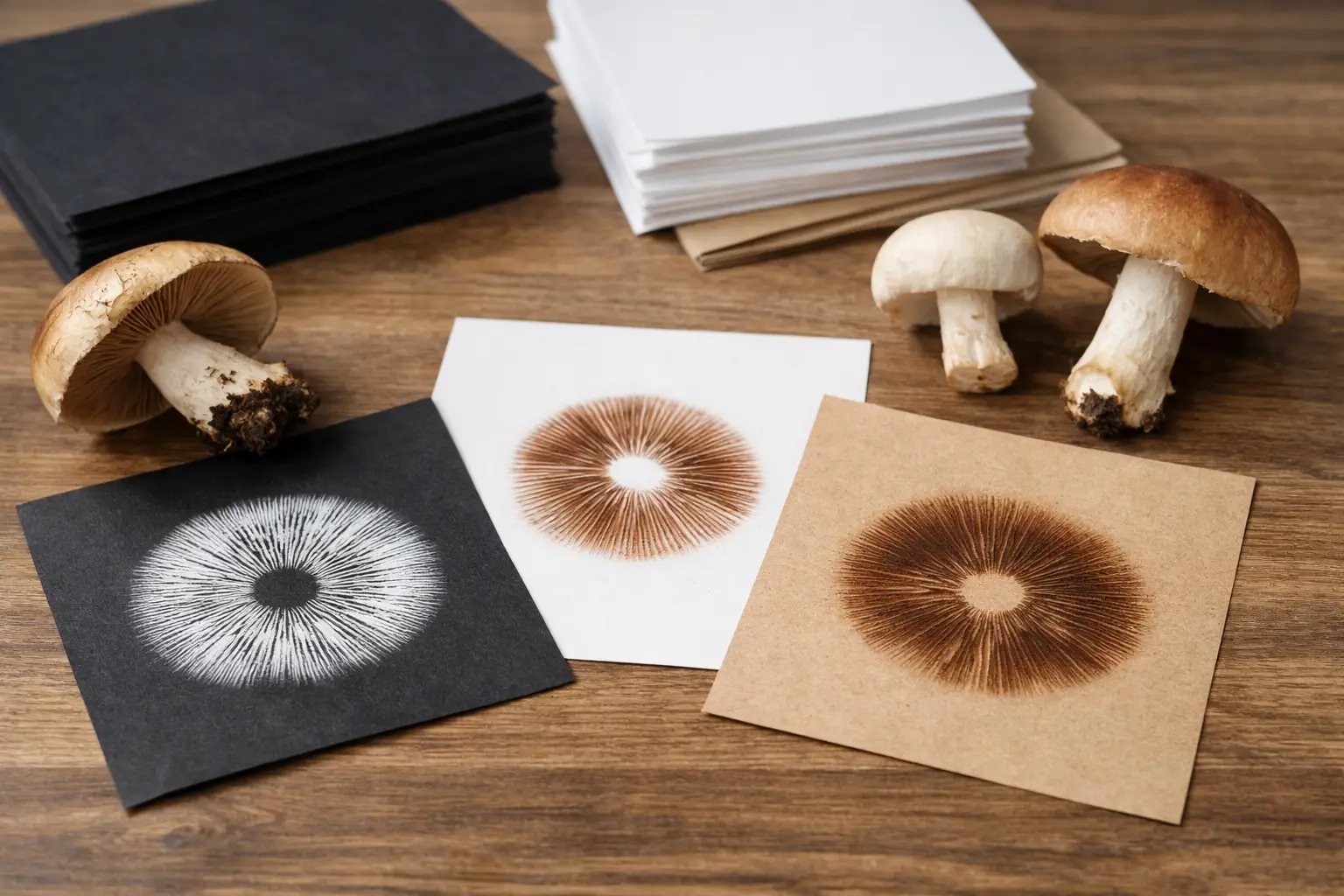
A clean print can look perfect at first glance, then fail later because the paper held moisture, shed fibers, or picked up contamination during storage. That is why choosing the best paper for spore prints is less about looks and more about how the material behaves once the cap comes off and the print starts drying.
For most growers, collectors, and microscopy-focused buyers, the short answer is simple: plain white, non-coated cardstock is usually the safest all-around choice if you want a paper product. It gives you contrast, holds its shape, and does not wrinkle as easily as standard printer paper. But there is a catch. In some cases, foil still outperforms paper altogether, especially when you want the easiest transfer and the least absorbency.
What actually makes the best paper for spore prints?
The best material needs to do three things well. It has to show the print clearly, stay stable while moisture evaporates, and avoid adding fibers, coatings, or residue that can interfere with collection or storage.
That is why thin office paper is rarely the top pick. It bends fast, absorbs moisture unevenly, and can stick to a damp cap. If you have ever peeled a cap away and found a fuzzy paper texture embedded where you wanted a clean print, you already know the problem.
Cardstock works better because it is thicker and more dimensionally stable. A plain white sheet also makes dark deposits easy to see, which matters if you are checking print density or trying to separate a strong print from a weak one. White paper is not the only option, but it remains the most practical for visibility.
The part many people overlook is surface treatment. Glossy paper, photo paper, waxed paper, and heavily coated craft stock can all create avoidable issues. Some coatings trap moisture longer than expected. Others make the spores smear instead of settle cleanly. If the goal is a reliable print, fancy paper usually adds more risk than value.
Best paper for spore prints by material type
Plain white cardstock
If you want one recommendation that covers most situations, plain white cardstock is it. It is thick enough to stay flat, light enough in color to show detail, and simple to cut into clean squares for printing and storage. It also folds better than brittle specialty papers if you plan to package prints neatly.
This is the option that feels closest to a dependable middle ground. It is easy to source, inexpensive, and beginner-friendly without being low quality. For many hobbyists, this is the best paper for spore prints because it balances readability and handling.
Standard printer paper
Printer paper can work in a pinch, but it is usually not the best choice for anything you want to keep. It absorbs moisture quickly and can wrinkle or curl as the cap sits on it. That movement alone can distort the print.
There is also the fiber issue. Thin paper sheds more easily, and that is not ideal when you want a clean deposit. If standard copy paper is all you have, use it for a quick temporary print, not your best sample.
Construction paper or colored paper
Colored paper is mostly a visibility problem. Some prints simply do not stand out well against darker backgrounds, and that makes inspection harder than it needs to be. Dyes and rougher surfaces can also be inconsistent.
If you want paper for presentation, maybe. If you want paper for clarity and easy handling, white wins almost every time.
Glossy or coated paper
Glossy paper sounds appealing because it seems smooth and clean, but in practice it is a poor fit. Coated surfaces can cause moisture to bead or dry unevenly, and prints may smear more easily when touched.
It is also harder to predict how that coating will behave over time in storage. For a process that benefits from fewer variables, coated stock is just extra noise.
When foil is better than paper
A lot of experienced cultivators skip paper entirely and go straight to foil. That is not because paper is useless. It is because foil is non-absorbent, easy to keep sterile, and often easier for collecting spores afterward.
So if the question is strictly the best paper for spore prints, cardstock is a strong answer. But if the real question is the best surface overall, foil deserves a serious look. It does not shed fibers, and it can be cut, wrapped, and stored with minimal fuss.
There is a trade-off, though. Foil tears more easily, and some people prefer the visual contrast of white cardstock when checking print quality. Paper also feels more organized for labeling and archiving, especially if you keep a larger collection.
That is why many enthusiasts use both. Cardstock for clarity and record-keeping, foil for easy transfer and lower absorbency.
How to choose the right paper for your setup
The right material depends on what you care about most after the print is made. If you want easy viewing and straightforward labeling, plain white cardstock makes the process clean and familiar. If you want the least absorbent surface possible, paper may not be the winner at all.
Humidity matters too. In a drier environment, cardstock behaves predictably and dries well. In a more humid room, thin paper becomes even less forgiving, and foil starts to look better. The wetter the conditions, the more absorbency becomes a liability.
Storage plans also matter. If you are making a print for short-term observation, material choice is more flexible. If you are planning long-term storage, consistency matters more. Thick, plain, uncoated material gives you fewer surprises later.
Common mistakes that ruin a good print
Most bad prints are not caused by the cap alone. They are caused by handling shortcuts. Using textured paper, touching the print too soon, or storing it before it is fully dry will undo even a strong deposit.
One common mistake is assuming any white paper is good paper. Bright white photo stock, resume paper, and coated stationery are not the same as plain cardstock. Surface chemistry matters.
Another is overpacking the print while it still holds moisture. Paper can look dry on the edges and still trap dampness underneath the center. If you seal it too early, you create the kind of environment that invites contamination and degradation.
Labeling is another small thing that becomes a big thing later. Write on the paper before use if possible, or in an area far from the print zone. Pressing down with a pen after the print is made can disturb the deposit.
A simple standard that works
If you want a repeatable system, cut plain white uncoated cardstock into small squares, keep them clean and dry, and pair them with a cover during printing so airborne debris stays off the surface. After the print forms, let it dry fully before packaging.
That basic method works because it reduces variables. You are not fighting paper curl, glossy coatings, or weak contrast. You are using a surface that behaves in a predictable way and stores neatly.
For sellers, collectors, and hobbyists who want a practical default, this is usually the best paper for spore prints without turning the process into a materials experiment. It is affordable, easy to replace, and simple to organize in batches.
Paper quality matters more than brand name
You do not need luxury stationery for a better print. What matters is the paper specification, not the marketing on the package. Look for plain, uncoated, white cardstock with a smooth but not slick finish.
Avoid scented paper, recycled stock with heavy flecking, glossy finishes, and anything labeled weatherproof or photo-grade. Those features may be useful in other contexts, but they do not help here.
This is one of those areas where simple wins. A clean surface, solid handling, and proper drying will outperform expensive paper with the wrong finish every time.
At Myceli Nation, we see the same pattern again and again: growers get better results when they standardize the small details. Pick a material that stays flat, stays clean, and stays predictable, and the rest of your workflow gets easier from there.
If you have to choose just one paper product, go with plain white cardstock and keep a few foil sheets on hand for comparison. The best setup is the one that gives you clean prints you can trust, not the one that looks the most polished on day one.