
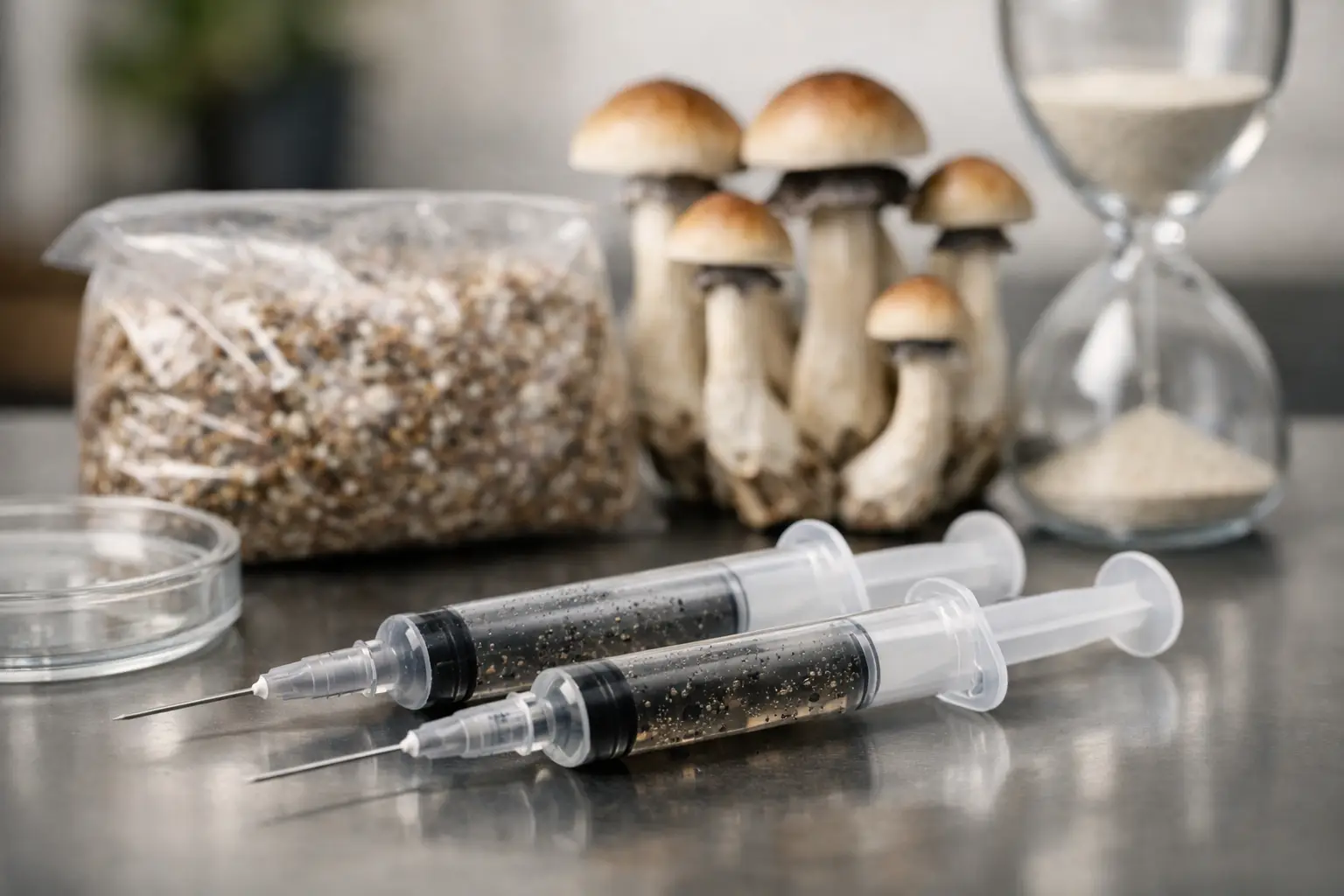
If you have ever pulled a spore syringe from the fridge and wondered whether it is still good, you are asking the right question. How long do mushroom spore syringes last depends less on the calendar alone and more on storage, handling, and how stable the syringe has stayed since the day it arrived.
For most buyers, a well-made mushroom spore syringe can remain usable for several months and often up to a year when stored correctly. Some last longer, some lose performance sooner. That range is not a cop-out – it reflects real-world variables like temperature swings, contamination risk, and how often the syringe has been handled.
How long do mushroom spore syringes last in real conditions?
In practical terms, most mushroom spore syringes hold up best when they are kept refrigerated, protected from light, and left sealed until use. Under those conditions, many growers and collectors treat 6 to 12 months as a reasonable working window. If storage has been especially consistent, viability may extend beyond that, but reliability usually becomes less predictable as time passes.
At room temperature, the timeline usually shortens. A syringe that sits in a warm closet, on a sunny shelf, or in a mailbox for too long may still contain viable spores, but you are increasing the odds of weaker performance or contamination issues. Short exposures during shipping or setup are one thing. Long-term warm storage is another.
That distinction matters because spores are durable, but the syringe itself is still a moisture-rich environment. Over time, even a good syringe can degrade if it is exposed to heat or handled carelessly.
What affects spore syringe shelf life?
The biggest factor is temperature. Cool, stable refrigeration generally gives a syringe its best chance of staying viable for the long haul. What hurts shelf life is repeated warming and cooling, especially if the syringe moves in and out of storage every few days. Constant fluctuation creates stress and increases the chance of condensation and handling errors.
Cleanliness at the time of preparation also matters. A professionally prepared syringe starts with a better foundation than one made in inconsistent conditions. If the solution was clean, the syringe was packed properly, and the cap stayed secure, it has a stronger chance of aging well.
Light exposure is another piece of the puzzle. Direct sunlight and prolonged bright light are not doing your syringe any favors. Dark, cool storage is the safer play.
Then there is handling. Every time a syringe is unbagged, examined closely, shaken aggressively, or opened before use, you create another opportunity for trouble. Even if no obvious contamination appears, unnecessary handling can shorten the useful life of the product.
Best way to store a mushroom spore syringe
A refrigerator is usually the safest spot, provided it stays within a normal cool range and does not freeze. Store the syringe in a clean bag or container so it is protected from spills, food contact, and temperature swings from frequent door openings. A back shelf is often better than the fridge door because the temperature tends to stay more stable.
Freezing is usually not recommended. While spores themselves can survive harsh conditions better than many people assume, a syringe solution is not something you want cycling through freezing and thawing. That can affect the liquid environment and reduce consistency.
If refrigeration is not available for a short period, keep the syringe in a cool, dark place and avoid heat. That is a short-term backup, not a best practice. A dresser drawer in an air-conditioned room is better than a garage, windowsill, or car.
Before use, let the syringe come closer to room temperature naturally for a bit rather than rushing it. That small step can make handling easier and reduce condensation around the exterior.
Signs a spore syringe may be too old or compromised
Age alone does not always tell the story. A six-month-old syringe stored well may be in better shape than a one-month-old syringe that sat in the heat. The better question is whether the syringe still looks and behaves like a clean product.
Cloudiness that seems unusual, odd discoloration, foul odor, leaking around the cap, or visible foreign growth are all warning signs. Some spore syringes naturally show dark clumps or suspended matter because spores gather together in the solution. That is normal. Strange colors, slimy appearance, or anything that looks actively off is not.
If the plunger sticks badly, the seal looks damaged, or the packaging appears tampered with, that is also reason to be cautious. Product integrity matters just as much as spore age.
One tricky part for newer buyers is telling normal spore clustering from contamination. Spore clumps often break apart with gentle shaking and still look like dark particulate matter suspended in otherwise normal liquid. Contamination tends to look more irregular, murky, or suspiciously alive. When in doubt, it is smarter to trust your instincts than gamble on a questionable syringe.
Do different strains or varieties last longer?
Buyers often assume shelf life changes dramatically from one variety to another, but storage conditions usually matter more than the label. A properly prepared syringe from one fan favorite variety and a properly prepared syringe from another will often have a similar storage window if both are kept under the same conditions.
That said, individual batches can behave differently. Spore density, preparation quality, and how long the syringe spent in transit can all influence how fresh it feels when it reaches your hands. This is one reason experienced shoppers tend to buy from dedicated suppliers that understand packaging, product turnover, and inventory handling.
Can an old spore syringe still work?
Yes, sometimes surprisingly well. A syringe that is older than the ideal window may still contain viable spores, especially if it has been refrigerated and left undisturbed. The trade-off is consistency. Older syringes may perform more slowly, less evenly, or with a lower success rate than fresher stock.
That is why shelf life should be viewed as a reliability curve, not an expiration switch. There is no universal day when every syringe suddenly stops being useful. Instead, your odds gradually change over time.
For buyers who like to keep options on hand, it makes sense to rotate inventory. Use older syringes first, label purchase dates, and avoid buying more than you can reasonably store well. A broad catalog is great, but only if your storage habits keep pace with your collection.
Buying habits that help you get the most from shelf life
The best storage strategy starts before the package even arrives. Ordering from a seller that moves inventory consistently and ships with care gives you a better starting point than buying unknown stock that may have been sitting around too long. Freshness is not just about what happens in your fridge. It begins with sourcing.
It also helps to buy with a plan. If you know you want to compare varieties, a smaller, more manageable order can be smarter than overstocking and letting syringes sit for too long. Enthusiasts love options, but shelf life is one of those areas where discipline pays off.
For shoppers building out a personal lineup of microscopy supplies, keeping products organized matters more than people think. Label by arrival date, store them consistently, and avoid tossing them loosely into crowded storage. A simple system prevents waste.
FAQ: how long do mushroom spore syringes last?
Should I refrigerate mushroom spore syringes right away?
Yes, if you are not using them immediately. Refrigeration usually gives you the best shot at preserving viability and product quality.
How long do mushroom spore syringes last at room temperature?
Usually less time than refrigerated syringes. A brief period at room temperature is often fine, but long-term warm storage can shorten usable life significantly.
Is it normal to see black clumps in a spore syringe?
Yes. Spores often clump together, and gentle shaking can redistribute them. Clumping by itself is not usually a problem.
Can I use a syringe after one year?
Possibly. If it was stored well and still looks clean, it may remain viable. Just expect less predictability than you would get from a fresher syringe.
A good spore syringe is not just about what you buy – it is about how you store it from day one. Keep it cool, keep it clean, and keep your expectations realistic, and you will give yourself the best chance of getting solid use out of every syringe in your lineup.